Christians Under Siege in Jerusalem
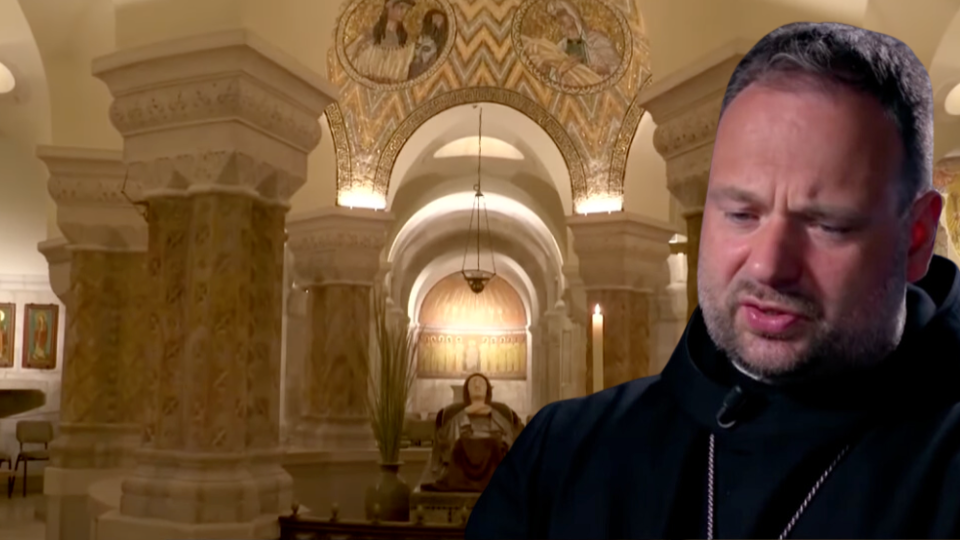
Since the October terrorist attacks by Hamas in Israel, the situation for Christians in the Holy Land has worsened significantly. Christians in the region report living under constant threat as tensions escalate. Benedictine Abbot Fr. Nikodemus Schnabel of the Dormition Abbey in Jerusalem, despite the violence, has made the choice to remain in the city, standing firm in his faith and mission.
“I am a German citizen. My government told me and my other brothers: ‘Please leave the country. It’s not secure anymore.’ Actively, I said: ‘No, I stay,’” Fr. Nikodemus told EWTN Vatican Bureau Chief Andreas Thonhauser.
Facing Daily Hostility
Remaining in Jerusalem has proven dangerous. The Abbot describes the daily hostilities he and other Christians face. “I face, more or less on a daily basis, that these people spit in front of me or behind me, sometimes they spit also on this cross, it has had a lot of spitting attacks, or really physically attack me or say bad words about Jesus, or throw stones through our windows and also have arson attacks and other,” he said.
Amid the ongoing conflict between Israel and Hamas, the violence against Christians has intensified, threatening their safety and well-being. However, this struggle has also led to a sense of unity within the Christian community.
A Call for Christian Unity
Despite the collapse of interreligious dialogue between Muslims, Jews, and Christians, the conflict has drawn Christian denominations closer together. “Our enemies have a more ecumenical thinking than we, because they don’t divide us by denomination, they hate us because we’re Christians,” Fr. Nikodemus explained. “Maybe it’s also a call to us to say, ‘Okay, if we are attacked because of our common baptism, maybe we should also live this common baptism, this common vocation as Christians more authentically.’”
In response, the German abbot has initiated weekly gatherings with monks and faithful of different Christian traditions, including Armenian, Syriac Orthodox, and Anglican communities. Every Sunday, they share a meal, discussing their shared struggles and supporting one another.
The Struggle for Survival
One of the most pressing challenges Christians in the Holy Land now face is the sharp decline in pilgrims, which has resulted in a significant loss of income. Fr. Nikodemus shared that the Dormition Abbey used to receive 5,000 pilgrims a day, but now, there are none. Despite this, he remains committed to keeping the Abbey open as a sanctuary for those in need of refuge and support.
“We stay voluntarily in this ocean of suffering as islands of hope,” Fr. Nikodemus said. “We stay open: Both our churches were never closed. Faithfully, we pray our daily prayer from the morning until the evening; we are there. That’s the very first thing to say: Yes, we are here if you need us. You are welcome.”
Adapted by Jacob Stein