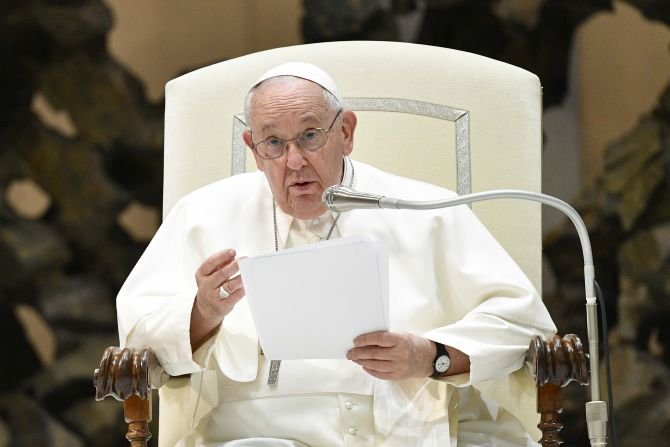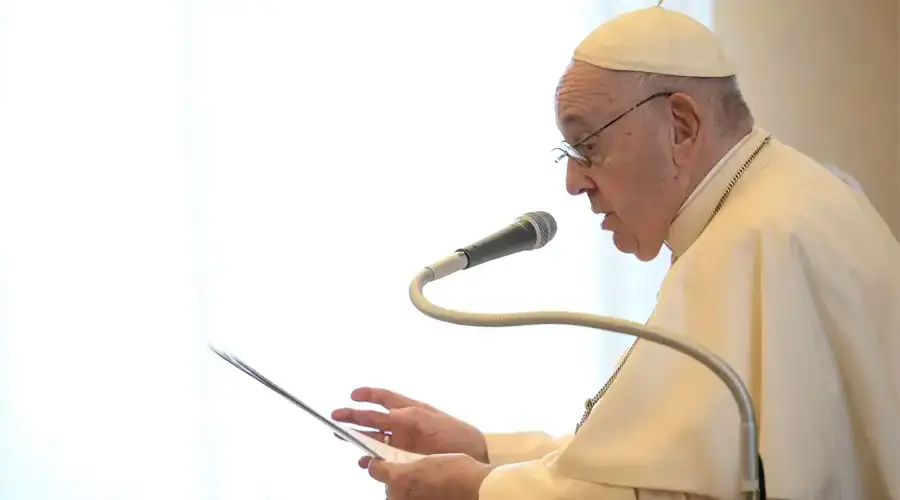
Pope Francis’s trip this week to the Democratic Republic of Congo, which will be followed by a visit to South Sudan, was scheduled for July of last year, but was postponed because of Pope Francis’ health.
The 2022 trip to the DRC would have included a visit to the east of the country, an area plagued by violence and armed terrorist militias.
The violence in this area has made the DRC a country with one of the highest numbers of displaced persons in the world, with around 5.6 million people living away from their homes, according to the UN Refugee Agency (UNHCR).
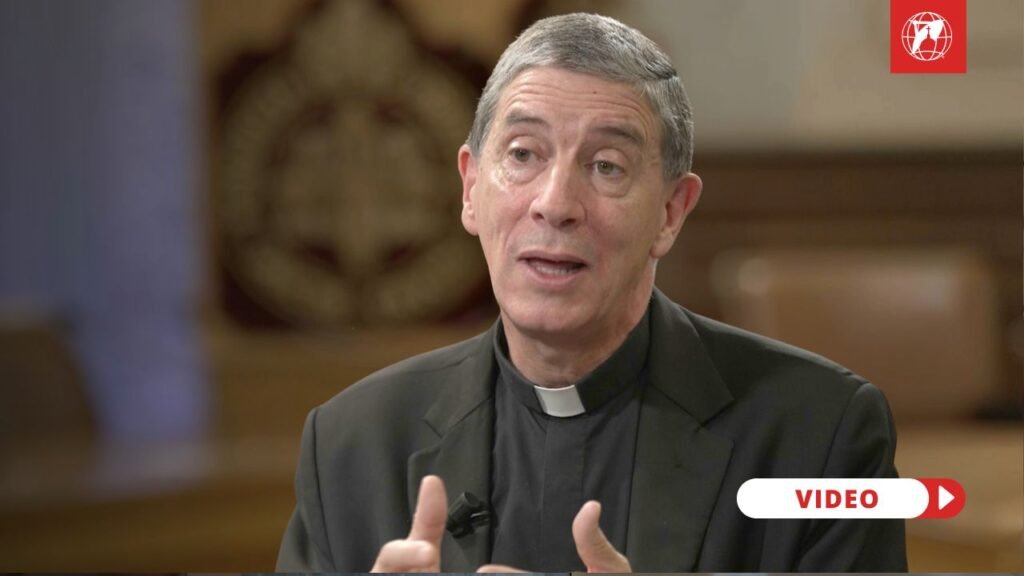
Amid this violence, the Catholic Church is working to give hope to the population, says Fr. Godefroid Mombula Alekiabo, a missionary priest based in the capital Kinshasa.
During the conference “Pope Francis’ trip to the DRC and South Sudan: A message of unity and reconciliation for two countries crushed by violence and suffering,” the priest indicated that the local Church is working to bring groups of displaced people and others affected by war to Kinshasa for the Pope’s visit.
At the event, held on January 16 by Aid to the Suffering Church, Fr. Mombula highlighted the role that the Catholic Church plays in the Democratic Republic of Congo in establishing education systems and health care programs.
“Its schools have educated more than 60% of the country’s primary school pupils and more than 40% of those in secondary school. The Church owns and manages an extensive network of hospitals, schools, and clinics, as well as numerous other projects,” said the priest, a professor and academic secretary at the University of St. Augustine in Kinshasa.
Church-State relationship
Fr. Godefroid Mombula Alekiabo explained that the Church-State relations were strong during the colonial period. However, the events that followed independence forced the Church to become “the most critical institutional voice.”
“The conflict first manifested itself openly in 1971, when the state, as part of its efforts to centralize and extend its authority, nationalized Catholic schools; and the conflict escalated in 1972, when, as part of an ‘authenticity’ campaign, all citizens were ordered to give up their Christian baptismal names to adopt African names,” he noted.
Christmas was then suspended, schools were nationalized, and images of the Pope and crucifixes were taken down and replaced with portraits of dictator Mobutu Sese Seko, who ruled the country from November 1965 through May 1997.
However, “the lack of management capacity and small resources of the State made the absorption of the educational system a disaster.” This led the government to ask “religious institutions to take over the denominational schools again, and religion classes were once again part of the curriculum.”
The priest said that “in its relationship with the State, the Church is considered a voice of opposition to authoritarian regimes.”
Pope Francis will be the second Pontiff to visit the Democratic Republic of Congo, after St. John Paul II, who visited the country in 1980 and 1985, when it was known as Zaire.
In the DRC, Christianity is professed by more than 95% of the population, and 45% of Christians belong to the Catholic Church. That is about 28 million people.
The presence of Catholicism in the area dates back to the late 1400s with the arrival of the very first missionaries. There are six metropolitan archdioceses: Bukavu, Kananga, Kinshasa, Kisangani, Lubumbashi, and Mbandaka-Bikoro, and 42 suffragan dioceses.
The current president of the Episcopal Conference is Archbishop Marcel Utembi Tapa, the Metropolitan Archbishop of Kisangani. The Democratic Republic of Congo is represented in the Sacred College by Cardinal Fridolin Ambongo Besungu, Metropolitan Archbishop of Kinshasa.
Holy See and the Democratic Republic of Congo have had diplomatic relations at the level of apostolic nunciature since 1963. The current Apostolic Nuncio is Italian Archbishop Ettore Balestrero.
This story was first published by ACI Prensa, the Spanish-language sister service of EWTN News.