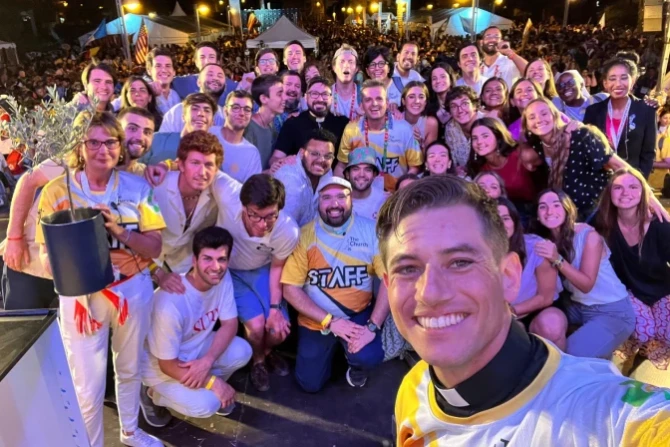
In the context of the Jubilee of Digital Missionaries and Catholic Influencers, which will be held in Rome July 28–29, Mexican priest Father Heriberto García Arias, author of the upcoming Spanish-language book “Digital Missionaries: Influencers or Witnesses of Christ Today?”, offered a reflection on the role of evangelizers on social media and the importance of their presence in the digital environment.
SIGN UP FOR OUR NEWSLETTER HERE
With more than 2 million followers on his TikTok account @heribertogarciaar and more than 200,000 on Instagram, the young priest gave an interview to the Spanish-language broadcast edition of EWTN News, “EWTN Noticias,” from the Eternal City emphasizing that the Catholic Church “is taking very important steps to be present throughout the digital context.”
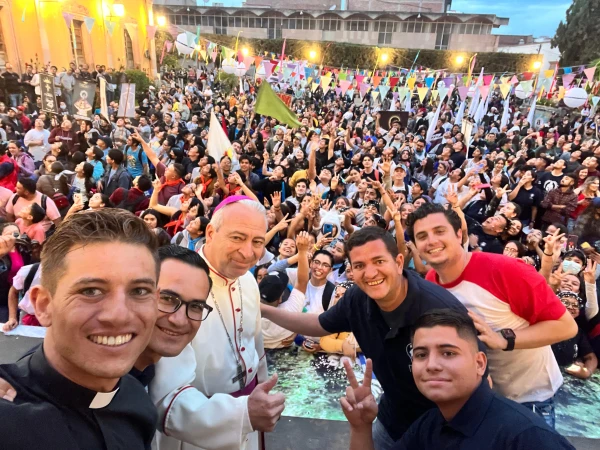
The difference between a Catholic influencer and a digital missionary
Drawing on his experience and the recent publication of his book, García explained the difference between a Catholic influencer and a digital missionary, whose “purpose is different.” Although “both use media,” the influencer can offer and sell products in line with their values, while the digital missionary’s purpose is to bring his or her experience of Christ to social media.
He pointed to the amount of time younger generations spend on social media: “There are people who are searching for God, and so we have to be present there, being witnesses, but not with the goal of stopping there, but rather to move [the viewer] from the screen to the altar.”
“So,” he added, “that’s only the path, not the destination.”
Moving from the screen to the altar
The Mexican priest pointed out that the Church “has always adapted to different cultures” to bring the message of Jesus Christ and affirmed that “now it’s our turn, in this culture where new generations come with a different way of thinking, where the digital world is real for them.”
For the priest, the celebration of the Jubilee of Digital Missionaries and Catholic Influencers — which also coincides with the Jubilee of Youth— represents “official recognition from the Church of all these missionaries.”
“Just three years ago, the term ‘digital missionary’ didn’t even exist,” he noted, adding that today there are more than 3,500 digital missionaries worldwide. Although he acknowledged that this new reality can elicit a certain “fear,” he assured that “the fruits are already being seen.”
According to the priest from Jalisco state in Mexico, being present on social media “is urgent and necessary,” since many young people “watch TikTok” but “aren’t going to cross the threshold of a church.” He therefore emphasized the importance of creating content that sparks their interest and helps them “come over to the Church.”
Regarding the risk of trivializing the message, he pointed out that the Church is experienced in different ways in each culture while emphasizing the need to form and accompany digital missionaries so that they are “united in the same truth.”
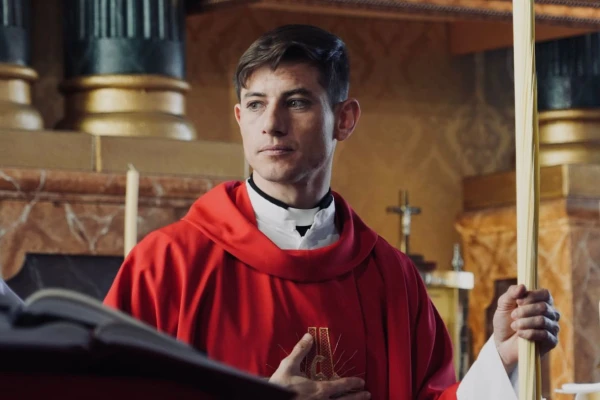
‘I’m not the one who’s speaking, it’s him’
Explaining the origin of his social media presence, García stated that it responds to “a pastoral urgency to address the needs of the young people who are there.”
“We have a very beautiful message, an incomparable philosophy, a transcendental proposal. But sometimes we don’t know how to convey it, we don’t know how to speak their language. I believe we need to convey this message that we have experienced, adapted to the new generations.”
The priest, who received his call to the priesthood when he was 15, confessed that as he began his vocation, he suffered from “stage fright.” However, his formation in the Church’s institutional communications helped him understand that “God has shown me that I’m not the one who’s speaking, it’s him.”
The young priest takes up his work on social media as a great responsibility, and faced with the temptation of becoming “self-referential,” he pointed out: “If you want the message to get across, you also have to deal with that temptation, because in the end, they’re following you, because they empathize with you and they like you.”
“But you do have to be vigilant. It’s not about being the center of attention and talking about Christ; he has to be the center of attention,” he added.
The priest acknowledged that his formation allowed him to understand that he is a “spokesman” for the Church: “You are not the protagonist; it’s about the Church, it’s about Christ, and you have to always keep that in mind, because the great risk is that the Church will not only lose its reputation but also lose its authority in the world. And that is in our hands.”
‘The Holy Spirit is acting through algorithms’
García shared that he has received numerous testimonies from people whose lives were transformed by his messages.
“People who were about to have an abortion and ended up not having it, people who were perhaps a bit at odds with God because they had a child in the hospital and [then] received the message they needed to encourage them to carry on. Or even someone who wanted to commit suicide and a message stopped him and motivated him to persevere.”
“The Holy Spirit is acting through algorithms, reaching hearts that need his word, that need hope,” he emphasized.
Finally, he assured that his work has the support of the Church and his bishop, something that gives him peace and strength to move forward in this increasingly necessary evangelizing mission.
This story was first published by ACI Prensa, CNA’s Spanish-language news partner. It has been translated and adapted by CNA.