The 2025 EWTN Catholic Radio Conference has drawn hundreds of attendees to Washington, D.C., this week to discuss and learn more about Catholic radio as an evangelization tool.
During the conference, attendees have had the opportunity “to network with each other, learn things from each other, and discuss things that have worked, and things that haven’t worked, in Catholic radio,” EWTN Radio General Manager Jack Williams told CNA.
Among the attendees, Williams said about 65 are associated with affiliate stations who carry the network’s radio programming in different parts of the country. He noted that many of them didn’t necessarily start off their careers in radio but are people who “heeded Mother Angelica’s call.”
On a live EWTN broadcast in 1995, hosted by network foundress Mother Angelica, “she put out the call that if anybody had, or could procure, an AM or FM radio station she would give them the programming for free. And that’s essentially what we’ve been doing since 1996,” Williams said. “By the end of that year, she had six people; now we have over 440 affiliates around the country.”
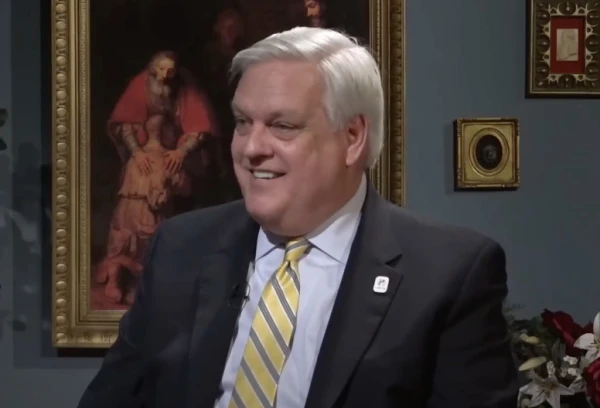
The conference always starts with a retreat day, and this year the group gathered for their retreat at the Basilica of the National Shrine of the Immaculate Conception. The days following the retreat have included workshops and professional development opportunities on various topics.
The topics discussed are tailored to what the attendees want to learn more about based on a sampling of affiliate groups that EWTN calls the “Affiliate Advisory Team.” They “meet on a monthly basis and talk about various issues facing the radio world in general, and Catholic radio in particular,” Williams explained.
“We use feedback from that group to help plan the topics for the workshops and the things that we think will best suit the operators that will help to propel them forward.”
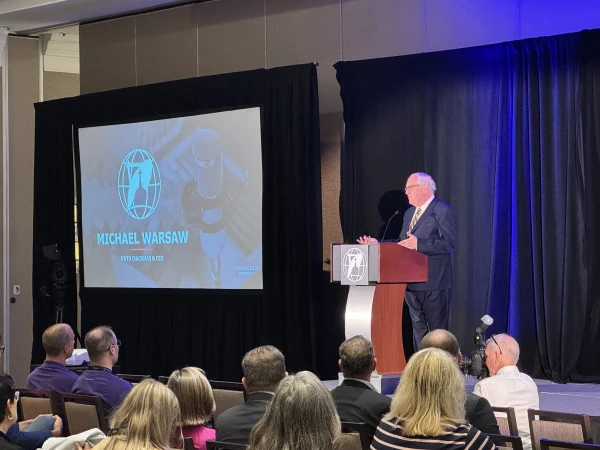
Along with the workshops, the conference welcomed various speakers, including EWTN Chairman of the Board and CEO Michael Warsaw and EWTN News Vice President and Editorial Director Matthew Bunson.
During his Aug. 28 keynote address, Bunson, who hosts the network’s weekly “Register Radio” program, reviewed the relationship various popes have had with radio and how their work can serve as a guide for radio professionals.
The popes have “understood that radio had a role to evangelize, to proclaim Christ Jesus, to lead a profound cultural service, a service to truth, to justice, and to human dignity,” Bunson noted.
The popes’ work in radio dates back to Pope Pius X in 1931 when he began his broadcast that allowed him to speak “directly to the faithful across continents.”
Then in 1957, Pope Pius XII continued to “highlight the importance” of religious radio. Bunson said: “He exhorted bishops to increase and enhance programs, deal with Catholic affairs, and emphasize the need for well-trained priests and laity in the fields, seeing radio as a new means to fulfill Christ’s command to preach the Gospel.”
Pius XII “underscored a fundamental principle” that technology, when ethically used, can be “a powerful ally in the service of faith,” Bunson explained.
“In the Second Vatican Council’s important 1964 document about the means of social communications, the famous document Inter Mirifica, the bishops made sure to include radio in the list of the great forms of expression that have to be put to use by the Church … [to] reach and influence not only individuals but a whole human society.”
Pope Paul VI “expressed even more vividly the power of radio. He wrote: ‘TV and radio, they have given society new patterns of communication. They have changed ways of life … broadcasters have access to the minds and the hearts of everyone.’”
Pope John Paul II “further articulated Catholic radio’s mission, stating that it is entrusted with the task of ‘proclaiming the Christian message with freedom, fidelity, and efficacy.’”
Bunson said Catholic radio and other forms of Catholic social communication “have an obligation to understand the real media landscape.” It “requires continuous adaptation, updating, solid human, cultural, professional, and spiritual formation to the community.”
By reflecting on the popes, those working in Catholic radio can learn “to have clarity in self-identity, to be as professional as possible, [and] to follow the call of the Second Vatican Council to utilize all the means of social communications that are before us.”
Bunson added: “Authentic Catholic radio … must be built on from the ground up with a strong Catholic identity.”
SIGN UP FOR OUR NEWSLETTER HERE
This article was originally published on Catholic News Agency.