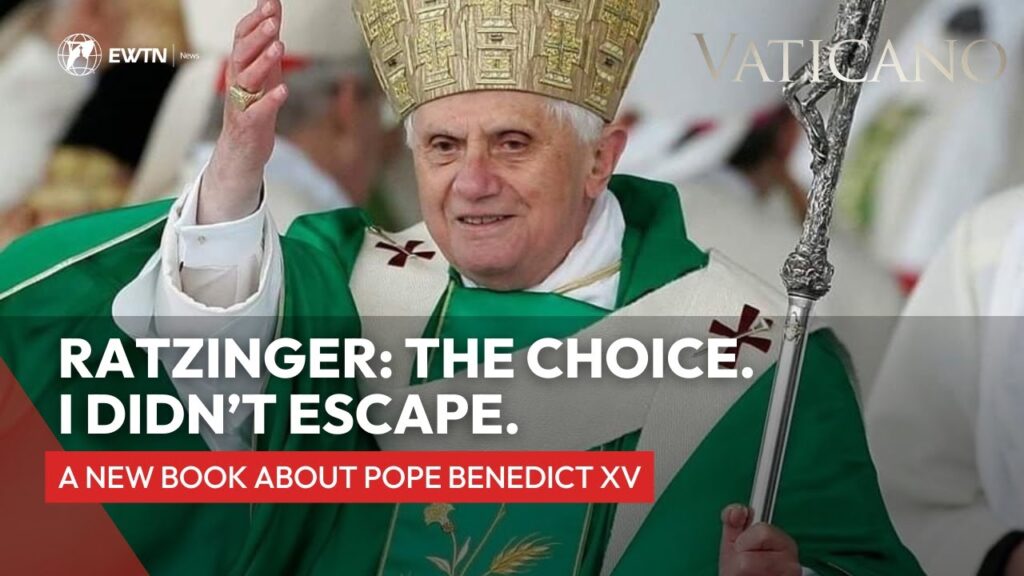
For nearly two decades, Archbishop Georg Gänswein stood at the very center of Vatican life. As the private secretary of Pope Benedict XVI, he was not only a close collaborator but also the gatekeeper of the papacy—managing schedules, access, and encounters with the Successor of Peter. He was among the very few who knew of Pope Benedict’s intention to resign in 2012, months before the historic announcement in February 2013 that would shake the Church.
After the resignation, Gänswein accompanied Benedict XVI into retirement, continuing to serve the Pope Emeritus while also fulfilling one of the Vatican’s most sensitive roles as Prefect of the Papal Household under Pope Francis. He remained at Benedict’s side until the very end, administering the last rites and offering a final farewell after nearly ten years of shared life in retirement.
In 2024, Pope Francis appointed him Apostolic Nuncio to Lithuania, Latvia, and Estonia. Today, under a third pontificate—that of Pope Leo XIV—Archbishop Gänswein continues his service to the Church. EWTN Vatican correspondent Rudolf Gehrig traveled to Vilnius to speak with him at the Holy See’s diplomatic post on Europe’s northeastern edge.
Reflections on a New Pontificate
Looking back on his time as nuncio and the first months of Pope Leo XIV’s pontificate, Archbishop Gänswein offered a measured but hopeful assessment. Responding to Gehrig’s question about his impressions so far, he said:
“Above all, there has been a change for the better in the atmosphere, which I believe is important because the difficulties that existed have really taken on a whole new positive dimension with the change of pontificate. I consider that helpful. And for me personally, it is also a sign that faith and the Holy Spirit are indeed at work and remain active.”
Asked where he draws the line when it comes to reform within the Church, the Archbishop was clear about the limits he sees as essential:
“Well, anyone who no longer represents the Catholic line on questions of morality, ethics, the sacramental structure of the Church, or the official authority of bishops – that’s where the firewall is, that’s where the line really is.”
Synodality, Reform, and Hope for the Future
The topic of synodality—so prominent in recent years—also arose during the conversation. When Gehrig noted that synodality remains an important subject for the Church, Archbishop Gänswein reflected critically on the lack of clarity surrounding the term:
“Two weeks ago, Pope Leo invited all the cardinals to a consistory, a meeting in Rome. A number of cardinals first requested clarification of what ‘synodality’ actually means. Unfortunately, there is still no clarification regarding the term ‘synodality.’ And as long as I don’t have a clear definition, as long as I don’t know exactly what it means, it is also difficult to talk about the desire to remain in dialogue within the Church or to even start the dialogue.”
He added a note of caution, observing that the term can sometimes be used to mask other agendas:
“If ‘synodality’ is just that, then it’s okay. But my impression is that a lot of hidden demands are being concealed under the cloak of the word ‘synodality’ and that certain goals are being pursued that have nothing to do with synodality at all.”
Despite challenges and uncertainties, Archbishop Gänswein spoke with confidence about the sources of his hope. When asked directly what gives him hope today, he answered:
“There are young people who have truly found meaning in their lives through faith. They live their faith as it should be lived, namely with a joyful heart. Faith is not a burden that adds to the burdens that life imposes on us, but rather a help to cope better. And we know why we are here in this world and where we are going.”
Adapted by Jacob Stein