Curial reform, synodality, and liturgy are on the agenda in the first such gathering of Pope Leo XIV’s pontificate
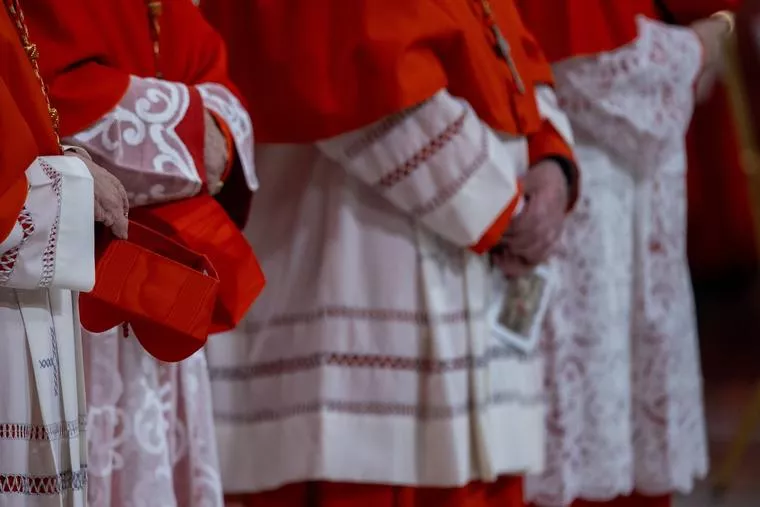
Important issues are on the agenda for Pope Leo XIV’s first extraordinary consistory of his pontificate which takes place on Wednesday and Thursday this week.
But the time allotted to discuss them will be short and it is not clear how much will be achieved during the meeting that will last just one and a half days and be structured around working groups.
The closed-door meeting will focus on four interconnected themes: the role of the College of Cardinals in Leo XIV’s governance, the future of synodality, the reform of the Curia, and broad questions about the liturgy.
It is not clear how many members of the sacred college will be present but Cardinal Joseph Zen will be among those attending, having obtained permission from Hong Kong authorities. Pope Leo XIV received the cardinal in private audience this morning.
The Vatican has presented the gathering as a strictly consultative, closed-door meeting, focused on prayer, reflection, and open exchange to support the Pope in his “high and demanding responsibility” in governing the universal Church.
The consistory has also been framed as a moment of “common discernment” and fraternity between the Bishop of Rome and the cardinals, explicitly to help shape the early phase of Leo XIV’s pontificate and its priorities after the Jubilee of Hope which concluded on the Feast of the Epiphany.
On the first issue, the internal role of the College of Cardinals in the governance of the Church, discussion will revolve around how often and in what manner the cardinals will be gathered and consulted, something explicitly highlighted in pre‑conclave discussions in 2025.
The cardinals, whose principal role is to advise the Pope as well as elect him, had become concerned at the lack of consultation during the pontificate of Pope Francis who almost exclusively called on his so-called “kitchen cabinet” known as the C9 Council of Cardinals, but consulted few other red hats.
In a Jan. 6 interview in The Daily Telegraph, Cardinal Timothy Radcliffe said that regarding such extraordinary consistories, “many cardinals think that there should be at least one a year.” He also expressed hope that this week’s meeting would bring those estranged by the late Pope’s approach back into the fold. It is vital, he told the newspaper, that the cardinals are happy: “A Church which is miserable,” he contended, “can’t preach the Gospel.”
Despite concerns over its structure, the extraordinary consistory therefore promises greater consultation and a more collegial, “new style of governance.” It may also serve to clarify the kind of counsel Leo XIV is expecting from his cardinals.
As part of this reflection on the Church’s self-understanding, the cardinals have also been asked to reread Evangelii Gaudium, Pope Francis’ 2013 apostolic exhortation, with one of the stated discussion points being a “renewed and joyful impetus in proclaiming the Gospel.”
A second key topic will be synodality and how it can function as an effective instrument of cooperation with the Roman Pontiff. The cardinals will examine how to continue, modify, or “re‑balance” the synodal processes emphasized under Francis, especially in relation to episcopal conferences and the central offices of the Holy See.
A third core theme will be Praedicate Evangelium, Francis’ 2022 apostolic constitution that reformed the Roman Curia. The cardinals are to pay particular attention to the relationship between the universal and particular churches and to the practical functioning of Curial dicasteries under the new pope.
The meeting is thus expected to explore whether adjustments, clarifications, or further implementation norms are needed, as Leo XIV moves from “inheriting” the Francis-era structures to actively shaping them in light of his own vision of governance.
Lastly, reports have suggested that the broad question of the liturgy will be a distinct fourth theme, with some Italian outlets speaking explicitly of a search for “liturgical peace,” especially after the tumult that followed Pope Francis’ 2021 motu proprio Traditionis Custodes that severely restricted the traditional Roman rite.
The Pope reportedly wants a theological, historical, and pastoral discussion of the liturgy (with Sacrosanctum Concilium as a key reference), in order to move beyond polarisation over the post‑conciliar reform and the older liturgical rite, and to articulate a more unified path forward. The cardinals are therefore to discuss the liturgy through an “‘in-depth theological, historical, and pastoral reflection ‘in order to retain sound tradition and yet remain open to legitimate progress.’”
Official Schedule
The full official schedule of the extraordinary consistory, published on Jan. 6 by The College of Cardinals Report, will be structured along the lines of a recent synod — that is, with cardinals divided into working groups which will then submit reports.
Such a structure departs from traditional consistory formats, and is reminiscent of the last extraordinary consistory held in late summer 2022. That synodal structure is intended to guide discussions on key themes, although some cardinals criticized the format in 2022 saying it did not allow sufficient opportunity for open, collective debate.
The same possibility exists for this meeting, with only two 45-minute segments planned for open interventions where cardinals can engage in free discussion in front of the whole college.
The consistory opens with members of the College of Cardinals registering in the atrium of the Paul VI Hall at 12.30pm on Wednesday, followed by a greeting from the Dean of the College of Cardinals, Cardinal Giovanni Battista Re. The Holy Father will give his introductory address, after which will be a presentation of how the group work will take place.
The first session will last nearly three hours and consist of working groups, reports from those groups, and concluding with an address by Pope Leo XIV at 7pm.
After 7.30 a.m. Mass the next day at the Altar of the Chair in St. Peter’s Basilica, group work will begin again at 9.45 following communal prayer and an introduction. A break at 11 will be followed by reports from the groups and then the first 45-minute open discussion will take place after the Angelus at noon.
After lunch with Leo in the atrium of the Paul VI Hall, the third and final session will get underway. Group work will begin after prayers at 3.30pm and last until 5pm, followed by a report from the groups. The last open discussion will take place from 6pm-6.45pm. The extraordinary consistory will conclude with an address by the Holy Father and the Te Deum. The Vatican have organized a press briefing at the end of the consistory on Thursday.
This article has been updated to include details of Cardinal Zen’s attendance.
This article was originally published by NCRegister.