The liturgical season of Lent begins on Ash Wednesday, which is March 5 this year. The Latin name for Lent is “Quadragesima,” which stands for “fortieth,” named for the forty days which comprise the time of penance leading up to Easter Sunday.
Lent is the season that prepares us with prayer, fasting, and almsgiving for the joy of the Easter season commemorating the Resurrection of Christ. In the history of the Catholic Church, there was even a preparatory liturgical time known as Septuagesima prepared Catholics for the intense season of Lent.
What is Septuagesima?
Septuagesimatide, or pre-Lent, is the three Sundays before Ash Wednesday. It starts with Septuagesima Sunday (about 70 days before Easter), followed by Sexagesima (about 60 days before Easter) and Quinquagesima (about 50 days before Easter).
Septuagesima helps ease the shift from the joy of Christmas to the seriousness of Lent. It takes on a more somber tone without being as strict as the Lenten fast, yet already taking some of the Lenten liturgical practices, like omitting the Alleluia and wearing Violet vestments.
Scriptural Themes of Septuagesima
Each Sunday during Septuagesimatide focuses on a different figure from the Old Testament to help prepare the faithful for the unfolding of the Paschal mystery that is remembered in the liturgies of the Holy Triduum: of Holy Thursday, of Good Friday, and of Holy Saturday leading up to Easter.
On Septuagesima Sunday, we remember Adam; on Sexagesima Sunday, Noah; and on Quinquagesima Sunday, Abraham. This pattern continues into Lent: the Second Sunday remembers Jacob, the Third Sunday Joseph, and the Fourth Sunday Moses. The goal of this progression is to help us understand the full importance and reasons for the Cross, which can be a stumbling block in the world’s understanding.
On Septuagesima, the readings about Adam teach us about original sin. On Sexagesima, the story of the Flood shows us how wicked people can be. On Quinquagesima, the sacrifices of Abraham and Melchizedek point to Christ’s sacrifice on the Cross.
Historical Origins of Septuagesima
The Sundays of Septuagesima and the prayers we pray during the liturgies of the liturgical season of Septuagesima were influenced by a series of disasters that struck the city of Rome in the sixth century.
For example, Psalm 18 is prayed at the start of the Septuagesima Sunday Mass:
“The terrors of death surged round me, the cords of the nether world enmeshed me. In my distress I called upon the Lord; from His holy temple He heard my voice.”
These themes of suffering and desolation reflect these difficult times in Roman history. By 541 A.D., Septuagesima had become a well-established part of the Roman liturgical calendar.
What can Septuagesima teach us?
Septuagesima offers valuable lessons: that Lent should be approached gradually, not abruptly; that sacred words, like “Alleluia,” are a privilege; that sin exiles us from our True Home; and that the Old Testament remains relevant to Christians. The practice of suppressing the Alleluia for seventy days before Easter makes its return on Easter Sunday even more joyful.
Further, Sexagesima Sunday urges joy amid suffering and Quinquagesima Sunday leans into the teaching of Saint Paul’s first Letter to the Corinthians which emphasizes that acts of mortification and almsgiving are meaningless without love (1 Cor. 13:3). In all, Septuagesimatide offers a perfect preparation for the purgative season of Lent.
Remnants of Septuagesima
The remnant of the spirit of Septuagesima that remains and which is known more widely is “Carnival,” leading up to what is also commonly known as “Mardi Gras.” Carnival comes from the Latin for “removal” (levare) of “meat” (caro/carnis). Without refrigeration, meat and dairy products would slowly be removed from the diet of Catholics leading up to Lent. The festivities now associated with Carnival are bidding farewell to the normal course of life before the forty-day fast of Lent begins on Ash Wednesday.
A Roman Tradition
The daily Lenten tradition of the Roman Station Church pilgrim itinerary, processing from one church to another each day of Lent, is also eased into during the days of Septuagesima. For each Sunday of Septuagesimatide, the local Church of Rome assigned a Station Church, where in earlier generations, the Pope, clergy, and faithful of Rome would gather in a special manner, preparing themselves for the daily Lenten pilgrimage they would make to the tombs of the early Christian martyrs across the Eternal City.
Explore these three Station Churches with Crux Stationalis:
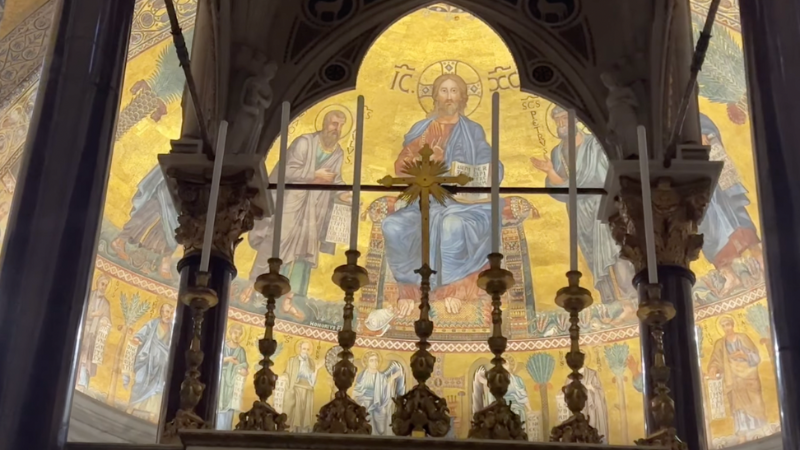
The Roman Station Church for Septuagesima Sunday is the Papal Minor Basilica of Saint Lawrence Outside the Walls. For Sexagesima Sunday, the pilgrimage travels to St. Paul’s Outside the Walls. Then, on the Sunday before Ash Wednesday, Quinquagesima Sunday, the Station Church is St. Peter’s Basilica.
This article was originally published on ChurchPOP and adapted for EWTN Vatican.