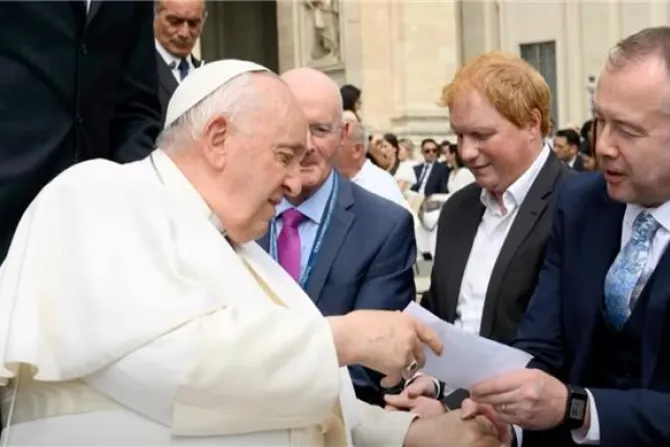
On Saturday, July 1st Pope Francis appointed the new Prefect of the Dicastery for the Doctrine of the Faith Archbishop Víctor Manuel Fernández from La Plata, Argentina. Formerly the President of the Episcopal Commission for Faith and Culture in Argentina, Archbishop Fernández will officially assume the position of Prefect of the Dicastery in mid-September.
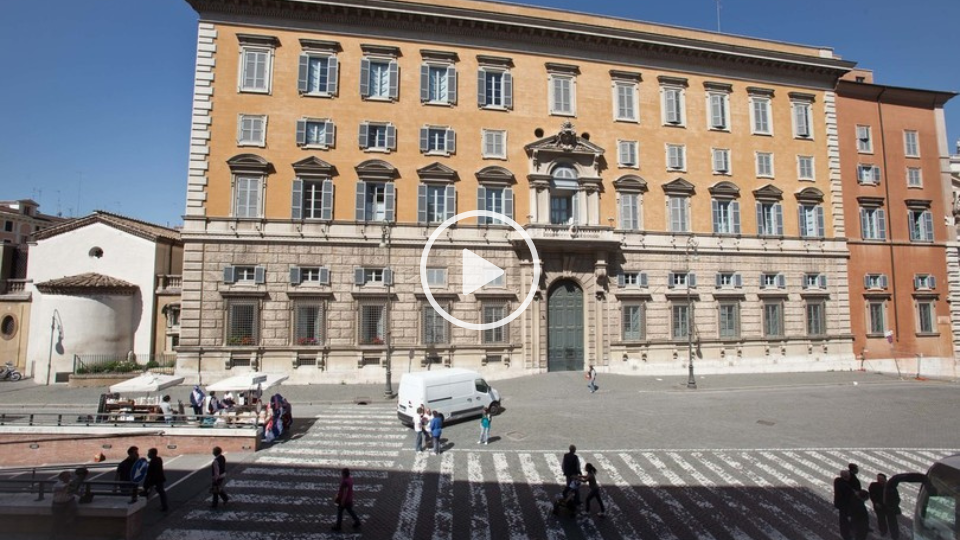
The Dicastery for the Doctrine of the Faith, established by Pope Paul III in 1542, serves a crucial mission of overseeing matters of faith and preventing the spread of false doctrines within the Catholic Church. It was originally named the “Holy Roman and Universal Inquisition.”
To gain further insights into the historical context and significance of this appointment, we spoke with Matthew Bunson, EWTN News Vice President and Editorial Director.
Bunson: “So when we talk about the Inquisition, we have the Roman Inquisition, of course, was established by Pope Paul III, but we also have several other inquisitions that took place, and this has led to a great deal of misinformation and misunderstanding and actually direct misrepresentation of what the work of the Inquisition actually was. We had the medieval Inquisition that was established to help root out heresy, in particular the Albigensian Heresy and the Cathars. That was succeeded in some ways by the Roman Inquisition in the 16th century, and then we have the somewhat unique institution of the Spanish Inquisition that was established under the Spanish monarchy after what’s called the Reconquista or the the reconquering of Spain from the Moors. The Spanish Inquisition, contrary to what it has often been said historically, was not under the control of the Papacy, but really was an institution of the Spanish Crown.”
Only after the reform of the Curia by Pope Sixtus V in 1588 did the activity of the Inquisition, also known as the Holy Office, extend to everything that could concern faith and morality.
Bunson: “All of the institutions, but especially the Spanish Inquisition, have been subject to what’s known as the black legend. This is a series of propaganda ideas perpetrated in particular by the Protestants, but also even in modern times, by those who dislike the church, that somehow the Inquisition was responsible for the trials, torture, death, and executions of hundreds of thousands – if not millions – of people. What we know is that historically, the numbers were significantly lower than that. It’s a matter of historical record, because the Spanish Inquisition was very good at very detailed records. Now, should that have been an activity on the part of the church? Absolutely not.”
Regarding the Dicastery’s historical evolution, it underwent various name changes and reforms to adapt to the changing times and needs of the Church. For example, Pope Saint Pius X reorganized it as the “Sacred Congregation of the Holy Office” in 1908, and Pope Saint Paul VI renamed it as the “Sacred Congregation for the Doctrine of the Faith” in 1965, modernizing its examination of doctrines. Later, Pope Saint John Paul II reformed the Roman Curia, giving it a new structure and competencies, and finally, Pope Francis, through the Apostolic Constitution Praedicate Evangelium in 2022, modified its denomination to the Dicastery for the Doctrine of the Faith.
Bunson: “Cardinal Joseph Ratzinger at the time of his arrival in 1981, as head of the congregation – then Congregation of the Doctrine of the Faith – was a very important moment, not just in the pontificate of John Paul II, but also in the life of the modern church. Ratzinger understood two things that were very, very important. The first was that in his role as prefect, he was overseeing a congregation that had as its function a positive and a negative side. On the positive side, it was to help articulate to advance the teachings and understanding of the faith. The negative side it was also to safeguard the teachings of the faith. But the other lasting legacy of Joseph Ratzinger, as prefect for the Congregation for the Doctrine of the Faith, was how he pushed consistently, and for years, to guide the Church’s response to the clergy sexual abuse crisis. It was largely through his influence that the cases were essentially brought under the umbrella of the Congregation for the Doctrine of the Faith, and so much of the progress that followed in those years, in the late time of Saint John Paul II pontificate and then into his own pontificate, we can trace directly to the work of Joseph Ratzinger as the prefect for the Congregation for the Doctrine of the Faith.”