A secretive deal, a historic compromise. February 11, 1929, marked a key moment in the modern history of the Church. On that day, with the signing of the Lateran Treaty—an agreement between the Holy See and Italy—the Vatican City State was officially established.
A Historic Agreement That Changed the Church’s Modern History
To understand why this mattered, it is necessary to look further back. As Fr. Juan Ignacio Arrieta Ochoa de Chinchetru, Secretary of the Vatican Dicastery of Legislative Texts, explains, the popes once governed far more than a few hectares inside Rome.
“From very early on in the first centuries, there existed a territory—almost a strip across the middle of Italy, from one side to the other, from one part of the Mediterranean to the other which were called the Papal States. This lasted until, with the unification of Italy, the Papal States were lost and Rome was lost in 1870, and then in 1929 an agreement was reached to restore to the Pope a small measure of temporal sovereignty, by creating a small state.”
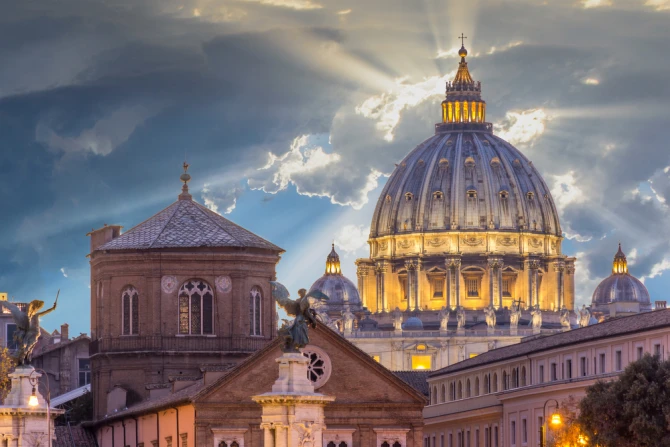
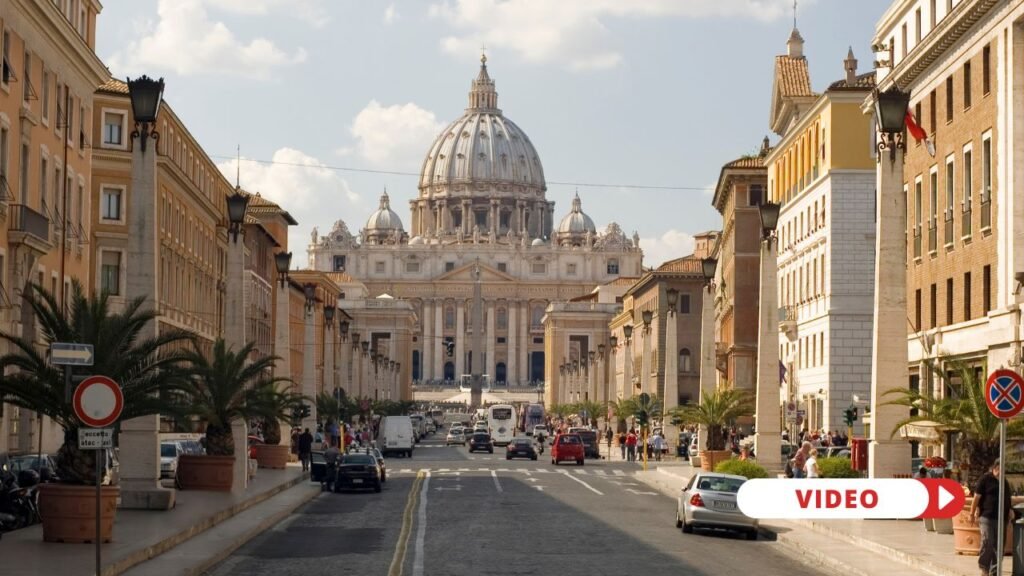
The result was the smallest sovereign state in the world—situated in the heart of Rome, surrounded by a 9-meter-high boundary wall, with a territory of just 44 hectares or 109 acres.
A Territory That Guarantees the Pope’s Independence
While Vatican City is tiny, its purpose is not primarily geographic. Its territory exists to safeguard the Pope’s freedom to govern the Church without dependence on any other political power.
As Fr. Roberto Regoli, professor at the Pontifical Gregorian University, notes, “Today, that territory serves to guarantee the Pope’s independence. The Pope can look out from the window of his study in the Apostolic Palace and speak freely, without being subject to the laws of any other state. It is a guarantee of freedom and independence.”
Vatican City State is deeply intertwined with another entity – the Holy See. This spiritual and diplomatic authority governs the Church worldwide, while Vatican City State provides the sovereign territorial base.
It is tiny in size but powerful in symbolic, cultural, and political influence. It is a unique elective absolute monarchy, with its own flag, anthem, and Latin as its official language. It is governed by the pope, who holds total legislative, executive, and judicial power.
Citizenship, Courts, and a Global Diplomatic Network
One of Vatican City’s most distinctive features is Vatican citizenship, which is not acquired by birth. It is granted exclusively to those who serve the Holy See, such as cardinals, diplomats, and members of the Vatican security services. Fewer than 400 people live within the Vatican walls, and only a handful of them hold a Vatican passport.
As Fr. Regoli explains, “People who hold that passport have it only because of the role they perform, so their citizenship is temporary. There are no lifelong citizens; it is functional—both the territory and the citizenship exist to serve the objectives of the papacy.”
Despite its microscopic territory, Vatican City possesses all the essential elements of a state, including its own legal system and courts of law. Fr. Arrieta points out that the courts are not symbolic—they operate in real cases.
“There have been people who have been tried—those courts do function—and there have been people judged, for example, for traffic-related offenses, or for leaking information—that is, for violating secrecy, breaching confidentiality of reserved information. In those cases, the court might say: “You get five years, or two years, in prison. In the Vatican there is a prison; there is one nearby, in a building where the gendarmerie is located.”
Within its borders, Vatican City has a post office, a railway station, a radio broadcasting, a printing press, and a pharmacy. It issues its own stamps and has its own currency, tied to the euro, which requires compliance not only with Italy, but also with European Union regulations.
Rome has been the capital of the Papal States for centuries and there are still plenty of churches, basilicas, universities and diplomatic representations, so called extraterritorial entities, that belong to the Vatican even though they are on Italian soil.
As Fr. Arrieta explains, “So Italy very generously allowed some places and buildings in Rome to remain the property of the Holy See and extraterritorial. They are like embassies—for example, the Basilica of Santa Maria Maggiore, the Lateran, the Chancery, the San Callisto area, a building next to Santa Maria in Trastevere, in the Trastevere neighborhood.”
A significant sign of the Holy See’s presence in the world are the 184 Apostolic Nunciatures, which function like embassies in the secular sense. Each is headed by a nuncio, the Pope’s highest permanent representative abroad.
Archbishop Georg Gänswein, Apostolic Nuncio to the Baltic countries, describes the role as both political and ecclesial.
“On the one hand, like all ambassadors, he is someone who seeks to help shape and maintain contact with the government—with government members, institutions, politics, and culture. On the other hand, which is just as important, he is also the counterpart—the point of contact—for the bishops in the country.”
Nearly a century after their signing, the Lateran Pacts remain the legal foundation for the Vatican’s existence. Signed on February 11th, 97 years ago, they secured the Pope’s and the Church’s autonomy and its role in the world, providing a foundation for the Vatican’s cultural, diplomatic, and religious influence today and in the future.
Adapted by Jacob Stein. Produced by Alexey Gotovskiy; Camera by Alberto Basile; Video edited by Andrea Manna.