The Vatican, the smallest state in the world, possesses a unique and complex legal, administrative, and spiritual structure designed to guarantee the independence of the pope and allow the Church to act freely throughout the world.
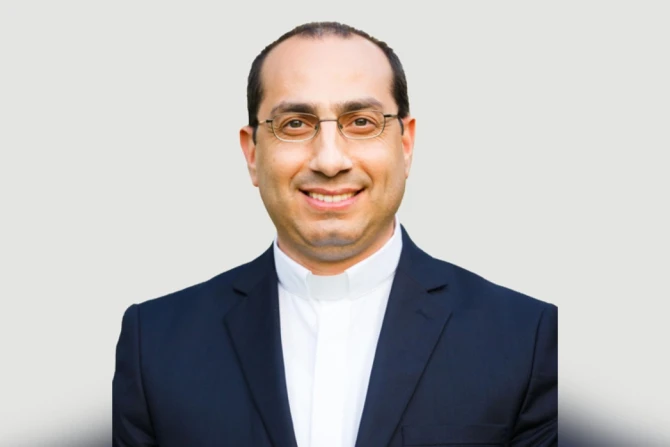
Bishop Juan Ignacio Arrieta, secretary of the Dicastery for Legislative Texts, in an interview with the Spanish-language edition of EWTN News, detailed how this tiny nation is governed, how its institutions operate, and what role the Holy See plays in the world.
A unique governance structure
Arrieta explained that the Dicastery for Legislative Texts — where he has served for 18 years — is one of the departments that collaborates directly with the pope in the governance of the Church.
“The dicasteries are the ministries of the Holy See; they are like the departments that serve the pope … and this one is dedicated to the preparation of laws, to the oversight of the laws of the entire Church,” he said.
Unlike traditional states, these norms govern worldwide. “They apply to all five continents. They are not like the laws of Spain, Argentina, or Mexico. These are laws that must be created for the entire Church, with its different cultures,” he noted.
This legislation covers everything from the administration of parishes to issues such as canon law offenses and declarations of a marriage annulment: “The Church functions like a society… and that society has its specific laws.”
The reason for the existence of the Vatican City State
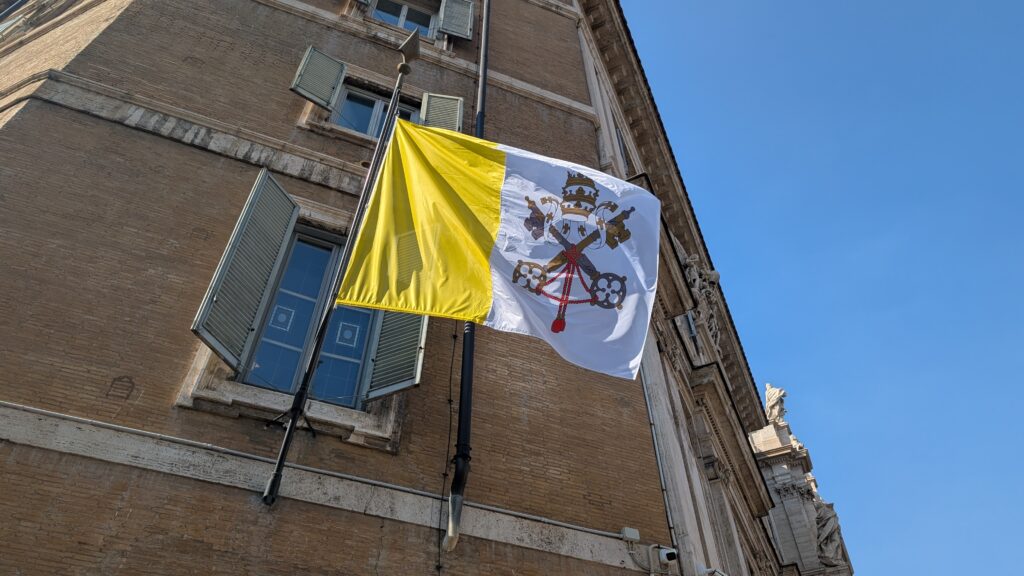
Although many confuse the Holy See with Vatican City State, Arrieta clarified that they are distinct entities. The Holy See is the spiritual and governing authority of the universal Church; the Vatican City State, on the other hand, exists to protect its independence. “It is a tiny state — only half a square kilometer (.19 sq. mi.) — that was created to protect the pope’s independence from all temporal power,” he explained.
That territory was created after the Lateran Treaties of 1929, by which the Kingdom of Italy recognized the independence, sovereignty, and borders of what would become Vatican City. Arrieta noted that Italy “also ceded to the Holy See certain places, buildings, and palaces in Rome that are the property of the Holy See and are extraterritorial,” such as the St. Mary Major Basilica and the Archbasilica of St. John Lateran.
A surprising fact: “The only actual citizen is the pope,” he explained, while the rest have temporary residence or work permits.
What happens when someone commits a crime?
Even though it is small, the Vatican functions like any other state, with courts and prisons. Arrieta gave a common example: “What happens if someone goes to the supermarket inside the Vatican, takes a bottle of cognac, puts it in his pocket, and walks out?… It’s a civil crime in the Vatican… the gendarmes catch the person and take him to court.”
Criminal proceedings can take place in Vatican territory or in the country of origin, according to international agreements. The secretary of the dicastery noted that even with the assassination attempt on St. John Paul II, which occurred in Vatican territory, “the Vatican asked Italy to prosecute [the accused].”
A state with a bank, radio station, train, and supermarket
Daily life within the Vatican has peculiarities that surprise visitors.
Regarding the network of services, Arrieta explained about the Vatican Bank: “It’s not properly speaking a bank … it helps the Holy See to be able to move money and assist the missions.”
On Vatican Radio, he said: “It broadcasts in very many languages … even on shortwave to reach very distant places.”
The pope receives thousands of letters that are processed through the Vatican’s postal service. “If you send a letter to the pope, it’s possible that someone will read it … and respond kindly on the pope’s behalf.”
There is a supermarket and a shopping center in the Vatican that are mainly open for employees and residents.
There is also the famous Vatican train and train station that was initially built to receive foreign dignitaries. Today, part of its facilities function as a shop and in the summer, a tourist train runs from Vatican Station to Castel Gandolfo.
The Swiss Guard and the defense of the pope
The origin of the corps that protects the Holy Father dates back to the year 1506. They famously defended the papacy during the Sack of Rome in 1527, when “over a hundred [Swiss soldiers] died defending the pontiff. Since then, the Swiss Guard has maintained this tradition of loyalty.
The universality of the Church
Arrieta said that the most striking thing about the Vatican is not its power or history, but its transcendent spiritual life: “The most impressive thing here is how one experiences the universality of the Church. How one appreciates that in people of very different origins, of very different cultural backgrounds, we live the same faith and believe in the same things.”
This constant contact with a diverse group of people in the Vatican “is experiencing the universality of the Church. We are all trying to love Jesus, the Lord, more, and to live the same things and to spread the same faith,” he added.
This story was first published by ACI Prensa, CNA’s Spanish-language news partner. It has been translated and adapted by CNA.
Diego López Marina contributed to this report.