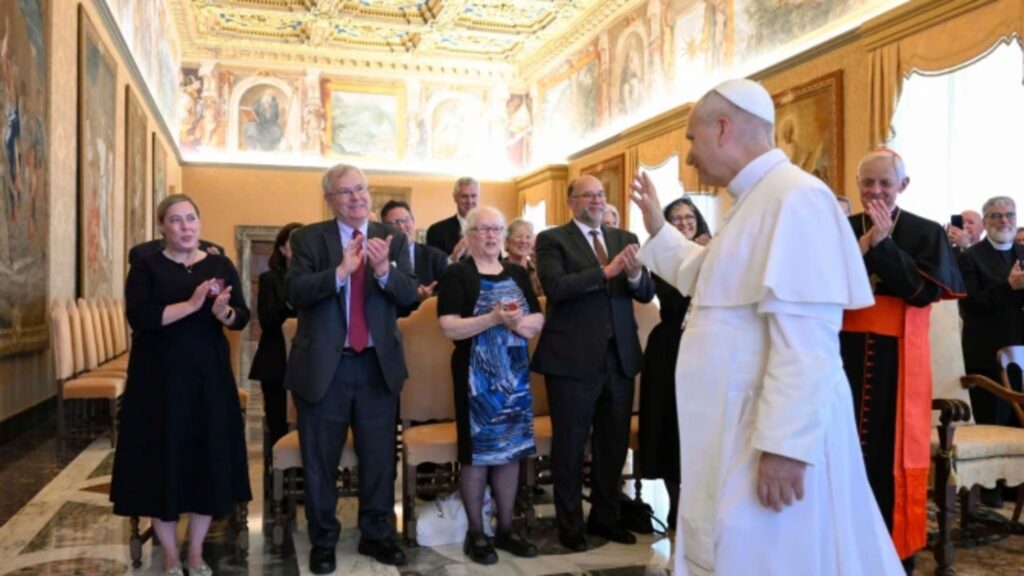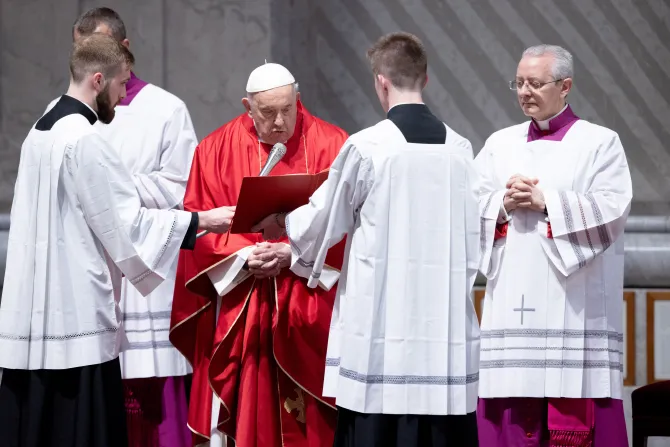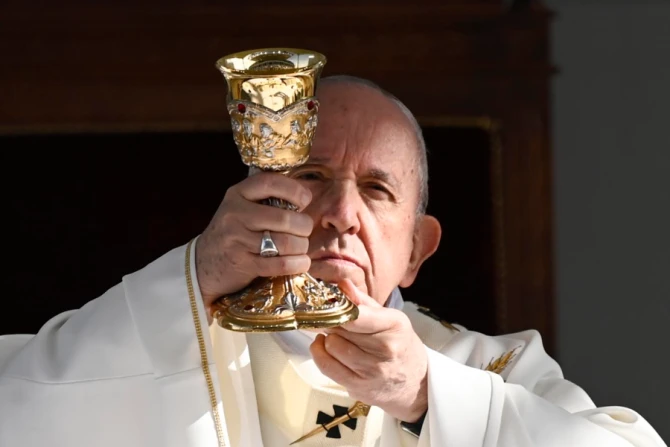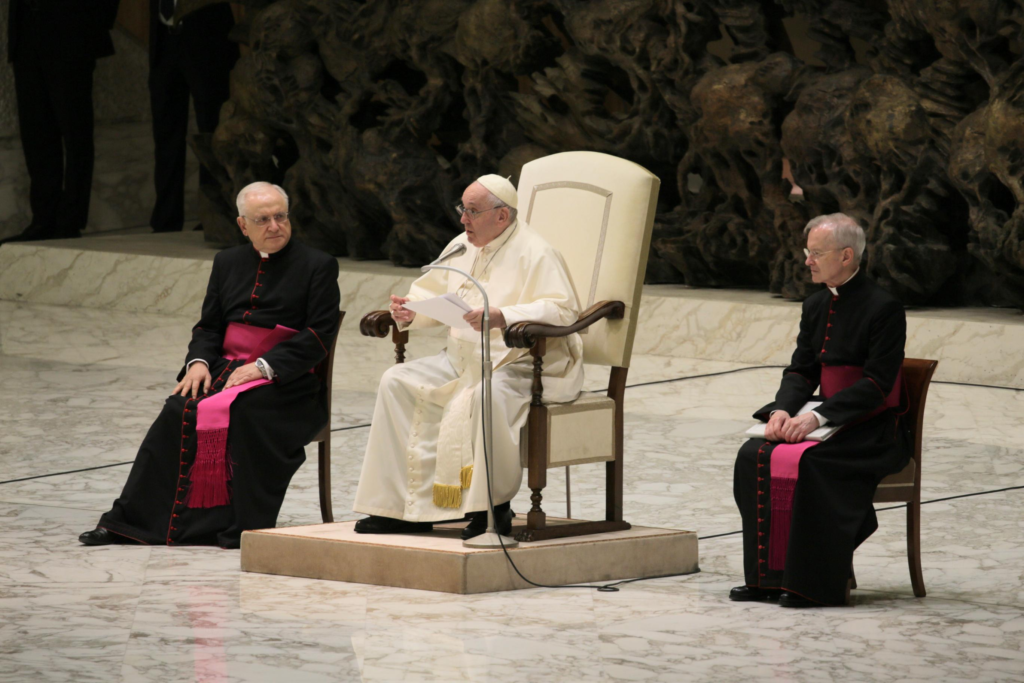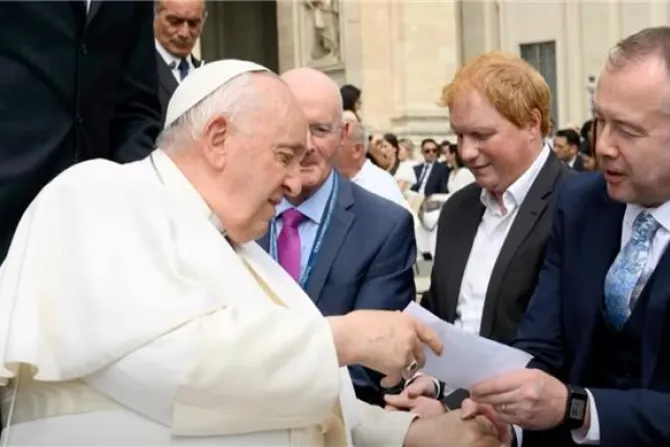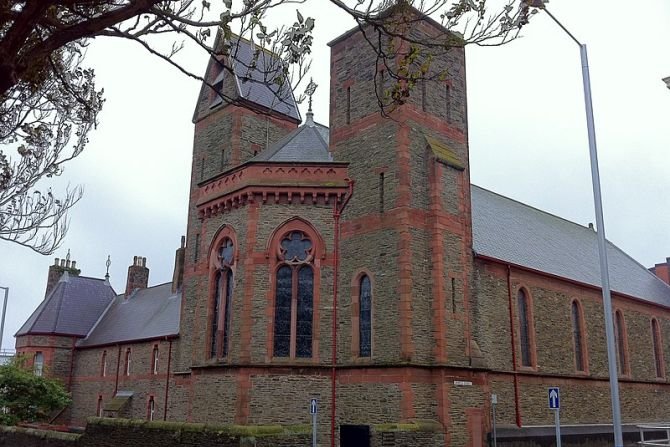
Pope Francis and other Christian leaders called for prayer and a rededication to the peace secured in Northern Ireland by the Good Friday Agreement of 1998, acknowledging that “open wounds” from the conflict still exist.
“Today marks the 25th anniversary of the so-called ‘Good Friday Agreement’ or ‘Belfast Agreement,’ which ended the decades-long violence that had plagued Northern Ireland,” the pontiff said after the Regina Caeli prayers in Rome on Monday. “With an appreciative spirit, I pray to the God of peace that what was achieved in that historic transition may be consolidated for the benefit of all the men and women of the island of Ireland.”
Catholic Archbishop of Armagh and Primate of All Ireland Eamon Martin welcomed the pope’s prayers, saying the pontiff has shown “great interest” in the peace process.
“As we mark the 25th anniversary of the Belfast/Good Friday Agreement today, Pope Francis would want us to redouble our efforts at finding solutions to our ongoing problems and to work earnestly at restoring relationships here in order to bring deeper healing and reconciliation on this island, and between these islands,” the archbishop said Monday.
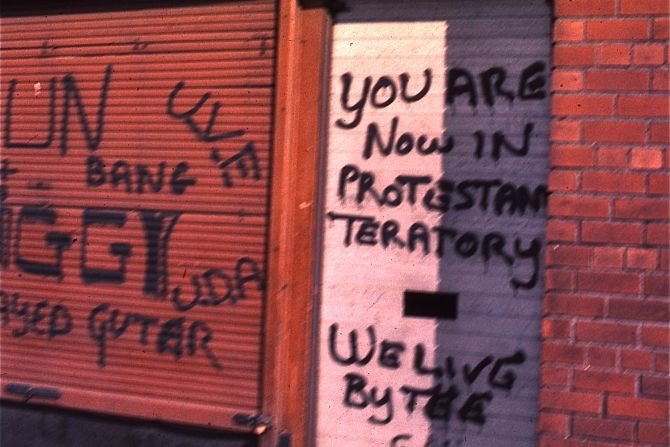
The Good Friday Agreement helped end the period known as The Troubles that saw sectarian violence between Protestant unionists who wanted Northern Ireland to remain part of the United Kingdom, and Catholic nationalists who wanted it to become part of the republic of Ireland.
More than 3,000 people were killed and tens of thousands of people were injured from the late 1960s through the Good Friday Agreement of 1998. The violence between Protestant and Catholic paramilitaries began when Catholics, who suffered from legal and social exclusion in predominantly Protestant Northern Ireland, held civil rights demonstrations that came under attack from security forces. These were followed by riots, violent attacks, bombings, and other acts of retaliation. The Royal Ulster Constabulary police force and the British military were also involved in the violence.
There are continuing questions about the individuals and groups responsible for hundreds of killings on all sides of the conflict and whether they should face legal consequences. There are enduring fears that younger generations could return to violence if tensions increase. Northern Ireland’s power-sharing conditions established by the agreement have also faced new political challenges as unionist political power wanes and nationalist power grows in the North’s six counties.
Archbishop Martin and Church of Ireland Archbishop of Armagh John McDowell issued a joint Holy Week and Easter message dated April 2 that included remarks on the Good Friday Agreement.
Christian reflection, the Catholic and Protestant archbishops said, has led to the belief “that the death and resurrection of Jesus was somehow an atonement that brought about a reconciliation.”
The Holy Week commemorations are “all the more significant and poignant” because of the 25th anniversary of the Good Friday Agreement, they said. There is a “special resonance” about the agreement because it was reached on a day so holy to Christians.
The church leaders urged Ireland’s Christians to continue to seek truth and reconciliation and to make the sacrifices needed for peace.
“Have we, in the Christian community in Ireland, allowed ourselves to forget the greatness of this achievement, the sacrifices and risk–taking that made it happen, the light it shone into the darkest of days and the promise and hope it offered?” Martin and McDowell asked. “Have we been open to establishing the full truth of our past, so as to enable justice and facilitate forgiveness and healing?”
“Might it be time for those of us who call ourselves His disciples, signed at baptism with the sign of his Cross, and who recognize, however dimly, the cost of our reconciliation, be prepared to make our own sacrifices and atonement for our carelessness with the precious opportunity for lasting peace that has been given to us?” the archbishops asked.
In a standalone Easter message, Archbishop Martin noted that many young people were not even born in 1998.
“They have no recollection of the terrible violence which brought so much destruction, bloodshed, grief and trauma within our communities. And thank God for that,” Martin said. He voiced his gratitude for all parties to the agreement who “took such risks for peace” and made political compromises “to secure a better future for us all.”
While the archbishop said he was grateful for the general end of hostilities and the separation of violence from politics, he voiced sadness at continued divisions among people who are “separated by distrust, sectarianism, and by the continued threatening presence of paramilitaries.” He urged efforts to reconcile and to heal “the awful open wounds of the past.”
“Christ is our peace,” Martin said. “To leave unchallenged the existence of sectarianism, bigotry, hatred and violence between Christians is a grave scandal. The cross and resurrection which are at the core of the Easter message confront us to go beyond ourselves to the other, and to make sacrifices for peace, harmony, forgiveness, and healing.”
The Church Leaders Group, composed of Catholic and Protestant leaders, prepared special prayers and worship resources for the anniversary.
Political leaders are also marking the Good Friday Anniversary, which was brokered with U.S. support under then-President Bill Clinton. President Joe Biden and President Clinton will be in Belfast for commemorations. Biden will be in Ireland April 11-14.