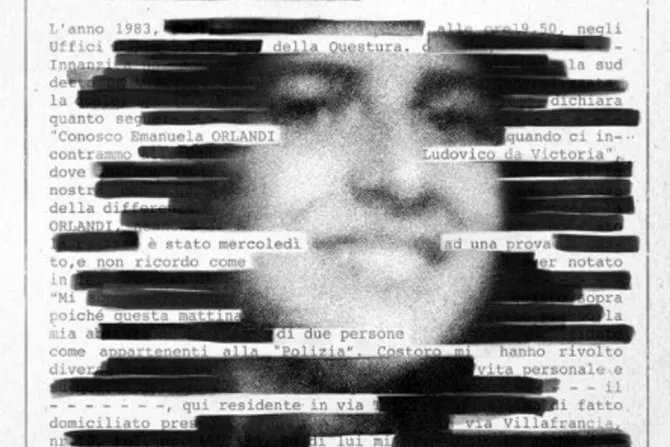
The Italian Senate voted nearly unanimously on Thursday to launch a new parliamentary inquiry into the 40-year-old cold case of the disappearance of 15-year-old Emanuela Orlandi, who lived in Vatican City, as well as another girl who went missing in Rome the month prior.
The four-year parliamentary commission will have “full investigative powers” and a budget of 50,000 euros per year to shed light on the 1983 disappearance of the two girls.
The Italian government inquiry comes after a separate Vatican investigation into the Orlandi case opened in January and shared its findings six months later with Rome prosecutors, who have been further investigating the cold case.
Emanuela Orlandi was the teenage daughter of Ercole Orlandi, an envoy of the Prefecture of the Papal Household and a citizen of Vatican City State. Her disappearance on June 22, 1983, after leaving for a music lesson in Rome has dominated headlines in Italy and been the subject of speculation for decades.
In addition to Orlandi, the newly established Italian commission will also look into the case of 15-year-old Mirella Gregori, who went missing in Rome on May 7, 1983, roughly 40 days before Orlandi.
Gregori was last seen after school at a coffee bar located below her family’s apartment in central Rome. She had told her mother that she was going to quickly meet a friend named Alessandro and never returned.
While Gregori had no connection to the Vatican, her case has been linked to that of the missing “Vatican Girl” after calls from alleged kidnappers in 1983 claimed that they had taken both girls.
The commission is tasked with examining the evidence from prior investigations into the two girls’ disappearance, obtaining necessary further documentation from foreign states related to the case and analyzing what might have hindered Italy’s judicial system from “ascertaining facts and responsibility” in past years. A total of 40 commissioners are expected to be nominated by the end of this year.
During the Vatican investigation into the case earlier this year, Vatican City’s chief prosecutor Alessandro Diddi conducted interviews with people who worked at the Vatican at the time of Orlandi’s disappearance and said that he had collected “all available evidence.”
The Vatican said in January the Orlandi case was being reopened at the request of the family.
Public interest in the case was also rekindled last year after the release of “Vatican Girl: The Disappearance of Emanuela Orlandi” on Netflix.
The true-crime docuseries featured interviews with subjects who proffered numerous theories about Orlandi’s disappearance ranging from the involvement of Italian organized crime to a theory that the Vatican was involved in some way in Orlandi’s disappearance, none of which have been substantiated.
Pietro Orlandi, the brother of the missing girl, told FQ Magazine that he is hopeful that “this commission will be able to help us understand situations that neither the Vatican nor the Italian Prosecutor’s Office are investigating.”
This article was previously posted on CNA.