In Rome, the Jubilee of Hope embraces all people. Among those who crossed the Holy Door last week were the Roma and Sinti — often referred to as the Gypsy people.
The event, organized by the Dicastery for Promoting Integral Human Development, brought together pilgrims from every corner of Italy and Europe.
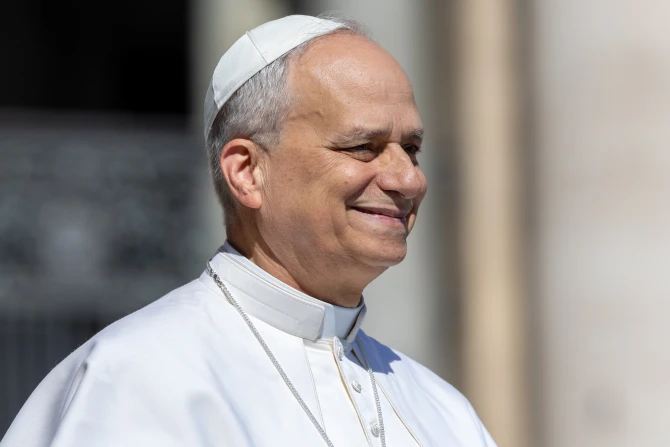
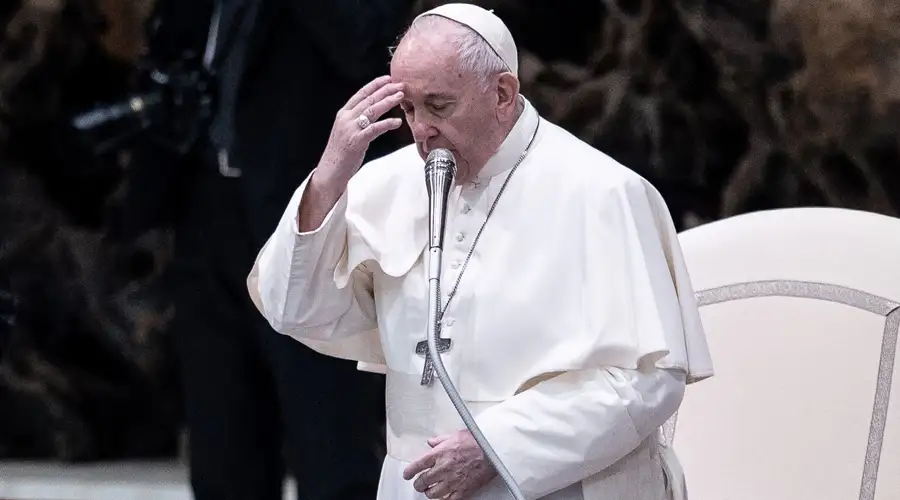
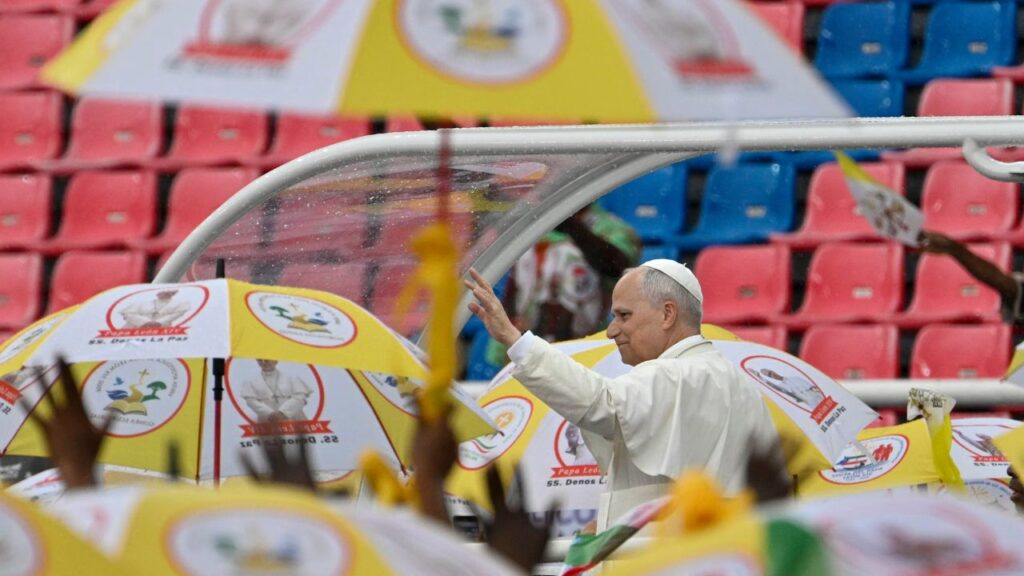
Welcoming them, Pope Leo XIV praised their strong faith, unshakable hope in God alone, and solid trust that endures despite a life often lived on society’s margins:
“May the peace of Christ be in your hearts, brothers and sisters of the Rom, Sinti and travelling communities — and in the hearts of the many pastoral workers who walk with you.”
The celebration filled the Paul VI Hall with joyful music and dance, showcasing the richness of Roma and Sinti culture through artists from across Europe.
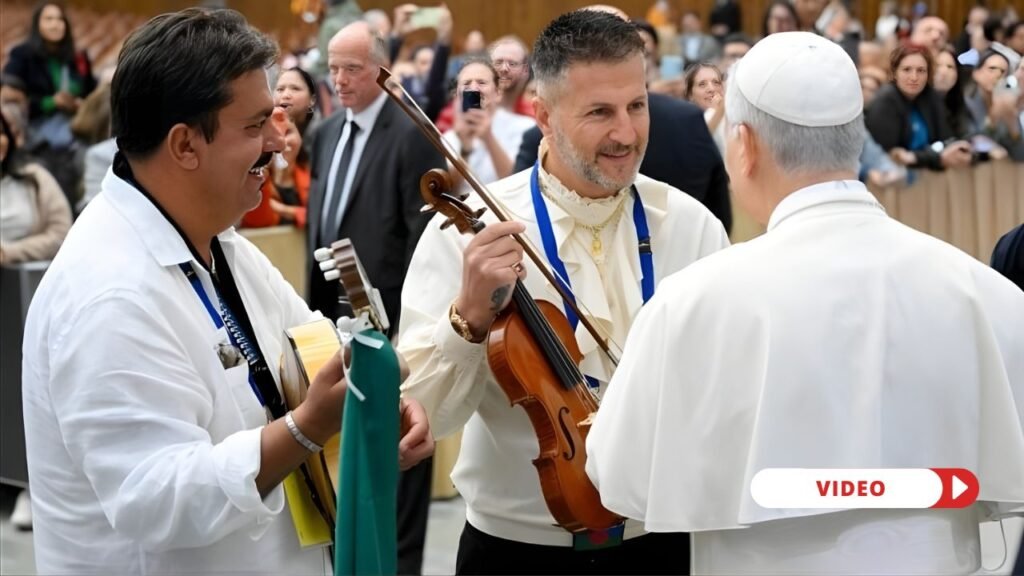
Among them was Rubino Gabriele, a violinist from the Sinti community of Bressanone, carrying forward the musical tradition of his grandfather — who, together with his family, played before Saint John Paul II in 1991.
“It was something completely new for me,” he shared, “years ago it was my grandfather who did this, and now I’m the one carrying on his tradition.”
He added, “It was deeply emotional, bringing back memories of my childhood, when I used to watch him play for the Pope. And now, twenty-five years later, it was my turn. Playing live for the Holy Father was an indescribable experience — and when he signed my violin and said to me, ‘Play,’ it was one of the most beautiful moments of my life.”
In Europe, many Roma and Sinti communities still face deep social challenges — from isolation and limited access to education, to the struggles of poverty that can easily lead to crime and substance abuse.
In response, the Church supports initiatives that build bridges of inclusion — such as the project “No Name per il Sociale” in Scampia.
Daria Tartamella is an educator for the project called “Quattro Talenti” sponsored by “No Name per il Sociale.” She shared, “For me, today is an emotional moment — because it means community. I’m part of the Gypsy community, even if I’m Sinti and not Rom, and this day allows us to meet face to face, to recognize that we share the same culture, and to say that we are one people. Right now, it’s essential that religious communities take an interest in these issues — especially in the absence of a State that does so.”
That mission bears fruitful results with medical students participating in the “Quattro Talenti” project like Mitat Jasari, who dreams of becoming a doctor.
He said, “I want the young people of my community not to give up on their studies, but to keep going — to build a future, change our generation, and carry it forward.”
The Roma and Sinti communities often live on the margins, such as in the encampment adjacent to Santa Maria della Misericordia, where Father Stefano Meloni served for around 20 years — offering not only pastoral care but also education, friendship, and daily support.
Father Stefano Meloni says it is not only about giving — it’s also about learning from them the values that our modern world sometimes forgets.
He added: “Well, they certainly teach us many values that we may have somewhat lost — the sense of being together, of helping one another. Perhaps those who live fragility more intensely, those who live on the margins, are the very ones who can help each other — and they do help each other. So, in that sense, they definitely teach us something. They teach us the value of family. Dragan is the second of his children, and of course, for them, roots are important — family is important.”
Silviana is a parishioner at Santa Maria della Misericordia in Rome. She shared, “To tell you the truth, when my husband was in prison, [Father Meloni] was the only one who truly helped us. He brought us food, gave us money — it’s true, I can’t deny it — he really saved us.”
Silviana added, “When I was going through a hard time, he was always there for me. I’d go to him, cry, and let it all out — and he would listen. Even now, I often call just to ask if he’s okay, to make sure nothing’s happened. I always want to be there for him, just as he was there for my children and for me.”
The Roma and Sinti face many hardships and often struggle for social inclusion, yet through the work of Father Stefano Meloni, the Church’s outreach, and the attention of the Holy Father, hope continues to grow on the margins.
Adapted by Jacob Stein. Produced by Alexey Gotovskiy; Camera by Giampiero Passalia, Sergio Natoli; Video Edited by Ilaria Chimenti