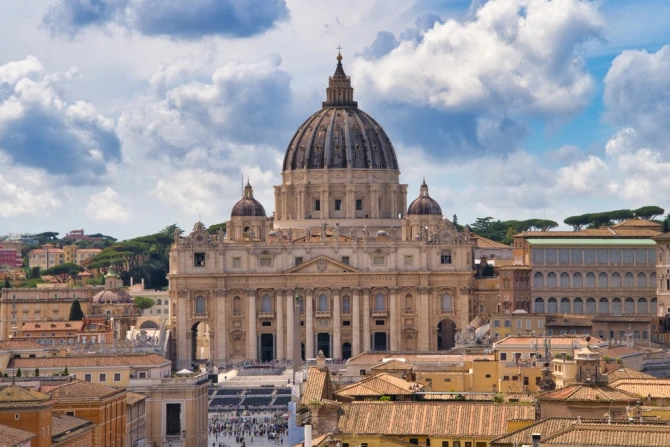
The Vatican City State’s first decree regulating the use of artificial intelligence quietly came into effect this month prohibiting discriminatory uses of AI and establishing a special commission to oversee “experimentation” with the new technology at the Vatican.
The decree titled “Guidelines on Artificial Intelligence” was enacted by the Pontifical Commission of Vatican City State and came into effect on Jan. 1 following a low-profile publication on the Vatican government’s website the day before Christmas Eve.
The new regulations set strict prohibitions on uses of AI within Vatican state institutions but do not apply to the entire Roman Curia.
Among the banned practices are employing AI systems that compromise Vatican City security, implementing AI systems that exclude persons with disabilities from accessing its features, and using AI to draw “anthropological inferences with discriminatory effects on individuals.”
The 13-page decree also forbids AI applications that create social inequalities, violate human dignity, or use “subliminal manipulation techniques” that cause physical or psychological harm to people.
Furthermore, any use of AI that conflicts with the mission of the pope, the integrity of the Catholic Church, or the Vatican’s institutional activities is prohibited.
In an effort to oversee compliance, the decree establishes a five-member “Commission on Artificial Intelligence,” comprising officials from Vatican City’s legal, IT, and security departments.
This commission is tasked with monitoring AI activities, preparing implementation laws, issuing biannual reports on AI within Vatican City and areas governed under the Lateran Treaty.
The commission will also evaluate proposals for AI experimentation to ensure alignment with the decree’s ethical framework.
The Vatican guidelines draw inspiration from the European Union’s AI Regulation, which came into force in August, emphasizing a risk-based approach to AI applications.
While safeguarding existing Vatican laws on data protection and copyright, the decree reinforces principles of transparency, inclusion, and ethical responsibility. It mandates that AI systems prioritize Vatican security, data protection, nondiscrimination, economic sustainability, and care for the environment.
AI-generated content within the Vatican must be clearly labeled as “IA” (intelligenza artificiale), ensuring transparency and distinguishing human creativity from machine outputs. The Vatican also retains copyright over such works.
The decree states that “the use of artificial intelligence must not limit the decision-making power of the subjects responsible for the organization, functioning, and coordination of the personnel of the governorate of the Vatican City State by the administration.”
In addition to outlining general principles, the decree provides specific guidelines for sectors such as health care, cultural heritage, judicial activity, and administrative procedures.
In Vatican courts, AI systems may only be used for research, while the decree stipulates that the actual judicial activity of interpreting the law must be reserved for human judges.
Pope Francis’ advocacy for ethical AI governance has been a driving force behind these new regulations. The decree reflects Francis’ ongoing call for regulations that align with AI ethics, as outlined in the Vatican’s “Rome Call for AI Ethics,” a document calling for transparency, accountability, and social justice in artificial intelligence.
Pope Francis has previously called for an international treaty to regulate AI and urged the G7 summit last year to ban the use of autonomous weapons.
Despite the prohibitions, the guidelines affirm that “science and technology are a product of human creativity understood as a gift from God and have remedied countless evils that afflicted and limited human beings.”
Additional Vatican laws implementing the AI regulations and guidelines are expected by the end of 2025.
This article was originally published on Catholic News Agency.