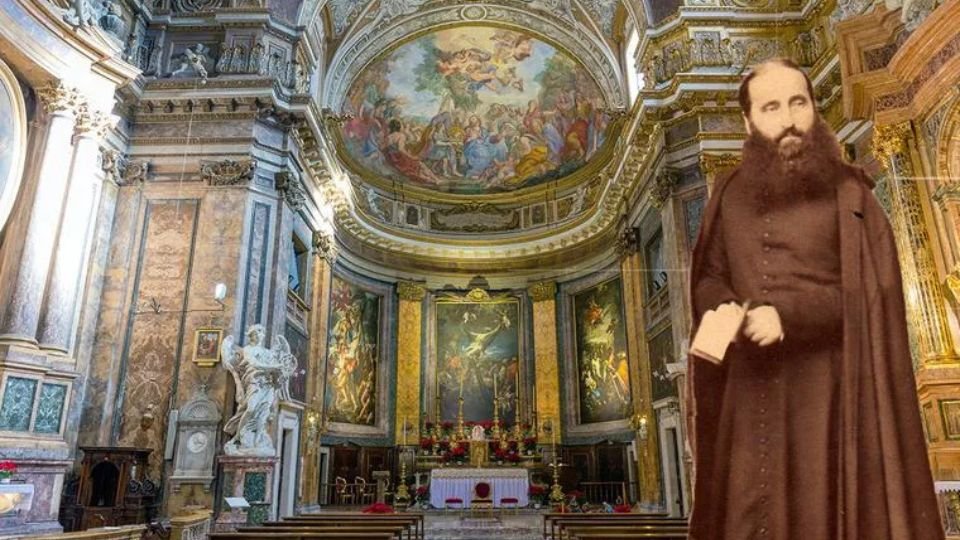
When the cynical Alphonse Ratisbonne accepted a dare to wear a Miraculous Medal, he didn’t expect to meet the Blessed Mother herself.
SIGN UP FOR OUR NEWSLETTER HERE
Many are familiar with the expression, “Hurt people hurt people,” meaning that those who have been hurt by others often perpetuate that toxic cycle.
While this truth can often explain the actions of those who have experienced injustice, it can sometimes extend to an excuse for violent or wrongful behavior. An injustice performed in one’s country can lead to violent rioting, even if those protests started out peacefully. A hurtful word can lead someone to harm others in a similar way or even harm themselves.
Have we ever considered that the opposite is also true? That saintly and holy people help make saintly, holy people? That when we respond with mercy instead of anger, we soften the hearts of our enemy? Do we remember that our own prayers and sufferings can redeem the irredeemable?
One such case for this argument is seen in the life of a French anti-Catholic. His life would be forever changed due to the prayers of three men: his brother, his friend, and a complete stranger who gave his life for him.
Alphonse and Theodore Ratisbonne were born in 1802 and 1814, respectively, into a prominent banking family in Alsace, France. The Ratisbonne family was a nominally Jewish household that seemed focused on worldly success, and it would seem that such success was expected of both Theodore and Alphonse. However, at age 22, Theodore met Louise Humann, a devout Catholic and catechist. Under her guidance, he studied the New Testament and other Scriptures and was baptized Catholic in the year 1826. He went on to be ordained a priest just four years later.
Theodore’s conversion came as a shock to his family. For his younger brother Alphonse, this was a betrayal of the worst kind. He took his brother’s conversion as an opportunity to become actively hostile to Catholicism and went so far as to reject his brother, refusing to speak to him.
Though this estrangement certainly wounded Theodore, evidence would point to Theodore not retaliating against Alphonse, but instead doubling down on his prayers for his little brother. These prayers would not fall on deaf ears, and Divine Providence would bring Alphonse to another Theodore — one who would act as a spiritual brother to him while his biological one was shunned.
Alphonse was on a pleasure trip through Europe when he caught up with an old school friend who introduced Alphonse to his brother, Theodore de Bussieres. Theodore was also a Catholic convert, and perhaps this reminded Alphonse of his mutinous older brother. Alphonse did not hold back punches and would openly mock the Catholic Church in Theodore de Bussieres’ presence. This Theodore was greatly offended by Alphonse’s blasphemies and offenses. Some friends said that Alphonse was too toxic a friend to be with. Instead, this Theodore, too, turned to prayer rather than retaliation.
After spending some time with Alphonse, Theodore de Bussieres took a radical leap of faith. In the middle of an argument about some aspect of the Catholic faith, Theodore pulled out a Miraculous Medal, which was still a relatively new sacramental at that time. Theodore held it out to Alphonse, daring him to wear it and to pray the Memorare twice a day. If Catholicism were folly, and the sacramental and prayer were merely superstitions, they would not harm him. But what if they could change Alphonse’s life for the better?
Alphonse took the bait and agreed to Theodore’s proposal. He prayed the Memorare that night, and recalled later that it became a real earworm — the words of the Marian prayer stayed in his head, repeating over and over through the night.
Meanwhile, that same night, Theodore ran into a friend, the Count de la Ferronnays. Theodore told him of Alphonse and asked the Count to pray for Alphonse and to especially pray for the Blessed Virgin’s intercession. The Count agreed and went to the Basilica of St. Mary Major to pray for Alphonse. In his prayer, the Count offered his own life to save Theodore’s young friend. He subsequently prayed 20 Memorares and returned home, where he died of a heart attack that very night.
One would expect the following day to be shrouded in grief over the Count’s sudden death. But God was about to bring about a glorious resurrection and miracle in Alphonse’s life. As he passed the church of Sant’Andrea delle Fratte, he encountered Theodore, who was entering to make funeral arrangements for the dead Count. Alphonse entered the church with Theodore, who then went to the sacristy to accomplish his errand while Alphonse roamed the church. When Theodore returned searching for Alphonse, he found him kneeling at the altar of St. Michael, weeping.
“I have seen her!” he exclaimed.
The “her” Alphonse was referring to was our Lady herself. He received an apparition of the Blessed Mother, exactly as she appeared on the Miraculous Medal. In those moments, he received a miraculous grace and motherly love from the Blessed Virgin. He came to realize his own sins and the truth, goodness and beauty of Catholicism. Alphonse, thanks to the prayers of so many, experienced a radical conversion. Soon after, Alphonse was baptized and confirmed into the Catholic Church, taking the new name of Marie-Alphonse.
The fruits of this amazing event continued to flow. Not only did the Vatican recognize this apparition as an authentic miracle after a four-month investigation, but he was soon reunited with his brother, Father Theodore Ratisbonne. Though Theodore’s support was quiet and hidden, it was no doubt through his prayers that his brother came to the Catholic faith. What’s more, Alphonse also became a Catholic priest and joined his brother in founding a new religious order consecrated to our Lady, the Congregation of Our Lady of Sion, to bring a Christian witness to the Holy Land.
What would have happened if Alphonse’s brother Theodore retaliated with rage? Or if Theodore de Bussieres opted to abandon his friendship with Alphonse, which would also mean that the Count would never have known to pray for Alphonse? Certainly, God would pursue Alphonse in another way, but thankfully, that was not necessary. Not only was Alphonse brought to faith, but Theodore Ratisbonne, Theodore de Bussieres, and the Count de la Ferronnays were surely brought into a deeper union with Christ because they chose love and mercy over hurt and rejection.
Through their examples, may we too learn how to better love those who hurt us, following Christ’s command, “Love your enemies, and forgive those who persecute you” (Matthew 5:44).
This article was originally published on National Catholic Register.