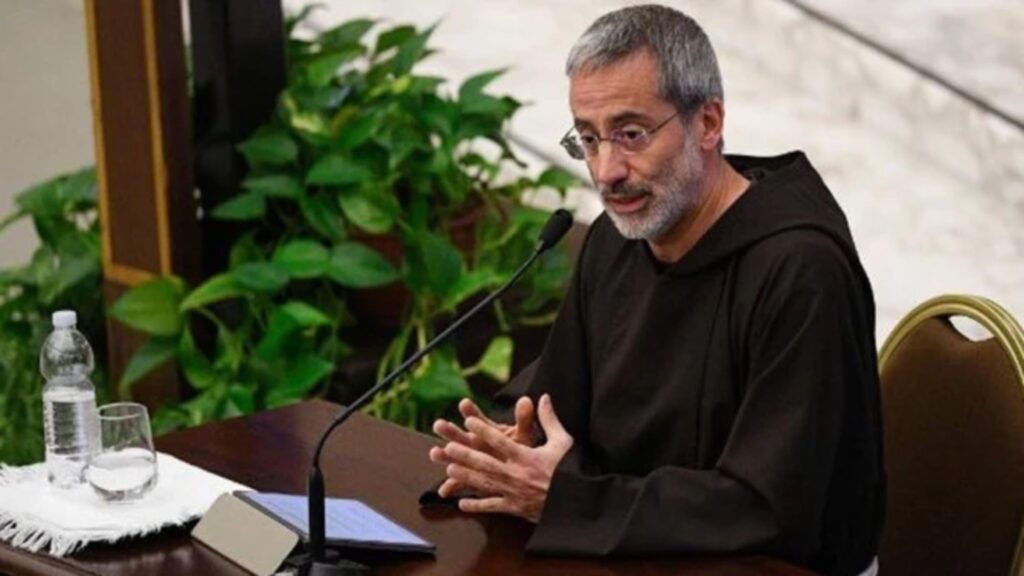
In a sermon to the pope and the Roman Curia, Preacher of the Papal Household Father Roberto Pasolini explained that achieving true fraternity poses many challenges and requires inner transformation.
Preacher of the Papal Household Father Roberto Pasolini continued on March 13 with the second Lenten homily, inspired by the conversion of St. Francis of Assisi and titled “If Anyone Is in Christ, He Is a New Creation: Conversion to the Gospel According to St. Francis.”
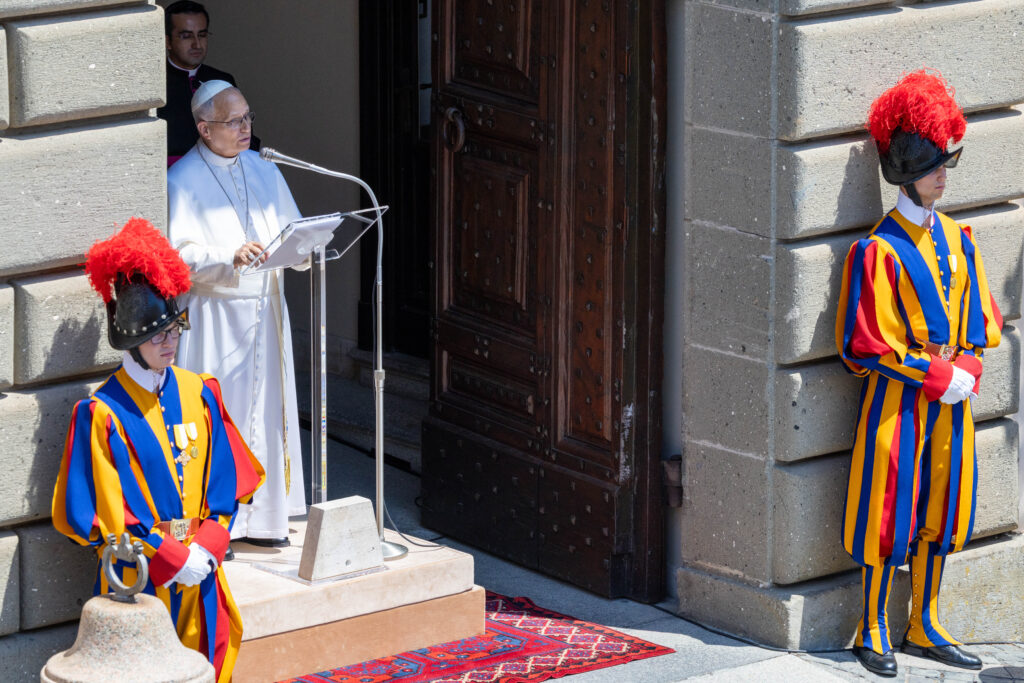
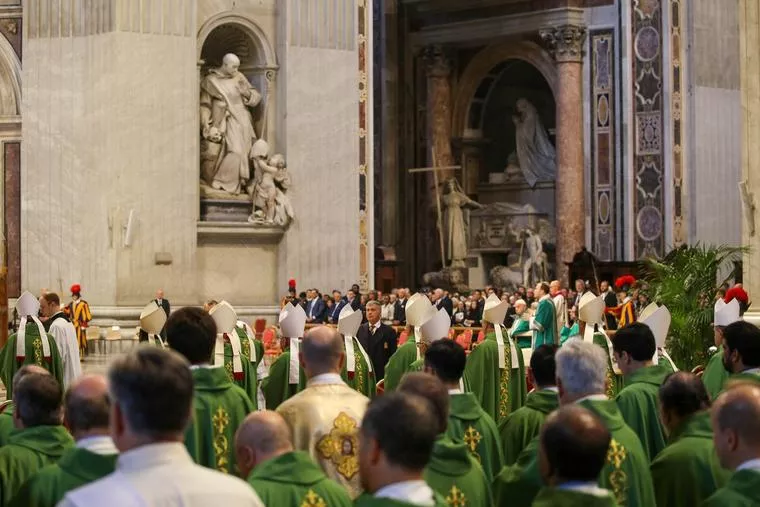
Before Pope Leo XIV and members of the Roman Curia gathered in the Paul VI Audience Hall, the Capuchin friar meditated on fraternity, referring to it as both a gift and a “serious and urgent” responsibility — especially in a society marked by division.
In his sermon reported by Vatican News, Pasolini explained that conversion is truly realized within fraternity, describing it as “the most eloquent sign of what the Gospel can accomplish in our lives.”
He also exhorted his listeners to “go beyond” and to view our brothers and sisters not merely as a source of support or sustenance but as someone entrusted to us “so that our lives may change.”
In this context, Pasolini emphasized that brothers and sisters in Christ, therefore, do not merely serve to confirm “what we are” but rather call us to a true transformation: “They become the concrete space in which God works on our humanity, loosening our rigidities and teaching us to live with a truer heart, one more capable of love.”
In light of the biblical account of Cain and Abel, the preacher to the papal household noted that a rift between brothers stems “from a problem of perspective” and urged the pope and the Roman Curia to ask themselves “who is Cain within us” and how much space resentment occupies.
He also recalled that, for St. Francis, fraternity is an opportunity “to learn the merciful logic of the Gospel toward a neighbor who makes mistakes.”
“When relationships crack and communion is wounded,” Pasolini noted, “the Gospel does not first suggest defending one’s own rights. Instead, it urges seeking the greatest and always possible good: the good that allows us to recognize in the other no longer an adversary or a debtor but a brother loved by the Lord,” he affirmed.
Pasolini thus invited his audience to focus on the conversion that arises “precisely from what others do to us, even when they hurt us or put us to the test,” and, for this reason, “we must never lose sight of the horizon” or the perspective of eternal life.
“Faith does not separate but reminds us that no one can be excluded from our hearts,” he remarked.
By way of conclusion, Pasolini noted that, amid the divisions, wars, and conflicts of the present day, Christians “cannot limit ourselves to speaking of fraternity as an ideal to be achieved.”
“We are called to receive it as a gift, and, at the same time,” he urged, “to take it on as a very serious and urgent responsibility.”
This story was first published by ACI Prensa, the Spanish-language sister service of EWTN News. It has been translated and adapted by EWTN News English.