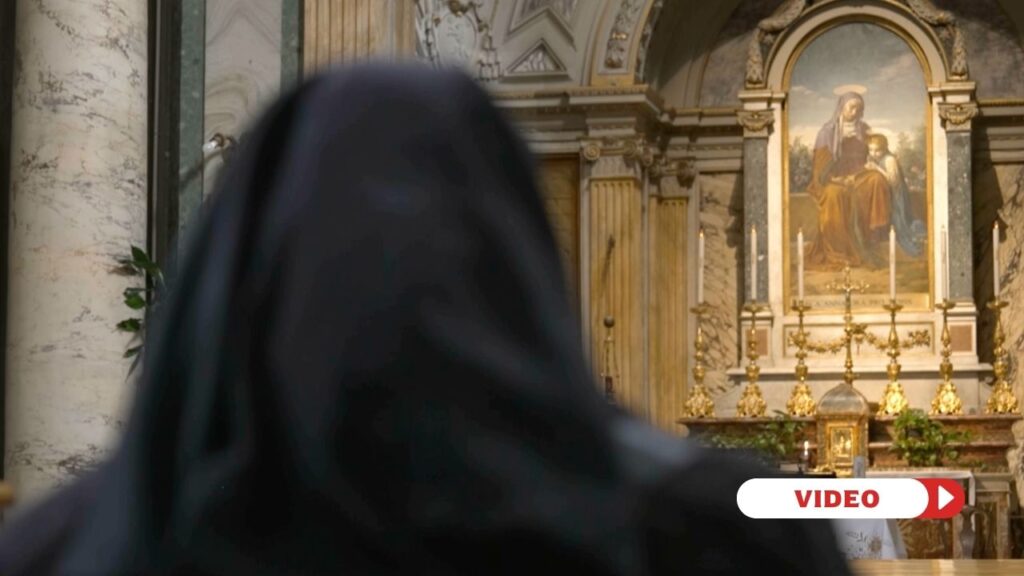
ROME — Hidden behind the walls of a historic palace in Rome’s Piazza della Minerva is one of the Holy See’s oldest and least-known institutions.
The Pontifical Ecclesiastical Academy has spent more than three centuries preparing the Holy Father’s diplomatic representatives for service around the world. This year, the academy marks its 325th anniversary, continuing a tradition that has helped shape the Church’s global diplomatic mission since 1701.
Forming generations of papal diplomats
Since its foundation, more than 2,000 clerics have studied within the Academy’s walls.
Archbishop Salvatore Pennacchio, president of the Pontifical Ecclesiastical Academy since 2023, says its alumni have gone on to serve the Church in some of its highest offices.
“In this house, since 1701, more than two thousand clerics have passed through its halls. Among its former students are five Popes, the most recent being Pope Paul VI, who was later canonized a saint, and eight Secretaries of State.”
“This demonstrates that the academy’s formation plays an important role in serving the Pope, the Supreme Pontiffs, and the Holy See, as well as its diplomatic representations throughout the world.”
Drawing on decades of experience as Apostolic Nuncio in 11 countries, including Rwanda, Singapore, Cambodia, Nepal, and Poland, Archbishop Pennacchio now oversees the formation of the next generation of Vatican diplomats.
A unique path to Vatican diplomacy
Unlike most diplomatic academies, the Pontifical Ecclesiastical Academy does not admit students through a competitive examination.
“At this Academy, there is no competitive entrance examination as there is in the civil diplomatic service,” Archbishop Pennacchio explained.
“Candidates are recommended by bishops from all over the world.”
He noted that the Academy currently has 37 priest-students, each with at least two years of pastoral experience and an average age of about 30.
“This year, there are 37 priest-students, each with at least two years of pastoral experience and an average age of around 30, who are currently pursuing their studies here. Of these 37, 11 will soon be sent on their first diplomatic assignments.”
Representing 28 countries, the students come from across Australia, Latin America, Africa, Europe, and beyond, reflecting the universal nature of the Catholic Church.
Priests first, diplomats second
The Academy’s formation extends well beyond diplomacy.
Archbishop Pennacchio says students receive a broad intellectual, linguistic, and pastoral education before being sent abroad.
“Students are provided with a well-rounded formation so that they can embark on their mission with adequate preparation.”
“An important aspect is language training. They arrive with their native language, but they are required to learn at least two additional languages.”
Despite their diplomatic preparation, the students continue serving in pastoral ministry throughout their formation.
“They do not have to lose their apostolic zeal anyway. For this reason, on weekends they are assigned to parishes, hospitals or prisons, where they can continue to develop and exercise their pastoral ministry.”
A diplomatic tradition centuries in the making
Although the Academy was founded in 1701, the history of papal diplomacy stretches back much further.
Fr. Roberto Regoli, professor of Contemporary Church History at the Pontifical Gregorian University, explained that the Bishop of Rome has maintained representatives to civil authorities since the earliest centuries of Christianity.
“The Bishop of Rome, from the earliest centuries, has had his own representatives who went to the imperial court in Byzantium.”
“And, over time, at the beginning of the modern era, together with the Republic of Venice, the Pope was among the first sovereigns to have his own permanent representatives at the courts of other rulers.”
“These permanent nunciatures made it possible to maintain continuous contact with other states.”
More than political diplomacy
According to Fr. Regoli, what distinguishes a papal nuncio from other ambassadors is the combination of diplomatic and pastoral responsibilities.
“Representation to the state is fundamental, because when one simply represents the Pope to bishops and the faithful, it remains a pastoral mission which does not provide access to the country’s top leadership.”
“When one is a nuncio, a true diplomat, the minister of foreign affairs cannot refuse him an audience.”
“It becomes a secure channel through which information, requests, and needs can be conveyed to the government, in order to protect the interests of the Catholic Church.”
“The Pope is among the best-informed leaders in the world.”
A vocation at the service of peace
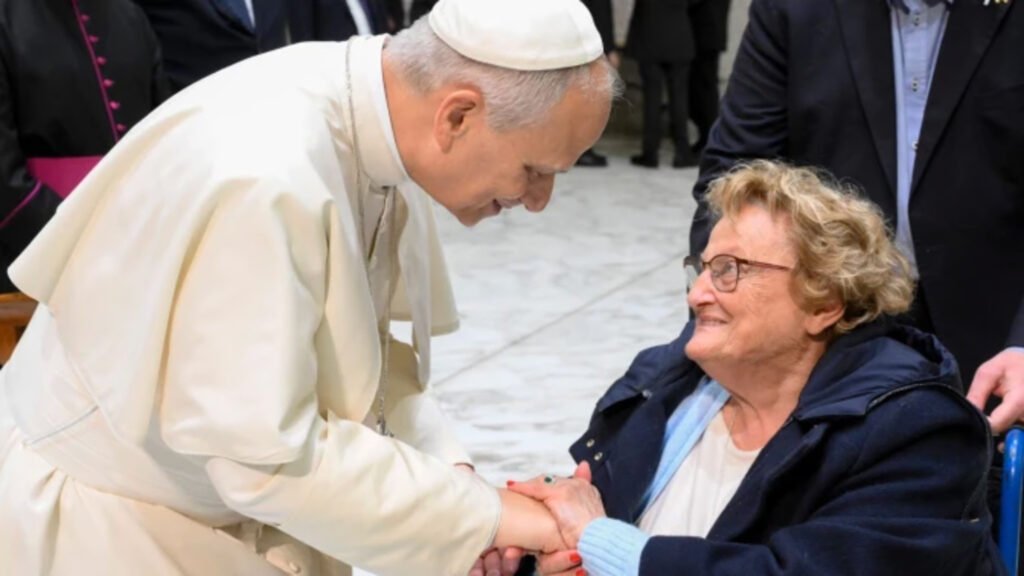
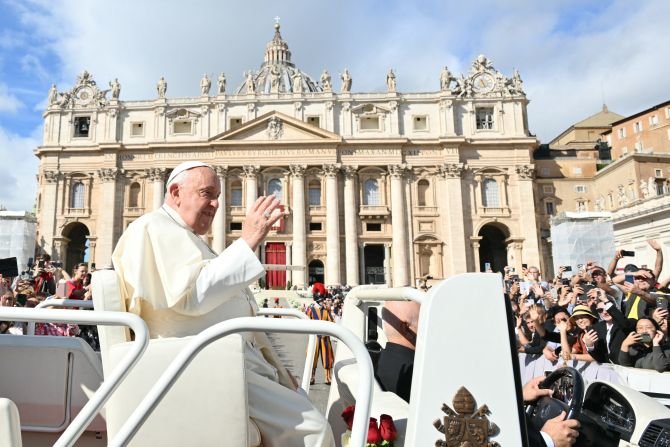
During a visit marking the Academy’s 325th anniversary, Pope Leo XIV encouraged the future diplomats to embrace what he described as a vocation dedicated to peace, truth, and justice.
He reminded them that before they are diplomats, they are shepherds called to serve the Church.
Archbishop Pennacchio sees that mission as especially relevant today, as the world confronts rapid technological change and growing international tensions.
“In that period, there was a major social transformation already underway, with factories and industrialization. There were social problems related to workers, and so this sense of commitment was very strong.”
“Today there are other modern developments: the rise of artificial intelligence and other technologies that can either serve humanity or suppress human dignity—and it is this latter possibility that is somewhat concerning.”
As the Academy begins its 326th year, its mission remains rooted in preparing priests to represent the Holy Father throughout the world, carrying the Church’s message of peace wherever they are sent.
Adapted by Jacob Stein.