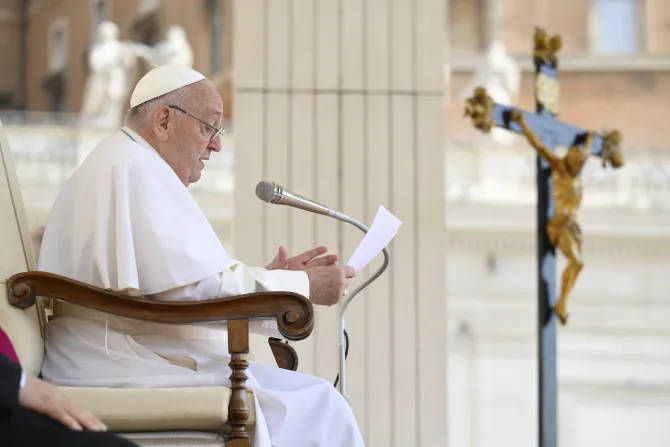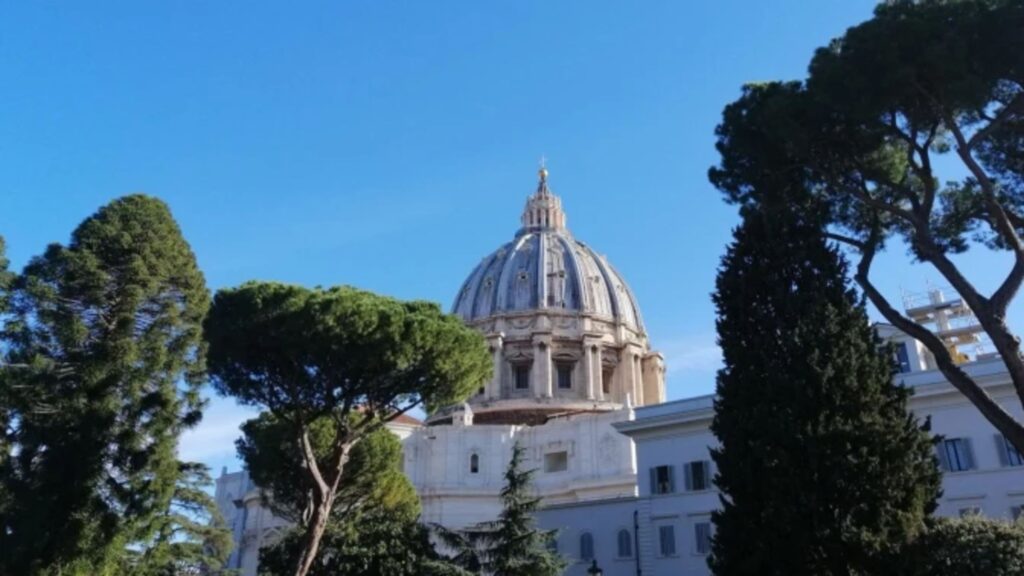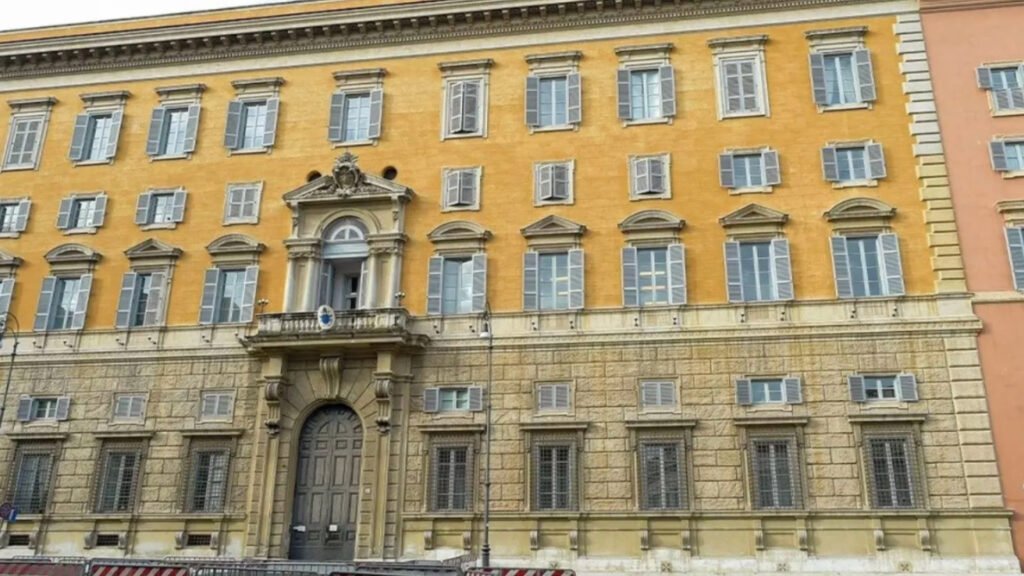
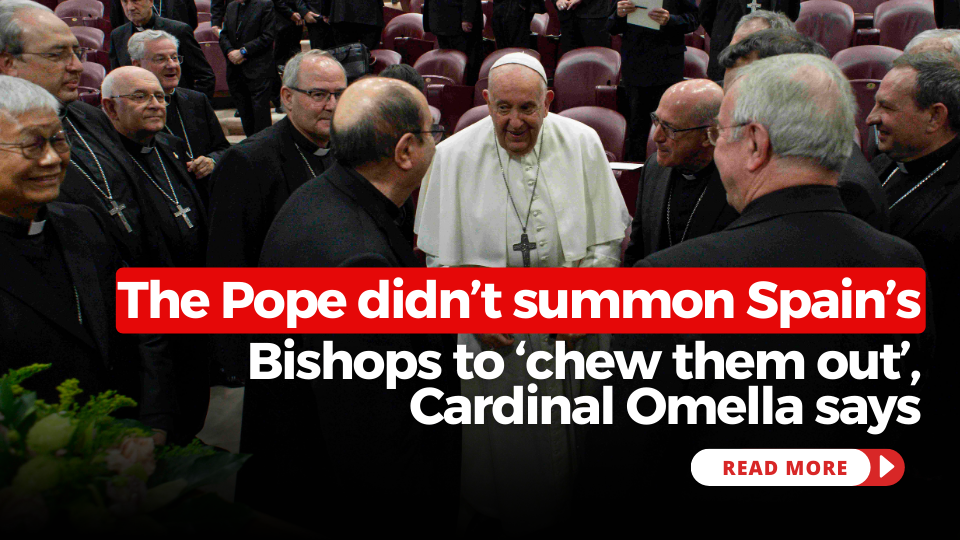
Pope Francis met with Spanish bishops at the Vatican today to inform them of the conclusions of the apostolic visit made to the country’s seminaries in early 2023.
Before discussing the report, the preacher of the papal household, Cardinal Raniero Cantalamessa, offered those present a meditation starting at 8 a.m. that took Pentecost as its starting point.
The Holy Father joined the meeting once the meditation began, and when it was over there was an extensive conversation for about two hours. After a break, the meeting with those responsible for the Dicastery for the Clergy began.
During a press conference, the president of the Spanish Bishops’ Conference (CEE), Cardinal Juan José Omella, stated that it soon became clear that the meeting with the pontiff “was not about chewing them out or condemning anyone. It was to see how we can improve. We are in a change of eras and in some way we have to prepare.”

Although the pope specified that the apostolic visit “is not an investigation” in an interview with the Spanish newspaper ABC published in December 2022, the unusual call for all the bishops to come to Rome raised some concerns.
The secretary general and spokesman of the CEE, Bishop Francisco César García Magán, stated on Nov. 24 that there was no “fear” among the bishops about the meeting today in Rome, although he acknowledged that it was “a singular event.”
Ask questions and hold nothing back
For the Spanish cardinal, it was a conversation “in keeping with the synodal path” in which the pope encouraged the prelates to ask questions and hold nothing back.
Repeatedly asked by journalists whether the only topic of conversation with the pontiff had really been the situation of the seminaries in Spain, the cardinal drew on a childhood expression to reinforce his explanations: “By Sweet Jesus, I’m telling you the truth.”
Omella thus sought to rule out that either the issue of the sexual abuse of minors within the Church or the complicated sociopolitical situation in Spain in recent weeks had been addressed.
Throughout the press conference, which he gave with García and the president of the Spanish bishops’ subcommission on the clergy, Bishop Jesús Vidal, Omella stressed Pope Francis’ interest “in forming very mature men, rooted in the person of Jesus Christ; men of God, but with their feet on the ground.”
For two hours, the conversation addressed questions about the different types of formation offered or the pastoral experience of the seminarians.
For Vidal, the Holy Father established “a spiritual dialogue in an atmosphere of unity and communion” in which “we have been asking him and he has been sharing his insights based on his experience.”
He said that “the pope would be interested in the formation of future priests in Spain is a privilege” and stressed “the push he gave us by encouraging us to continue implementing the formation plan” of the seminaries.
Reorganization of seminaries and houses of formation
Vidal explained that Spain has 86 seminaries sharing 55 houses of formation, which means that not all seminaries have their own house of formation. For example, there is an interdiocesan seminary in Catalonia attended by candidates for the priesthood from seven different dioceses.
Forty of the 69 Spanish dioceses currently have their own seminaries. Of the 40, 29 are diocesan and 15 are Redemptoris Mater seminaries run by the Neocatechumenal Way. Several dioceses have more than one seminary.
One of the issues raised is the need to reorganize this structure due to the decline of vocations. According to the latest data provided by the CEE, fewer than 1,000 candidates for the priesthood have been in formation in the 2022-2023 academic year, the first time that the figure fell below that level since records have been kept in modern times.
New admissions were below 200 and ordinations were under 100 for the first time. Two decades ago, Spain had nearly 1,700 seminarians and almost 200 were ordained.
Omella pointed out that, among other factors, this is caused by the low birth rate and that the Church has to face a kind of “corporate downsizing” in this area.
“The reality is different from the ’60s. The low birth rate affects the seminaries as it affects the universities and they have to rethink the future,” the president of the CEE explained.
Vidal said there is no fixed date to obtain “concrete” results for what has been proposed, because it’s an ongoing process. However, a three-year period has been established to evaluate progress.
“On the issue of the merging of seminaries, the pope encouraged us to continue following the path the Church is on in Spain,” where there are 15 houses of formation that take in seminarians from various dioceses, Vidal added.
Emotional formation
The president of the episcopal subcommittee on the clergy stated that the emotional formation of future priests “is a topic that the pope is very interested in.” In this regard he said the pontiff “encouraged future priests to be men capable of creating communion and fostering dialogue, priests who can live out synodality in this Church.”
The priest, “like anyone, must be a mature, free person, capable of developing a full life and a suitable social life,” Vidal noted.
Wearing a cassock?
Vidal also explained in response to questions from the media that during the conversation with Pope Francis the question of what kind of clothing the new priests should wear was addressed. The bishop said that this is a matter framed in the idea that priests must be “rooted in the reality” that surrounds them.
The prelate pointed out that “we can get carried away by trends that are not central, that are peripheral,” without clarifying what they are.
The pope’s health
Omella noted that Pope Francis was able to speak “without coughing even once” in his conversation with the Spanish bishops, despite the lung condition that has forced him to reduce his schedule, and said: “He’s healthier than us.”
For the Spanish cardinal, this meeting has had the effect of “puncturing two balloons: Nothing serious is happening in [the Church in] Spain and the pope is not as ill as it seemed.”
This story was first published by ACI Prensa, CNA’s Spanish-language news partner. It has been translated and adapted by CNA.