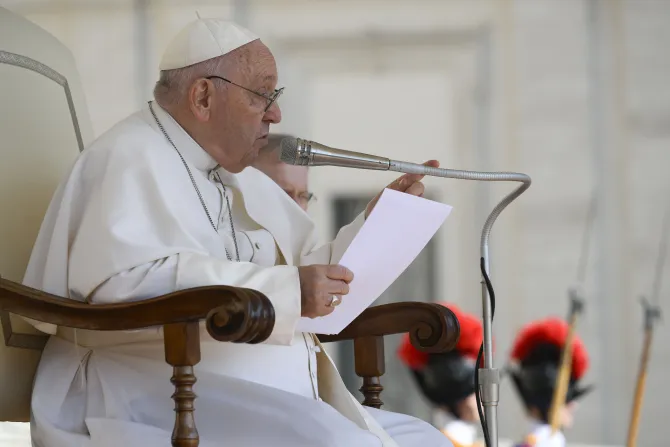
As Pope Francis marks his 10-year anniversary as the head of the Catholic Church, one notable aspect of his papacy is his frequent canonization of Saints. In the past decade, Pope Francis has canonized men and women from different eras and social backgrounds, but what they all have in common is their dedication to serving the poor and marginalized in society.
On May 12, 2013, Pope Francis carried out his first canonization, which included two Latin American religious sisters, Laura Montoya and Maria Guadalupe Garcia Savala. He also canonized Antonio Primalto and his 800 companions, who were murdered in the Ottoman invasion of the Italian city of Otranto in 1480. Since then, about 100 other Saints have been added, including two of his predecessors, John the 23rd and John Paul II.
Pope Francis has also canonized individuals who were not necessarily known for their holiness during their lifetimes, such as the Spanish Franciscan priest Junipero Serra, who founded mission stations and spread the gospel in America, and the computer programmer Carlo Acutis, who died of leukemia at the age of 15 and used the internet to spread the word of Eucharistic miracles.
The Holy Father has also recognized individuals who fought for social justice and human dignity, such as Archbishop of San Salvador Oscar Romero, who was shot by a death squad in 1980 while preaching in church, and the French lay brother Charles de Foucauld, who served as an inspiration to other founders of religious orders.
In September 2023, the church will recognize an entire family, the Ulma family, who hid eight Jews during World War II but were betrayed by the Nazis and killed, including a still unborn child. This decision by Pope Francis serves as a reminder of the sacredness of every human life that begins at the moment of conception and up to natural death.
Pope Francis’ canonization of Saints reflects his vision of the church as a church for the periphery, where the vocation to holiness is not limited to priests and religious but open to every person. As Saint Thomas said, “a credible person embodies Jesus because a credible person does what he says, and actions speak louder than words.”
In Pope Francis’ 10-year reign, his canonization of Saints has not only recognized individuals for their personal holiness but also for their social justice work and dedication to serving the poor and marginalized in society. The canonization of Saints is a reminder that every person, regardless of their background, has the same vocation to holiness.