Pope Francis changed canon law on Tuesday regarding the governance of Opus Dei and any future personal prelatures.
In a motu proprio issued Aug. 8, the pope assimilated the personal prelature to “public clerical associations of pontifical right with the faculty of incardinating clerics.” It also further defined the role of the prelate as a “moderator endowed with the faculties of an ordinary.”
The motu proprio modifies canons 295 and 296 of the Code of Canon Law on personal prelatures and immediately entered into force on the day of its publication.
The updated canons now state that the statutes that govern a personal prelature can be “approved or issued by the Apostolic See.”
To date, the international Catholic organization Opus Dei is the only personal prelature in the Catholic Church. The group’s statutes have yet to be approved by the Holy See following its extraordinary congress in April.
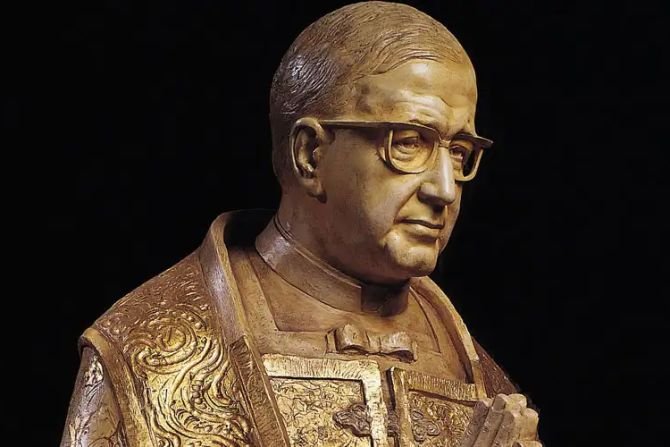
Opus Dei is a personal prelature made up of laymen and laywomen and priests founded by St. Josemaría Escrivá in 1928. Escrivá called the organization Opus Dei to emphasize his belief that its foundation was a “work of God” — or, in Latin, “opus Dei.”
Canon 296 on the lay involvement in the personal prelature now also includes a reference to canon 107 and stresses that “the manner of this organic cooperation and the main duties and rights connected with it shall be determined appropriately in the statutes.”
The changes build upon the pope’s previous decree on the oversight of Opus Dei last year in the motu proprio “To guard the charism,” which declared that its leader, the prelate, could no longer be a bishop.
In the text of the decree, Pope Francis also recalled that the apostolic constitution Praedicate Evangelium transferred the competence over personal prelatures to the Vatican’s Dicastery for the Clergy.
Responding to the most recent changes, Opus Dei spokesman Manuel Sanchez told CNA that the organization “will study what consequences these changes may have for the juridical configuration of Opus Dei, also in the context of the work that is being carried out with the clergy dicastery on the adaptation of the statutes required by the motu proprio Ad Charisma Tuendum, in a climate of communion with the Holy Father.”
Opus Dei has about 90,000 members — 98% of whom are laypeople, the majority of which are married. In addition to its lay members, some 1,900 priests incardinated in different dioceses throughout the world belong to the Priestly Society of the Holy Cross, an association of clergy intrinsically united to the prelature of Opus Dei.
This article was previously published on CNA.