The pope’s move restores a long-standing Roman tradition that his predecessor set aside.
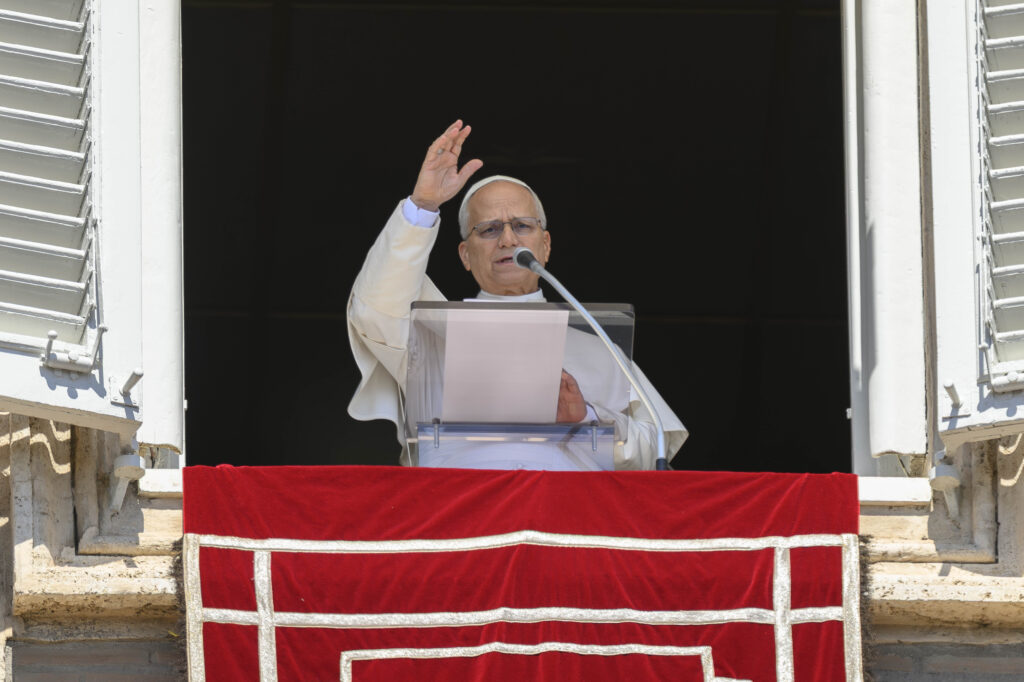
Pope Leo XIV will celebrate the Holy Thursday Mass of the Lord’s Supper at the Basilica of St. John Lateran on April 2, restoring a long-standing Roman tradition that Pope Francis set aside throughout his 12-year pontificate.
The announcement appeared last week in the calendar of papal liturgies published by the Prefecture of the Pontifical Household.
In his first Holy Thursday as pope on March 28, 2013, Pope Francis chose to celebrate the Mass in Coena Domini in the chapel of the Casal del Marmo juvenile detention center on the northern outskirts of Rome. As he had often done as archbishop of Buenos Aires, he carefully washed the feet of 12 inmates, including an Italian Catholic woman and a Muslim woman from Serbia.
From that point on, and for the next 12 years, Francis left aside the Holy Thursday celebration at St. John Lateran — the cathedral of the bishop of Rome — in a pastoral approach that broke with the customary practice of his predecessors.
For Monsignor Giovanni Falbo — a canon of the Lateran, camerlengo of the cathedral chapter, and provost of the basilica — that decision should be understood as an interlude.
In his view, Pope Leo XIV’s decision to recover the tradition on April 2 shows that the Francis years were an “exception.”
“The years of Pope Francis’ pontificate,” Falbo explained, “as happened with many other celebrations and initiatives, constitute an exception, motivated by the desire to offer the world a clear sign of predilection for the poor and the last, bringing the attention of the bishop of Rome to places of suffering.”
Falbo told ACI Prensa, the Spanish-language sister service of EWTN News, that the approach was “a praiseworthy intention” that nevertheless resulted in “a certain privatization of the celebration of the Last Supper,” since limited space in such locations made it impossible for priests of the Diocese of Rome to take part.
With his decision, Falbo said, Leo XIV resumes the tradition of the Church in Rome in line with the uninterrupted practice of the last century, without diminishing attention to the poor.
“There are countless occasions throughout the year,” Falbo said, “to underscore the predilection of the Lord and of the Church for the last.”
In that sense, he said, the return to St. John Lateran is another sign of the new pope’s desire “not only to be, but to behave as bishop of Rome.”
Falbo also pointed to the bond between Leo XIV and the Lateran basilica that became visible on May 25, when the pope took possession of the chair of the bishop of Rome — the pope’s episcopal seat — in what is considered the first Christian basilica built after the peace of Constantine in the fourth century.
That ceremony marked a fundamental step at the beginning of Leo’s pontificate, since the pope is not only successor of St. Peter and pastor of the universal Church but also bishop of the Diocese of Rome.
Historical roots of the foot-washing rite
Falbo recalled that the rite of washing feet “naturally has its roots in the gesture carried out by Jesus in the upper room, when he washed the feet of his apostles before the institution of the Eucharist.”
He noted that the Gospel of John is the only one to transmit the episode, accompanied by a catechesis that makes it a symbol of fraternal love and of the “new commandment,” concretizing love in reciprocal service.
For that reason, he said, “already in the early Church, the washing of the feet was considered a relevant sign for recognizing the authentic disciples of the Lord.”
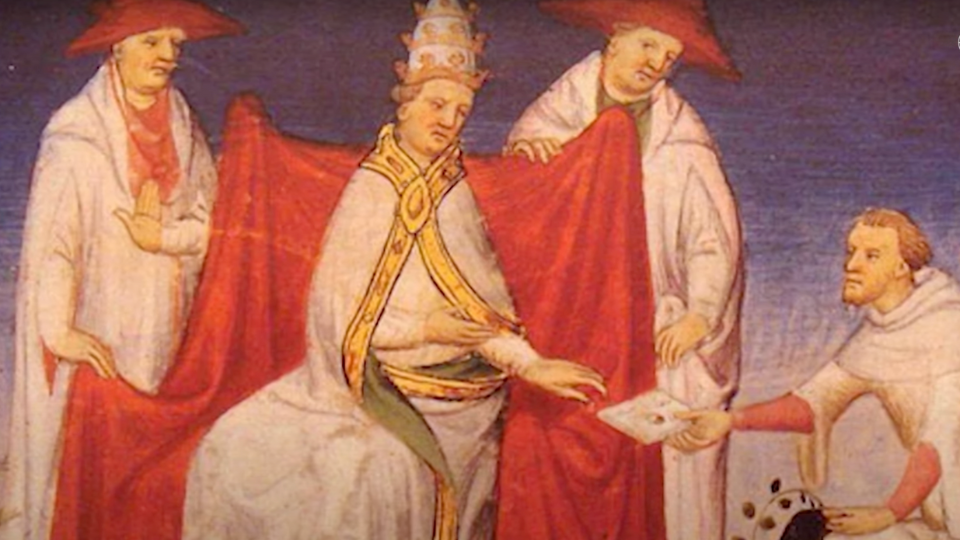
Falbo added that the rite has varied over the centuries. The Council of Toledo in 694 regarded the washing of feet performed by a bishop for his collaborators as a semi-liturgical and obligatory rite. The Ordo Romanus XII even describes a second mandatum in which, after offering lunch to 13 poor people in a hall of the papal palace, the pope washed, dried, and kissed their feet.
In the 15th century, the chronicles of Giovanni Burcardo — papal master of ceremonies from Innocent VIII to Julius II, including under Alexander VI — systematically mention the pope washing the feet of 13 poor people in one of the halls of the Apostolic Palace in the Vatican.
Falbo also recalled that before the definitive move to the Vatican after the return from Avignon in 1378, popes lived for nearly 1,000 years near the Lateran cathedral, from the pontificate of St. Miltiades (d. 314) to Clement V (1305–1314).
Although the washing of feet is a rite proper to Holy Thursday, Falbo noted that at least since the pontificate of Innocent I in 416, three separate Masses were celebrated that day: a morning Mass for the reconciliation of penitents; another for the blessing of the holy oils, especially the chrism; and a third evening Mass as a memorial of the Lord’s Supper.
For that reason, he said, the foot-washing was not originally joined to the Holy Thursday Mass, even though the Gospel proclaimed at the Eucharist in Coena Domini refers precisely to Jesus’ gesture.
Falbo also pointed to the profound reform of the Sacred Triduum carried out by Pope Pius XII in 1955, which took effect the following year, with the goal of restoring greater historical fidelity in the celebrations.
Since then, he said, the practice of the bishop of Rome — conditioned by no longer residing near his cathedral — has been to divide the Triduum liturgies between St. John Lateran and St. Peter’s, reserving to the lateran the evening Holy Thursday celebration with the foot-washing rite, after the chrism Mass celebrated in the morning at the Vatican basilica.
This story was first published by ACI Prensa, the Spanish-language sister service of EWTN News. It has been translated and adapted by EWTN News English.