Skip to content

Pope Leo XIV: AI can never be a person; its future depends on our choices

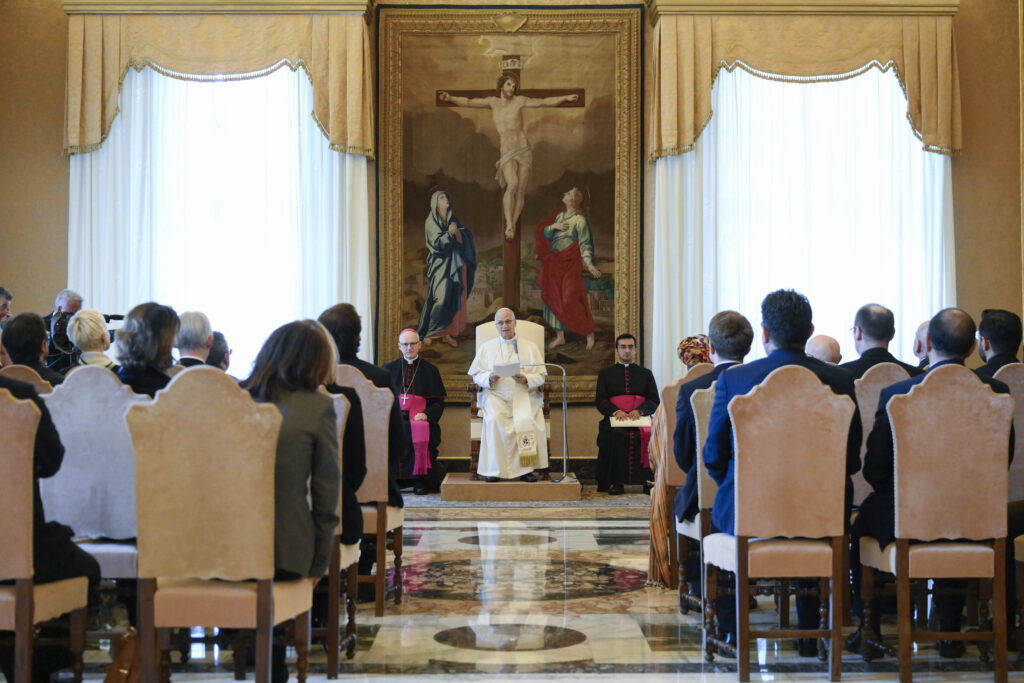
Pope Leo XIV speaks during his private audience with participants of the meeting “The Future of AI: A Dialogue Between the Vatican and the Scientific World on the Development and Applications of Intelligent Technologies” at the Apostolic Palace in the Vatican on Oct. 30, 2026. | Credit: Vatican Media

The pontiff met on Friday with participants in a Vatican AI conference organized by the Pontifical Academy for Life.

Pope Leo XIV emphasized that artificial intelligence (AI) can never replace the human person and that AI regulation must continue.

“Machines are tools, not persons,” Leo said in his address.

The pontiff held a private audience on Friday with participants in a meeting on “The Future of AI: A Dialogue Between the Vatican and the Scientific World on the Development and Applications of Intelligent Technologies” at the Vatican. The Pontifical Academy for Life and the Future of Life Institute organized the one-day conference.

AI cannot be given human rights or personhood

During the meeting, members of the Vatican Commission on Artificial Intelligence and scholars discussed ongoing concerns as AI continues to develop.

Noting this concern in his address, the pope warned against efforts to grant AI technologies rights and legal status comparable to those of human beings.

“Today, some propose granting these systems rights, or even legal personhood,” Leo said. “Such an approach risks obscuring human responsibility and leaving those who suffer harm to confront a faceless entity.”
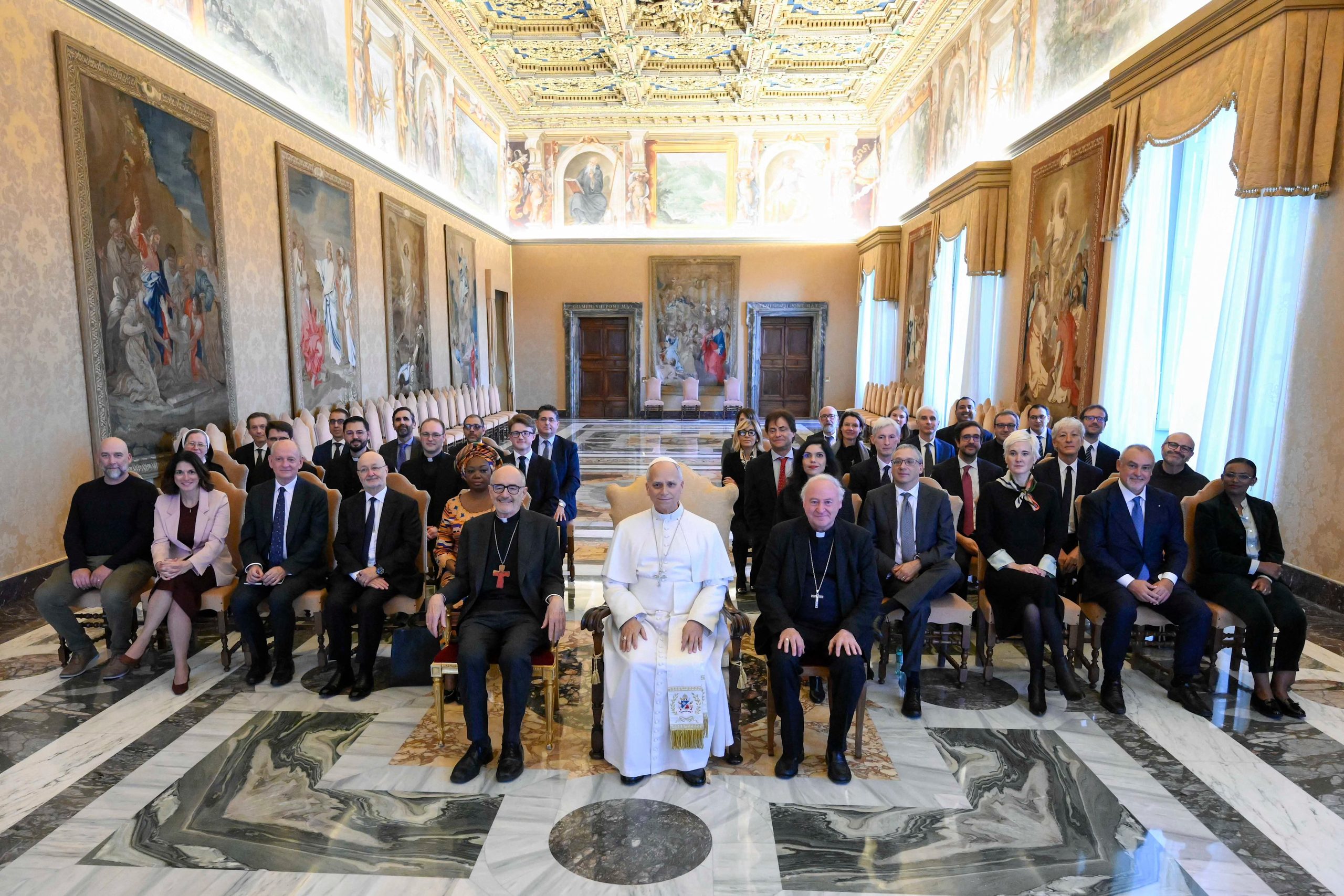
A group photo with Pope Leo XIV and the participants of the meeting “The Future of AI: A Dialogue Between the Vatican and the Scientific World on the Development and Applications of Intelligent Technologies.” The pontiff met them in a private audience at the Apostolic Palace in the Vatican on Oct. 30, 2026. | Credit: Vatican Media

Drawing on his encyclical Magnifica Humanitas, Leo explained that the future of AI technologies depends on the choices made today, choices he hopes will promote the dignity of the human person.

“As a technology developed by human beings, its future depends on the choices we make,” Leo said.

“A reliable system that serves the human person is of greater value than one that is exceptionally powerful but whose consequences cannot be adequately foreseen or controlled.”

Earlier in October, Leo explained the difference between classical art and AI-made art, saying there is an “ontological difference” that exists “even before an aesthetic one.”

Vatican AI leadership and calls to stop super-development

Several conference participants, according to an Oct. 30 press release, expressed hope in the Vatican’s leadership on AI ethical issues. One of those was Max Tegmark, a physicist from the Massachusetts Institute of Technology.

“With strong moral leadership, the Vatican can help steer AI development onto a better pro-human path,” Tegmark said.

Others called for an end to the super-development of AI amid fears that AI is making humans obsolete.

“We must turn aside from this trajectory before it is too late and pursue other trajectories,” said Stuart Russell, a professor of computer science at the University of California, Berkeley, adding that if AI developers succeed in super-development, “there’s a good chance that every human being will die.”

This article was originally published by EWTN News English.

Receive the most important news from EWTN Vatican via WhatsApp. It has become increasingly difficult to see Catholic news on social media. Subscribe to our free channel today

Share

Would you like to receive the latest updates on the Pope and the Vatican

Receive articles and updates from our EWTN Newsletter.

I agree that EWTN will keep me informed about news, faith stories and how to best support their work. You will never receive e-mails from us that you do not want to receive. You can unsubscribe any time. For more information on how to unsubscribe, our privacy practices, and how we are committed to protecting and respecting your privacy, please review our Privacy Policy.

More news related to this article

Cardinal Appointed to Fight Clergy Abuse by the Vatican Named in Boston Lawsuit

Cardinal Sean O’Malley, appointed a leader in the Vatican’s efforts to fight clergy abuse, is among those named

Behind the Scenes of World Youth Day: A Personal Encounter with Christ

World Youth Day is a global event that brings together millions of young people for a week of

Synod on Synodality reports reveal continued study on women, but not female diaconate

Reports from the Synod on Synodality published this week reveal that expert groups continue to discuss women’s participation

Ukrainian Greek Catholic Church Moves Away from Calendar Affiliated with Russia

The Ukrainian Greek Catholic Church recently announced a shift away from a Church calendar affiliated with Russia, causing

What has the Catholic Church said about Medjugorje? A timeline

Below is a timeline of the Catholic Church’s investigations into and decisions about Medjugorje.

Pope Francis removes Caritas Internationalis leaders, appoints temporary administrator

Pope Francis on Tuesday removed the entire leadership of an international confederation of charities and appointed a temporary

LIVE
FROM THE VATICAN

Be present live on EWTNVatican.com