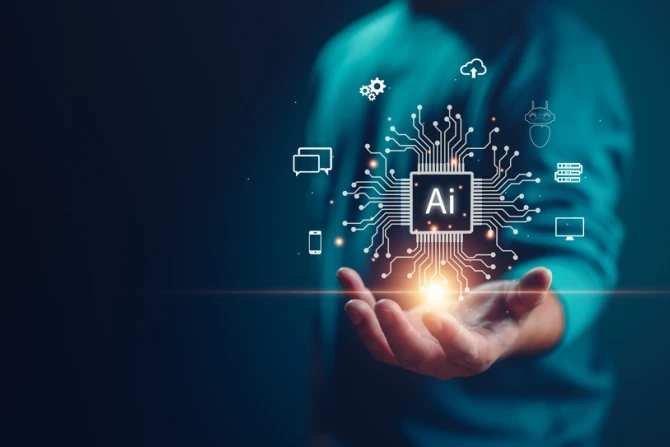
Pope Leo XIV on Thursday said developers and users of artificial intelligence (AI) are jointly responsible for ensuring innovations uphold human dignity and the common good in his message to participants of the 2025 AI for Good Summit taking place in Geneva, Switzerland.
SIGN UP FOR OUR NEWSLETTER HERE
“Although responsibility for the ethical use of AI systems begins with those who develop, manage and oversee them, those who use them also share in this responsibility,” the Holy Father said in a message to participants at the July 8-11 global meeting.
The letter, signed by Vatican Secretary of State Cardinal Pietro Parolin, expressed the pope’s call for “regulatory frameworks centered on the human person” and “proper ethical management” of AI technologies on local and global levels.
“Humanity is at a crossroads, facing the immense potential generated by the digital revolution driven by artificial intelligence,” the pope said. “The impact of this revolution is far-reaching, transforming areas such as education, work, art, healthcare, governance, the military, and communication.”
In spite of these global advancements, Leo commented that approximately 2.6 billion persons living in rural and low-income areas do not even have access to basic communication technologies.
“This epochal transformation requires responsibility and discernment to ensure that AI is developed and utilized for the common good, building bridges of dialogue and fostering fraternity, and ensuring it serves the interests of humanity as a whole,” he said.
While AI can perform specific tasks, “simulate” human reasoning, or technically enhance global cooperation with speed and efficiency, Leo said it “cannot replicate moral discernment or the ability to form genuine relationships.
“Ultimately, we must never lose sight of the common goal of contributing to that ‘tranquillitas ordinis — the tranquility of order,’ as St. Augustine called it,” he said, “and fostering a more humane order of social relations, and peaceful and just societies in the service of integral human development and the good of the human family.”
Just days into his pontificate, at his first meeting with the College of Cardinals on May 10, Pope Leo identified AI as “another industrial revolution” that can “pose new challenges for the defence of human dignity, justice and labor.”
This article was originally published by CNA.