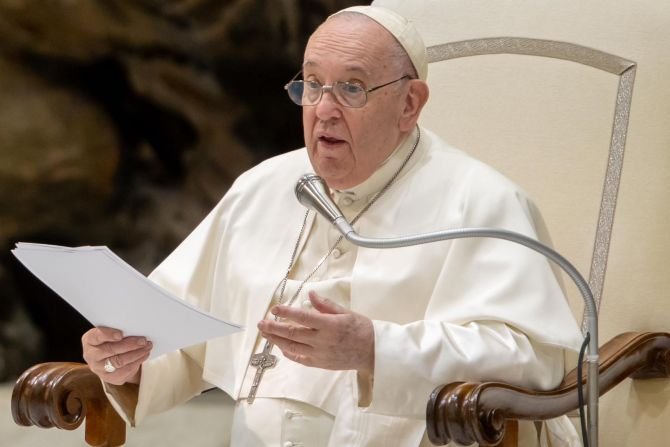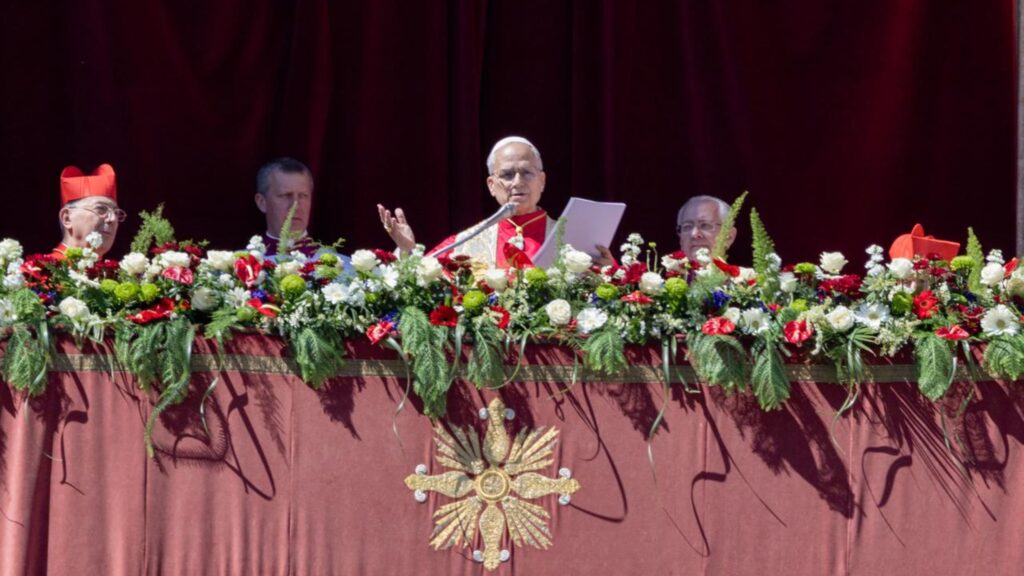
In his first Easter message to the city and the world, the pontiff urged those with weapons to lay them down.
VATICAN CITY — Pope Leo XIV announced Sunday that he will lead a prayer vigil for peace on April 11 at St. Peter’s Basilica, using his first Easter urbi et orbi message to make a forceful appeal for an end to war and a renewed embrace of dialogue.
In a departure from the traditional Easter survey of major international flashpoints, Leo focused his message on the spiritual roots of peace, presenting Christ’s resurrection as the answer to a world wounded by violence, hatred, and indifference.
“Easter is the victory of life over death, of light over darkness, of love over hatred,” the pope said. Yet it is also “a victory that came at a very high price”: Christ “had to die — and die on a cross — after suffering an unjust condemnation, being mocked and tortured, and shedding all his blood.”
Leo said the strength behind Christ’s triumph over death was not worldly power but divine love. “This strength, this power, is God himself, for he is love who creates and generates, love who is faithful to the end, and love who forgives and redeems,” he said.
“Christ, our ‘victorious king,’ fought and won his battle through trusting abandonment to the Father’s will, to his plan of salvation,” the pope said.
He added that Jesus “walked the path of dialogue to the very end, not in words but in deeds: to find us who were lost, he became flesh; to free us who were slaves, he became a slave; to give life to us mortals, he allowed himself to be killed on the cross.”
Leo stressed that “the power with which Christ rose is entirely nonviolent,” comparing it to “a human heart which, wounded by an offense, rejects the instinct for revenge and, filled with compassion, prays for the one who has committed the offense.”
“That is the true strength that brings peace to humanity,” he said, because it “fosters respectful relationships at every level: among individuals, families, social groups, and nations.”
The pope described the Resurrection as the foundation of a renewed human family. “Yes, Christ’s resurrection is the beginning of a new humanity; it is the entrance into the true promised land, where justice, freedom, and peace reign, where all recognize one another as brothers and sisters, children of the same Father who is love, life, and light.”
At the same time, Leo warned against becoming desensitized to violence.
“We are growing accustomed to violence, resigning ourselves to it, and becoming indifferent,” he said. “Indifferent to the deaths of thousands of people. Indifferent to the repercussions of hatred and division that conflicts sow. Indifferent to the economic and social consequences they produce, which we all feel.”
Recalling what he called an expression dear to Pope Francis, Leo lamented an ever-increasing “globalization of indifference” and urged Christians not to accept evil as inevitable.
“We cannot continue to be indifferent! And we cannot resign ourselves to evil!” he said.
Quoting St. Augustine — “If you fear death, love the Resurrection!” — Leo said Christians must cling to the hope of the risen Christ, who has conquered evil and offers true peace.
“The peace that Jesus gives us is not merely the silence of weapons but the peace that touches and transforms the heart of each one of us!” the pope said. “Let us allow ourselves to be transformed by the peace of Christ! Let us make heard the cry for peace that springs from our hearts!”
He then made his appeal in direct terms: “Let those who have weapons lay them down! Let those who have the power to unleash wars choose peace! Not a peace imposed by force, but through dialogue! Not with the desire to dominate others, but to encounter them!”
Leo concluded by inviting the faithful to join him on April 11 for the peace vigil at St. Peter’s Basilica.
“On this day of celebration, let us abandon every desire for conflict, domination, and power, and implore the Lord to grant his peace to a world ravaged by wars and marked by a hatred and indifference that make us feel powerless in the face of evil,” he said.
The pope ended the message with Easter greetings in several languages before concluding in Latin.
This story was first published by ACI Stampa, the Italian-language sister service of EWTN News. It has been translated and adapted by EWTN News English.