In a letter to the College of Cardinals, the pope said the exhortation remains “a significant point of reference” and urged renewed missionary boldness across the life of the Church.
Pope Leo XIV has confirmed that he will hold a consistory with cardinals from around the world on June 26–27, saying their previous discussions produced contributions that are “a resource of lasting value” for the Church.
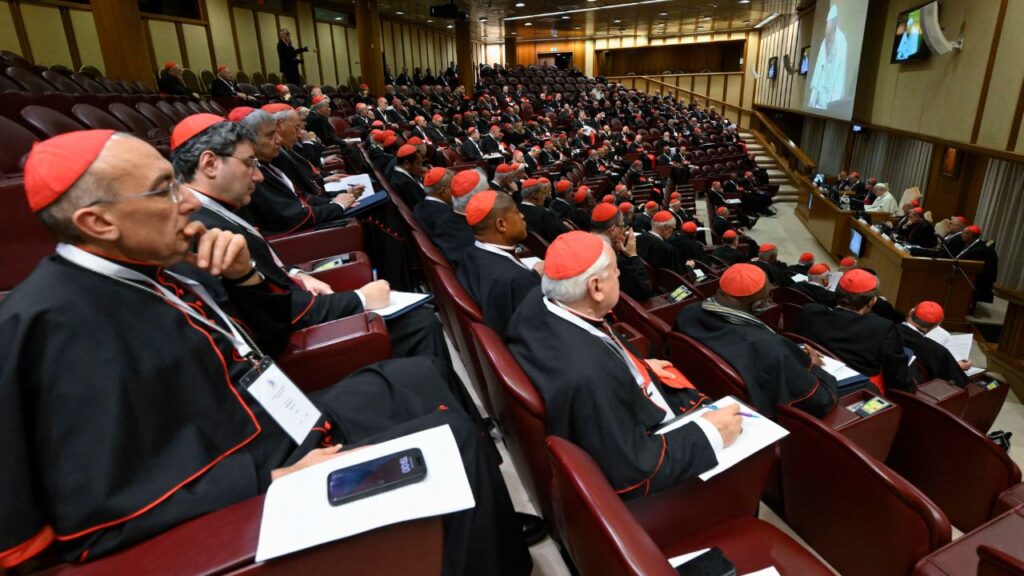
In a letter to the members of the College of Cardinals dated April 12 and made public Tuesday, the Holy Father looked back on the first consistory of his pontificate, held Jan. 7–8, and highlighted the importance of the cardinals’ exchanges there.
“I greatly appreciate the work carried out in the groups, which facilitated free, concrete and spiritually fruitful exchanges, as well as the notable quality of the interventions made during the plenary,” Pope Leo wrote.
At that January meeting, the cardinals chose two of four topics proposed by the pope to guide their work. Setting aside the liturgical question — specifically the rite used before the Second Vatican Council — and the issue of relations between the Holy See and episcopal conferences, they opted to focus on “the mission of the Church in the world today” and on “synod and synodality as an instrument and style of collaboration.”
The pope also placed special emphasis on Evangelii Gaudium, Pope Francis’ first apostolic exhortation, published Nov. 24, 2013, and centered on proclaiming the kerygma — the Gospel with Christ at the center.
Referring to the cardinals’ contributions, Pope Leo said: “This Exhortation continues to be a significant point of reference. In addition to introducing new content, it refocuses everything on the kerygma as the heart of our Christian and ecclesial identity.”
He added that it was recognized as “a ‘breath of fresh air,’ capable of initiating processes of pastoral and missionary conversion — rather than producing immediate structural reforms — and thus profoundly guiding the Church’s journey.”
The pope said this perspective challenges the Church at every level.
“On a personal level, it calls every baptized person to renew their encounter with Christ, moving from a faith merely received to a faith truly lived and experienced,” he wrote. “This journey affects the very quality of spiritual life, expressed in the primacy of prayer, in the witness that precedes words, and in the coherence between faith and life.”
At the community level, he said, the Church must move “from a pastoral approach of maintenance to one of mission.”
“This requires communities to be living agents of the proclamation — welcoming communities that use accessible language, attentive to the quality of relationships, and capable of offering places for listening, accompaniment and healing,” he wrote.
At the diocesan level, Pope Leo stressed the duty of bishops and priests to foster missionary zeal.
“The responsibility of Pastors to resolutely support missionary boldness emerges clearly, ensuring that such boldness is not weighed down or stifled by organizational excesses, but is guided by a discernment that helps us to recognize what is essential,” he said.
The pope also underlined a Christ-centered understanding of mission, one that spreads “through attraction rather than conquest.”
“It is an integral mission, holding in balance explicit proclamation, witness, commitment and dialogue, and yielding neither to the temptation of proselytism nor to a merely institutional mentality of preservation or expansion,” he wrote. “Even when the Church finds herself in a minority, she is called to live with confident courage, as a small flock bringing hope to all, mindful that the aim of mission is not its own survival, but the communication of the love with which God loves the world.”
Among the proposals that emerged from the January consistory, the pope said several deserve further reflection. These include “the need to relaunch Evangelii Gaudium through an honest assessment of what has actually been embraced over the years and what, by contrast, remains unfamiliar or unimplemented,” with particular attention to “the necessary reforms of the processes of Christian initiation.”
He also pointed to “the importance of valuing apostolic and pastoral visits as authentic opportunities for kerygmatic proclamation and for a growth in the quality of relationships” and called for a reassessment of Church communications — including at the level of the Holy See — “from a more explicitly missionary perspective.”
The letter concludes with the formal announcement of the next consistory, to be held June 26–27, with further details to come later to help cardinals prepare.
This story was first published by ACI Prensa, the Spanish-language sister service of EWTN News. It has been translated and adapted by EWTN News English.