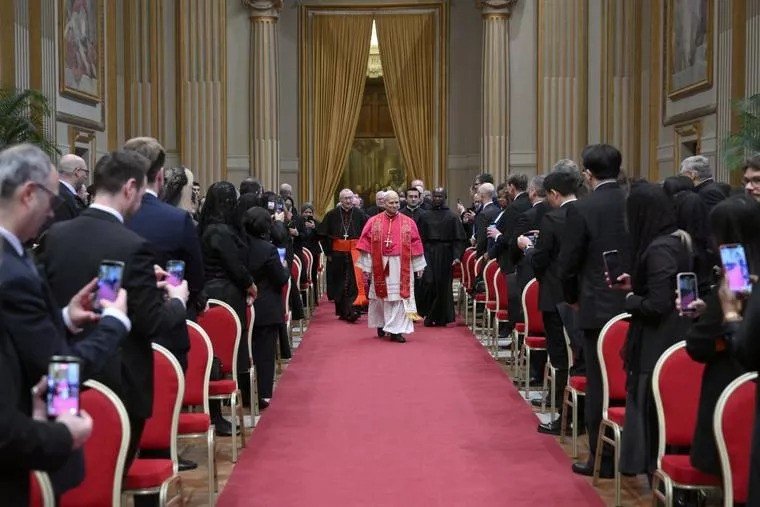
In interviews with EWTN News, ambassadors representing the European Union, Slovenia and Ukraine said they appreciated the Holy Father’s insights into some of the world’s most pressing humanitarian crises.
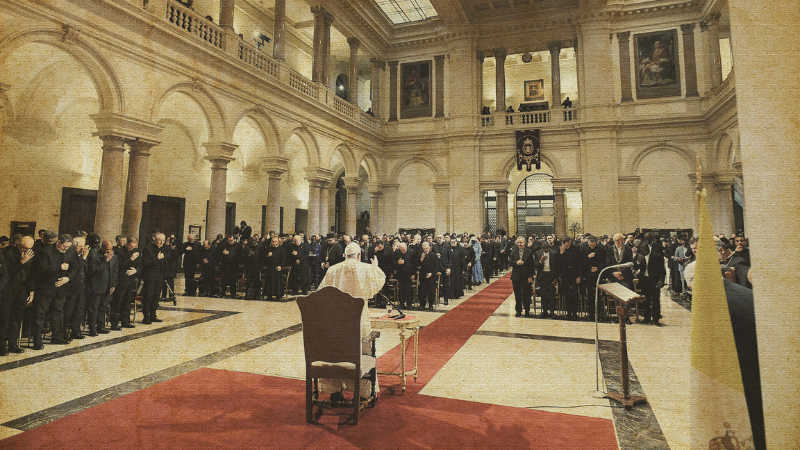
Pope Leo XIV’s speech last week outlining his vision of international relations made a deep impression on some of the diplomats accredited to the Holy See who attended the Jan. 9 event.
In interviews with EWTN News, ambassadors representing the European Union, Slovenia and Ukraine said they appreciated the Holy Father’s insights into some of the world’s most pressing humanitarian crises.
Every year, the Pope meets the diplomatic corps accredited to the Holy See and delivers a speech, often dubbed as the “State of the World” speech. This was the second time Leo XIV met with the diplomatic corps since his election.
The Pope framed the Holy See’s diplomatic efforts into the quest for the “city of God” described by his beloved St. Augustine, advocating a recommitment of multilateralism directed toward achieving a genuine, lasting peace, not merely a cessation of hostilities.
“The City of God does not propose a political program,” the Pope remarked. “Instead, it offers valuable reflections on fundamental issues concerning social and political life, such as the search for a more just and peaceful coexistence among peoples. Augustine also warns of the grave dangers to political life arising from false representations of history, excessive nationalism and the distortion of the ideal of the political leader.”
Martin Selmayr, the European Union’s ambassador, said the speech “was a message to the diplomatic corps, to the world, and to believers of the Catholic Church and beyond.”
Selmayr noted that “the word ‘dialogue’ appeared very often in this speech, and I think it is very important for us diplomats.”
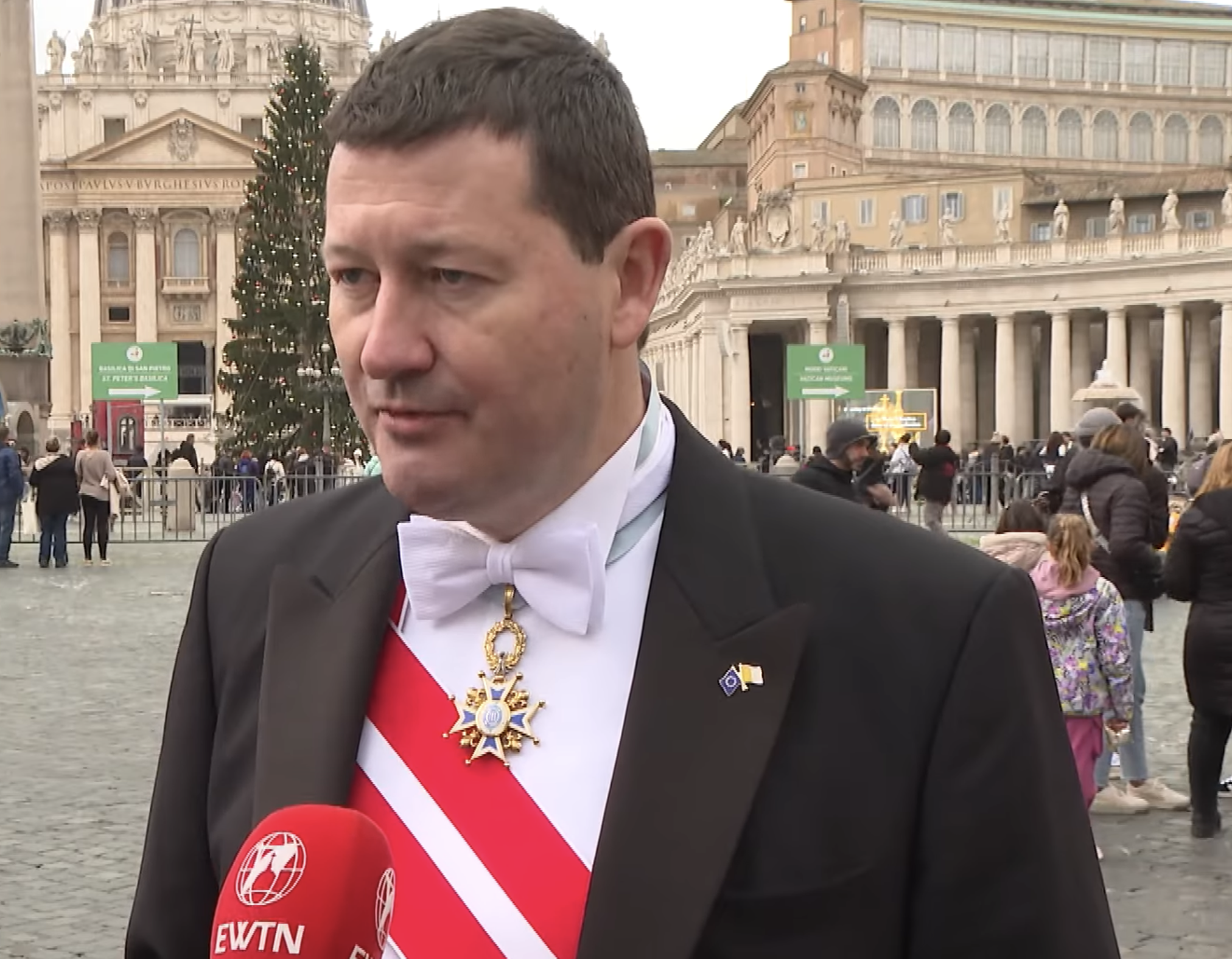
“We are in a new era,” the ambassador observed. “We have tectonic shifts everywhere, and we need stability. We need moral authority. We need the rule of law. The Pope spoke about the rule of law as the foundation of working together on this planet. He spoke about the city of God and the earthly city.”
Selmayr viewed the Pope’s address as an “encouragement for diplomacy,” adding that he appreciated that Leo mentioned the 80th anniversary of the United Nations and reiterated the importance of multilateralism.
Franc But, ambassador of Slovenia to the Holy See, observed that the speech was not only about “the wars raging, in every region — Ukraine, Middle East, Sahel and Great Lakes region in Africa, Haiti,” but also attacks on human life and dignity such as euthanasia.
The reference to euthanasia is important to the ambassador since the Slovenian people rejected a referendum aimed at legalizing assisted suicide in November.
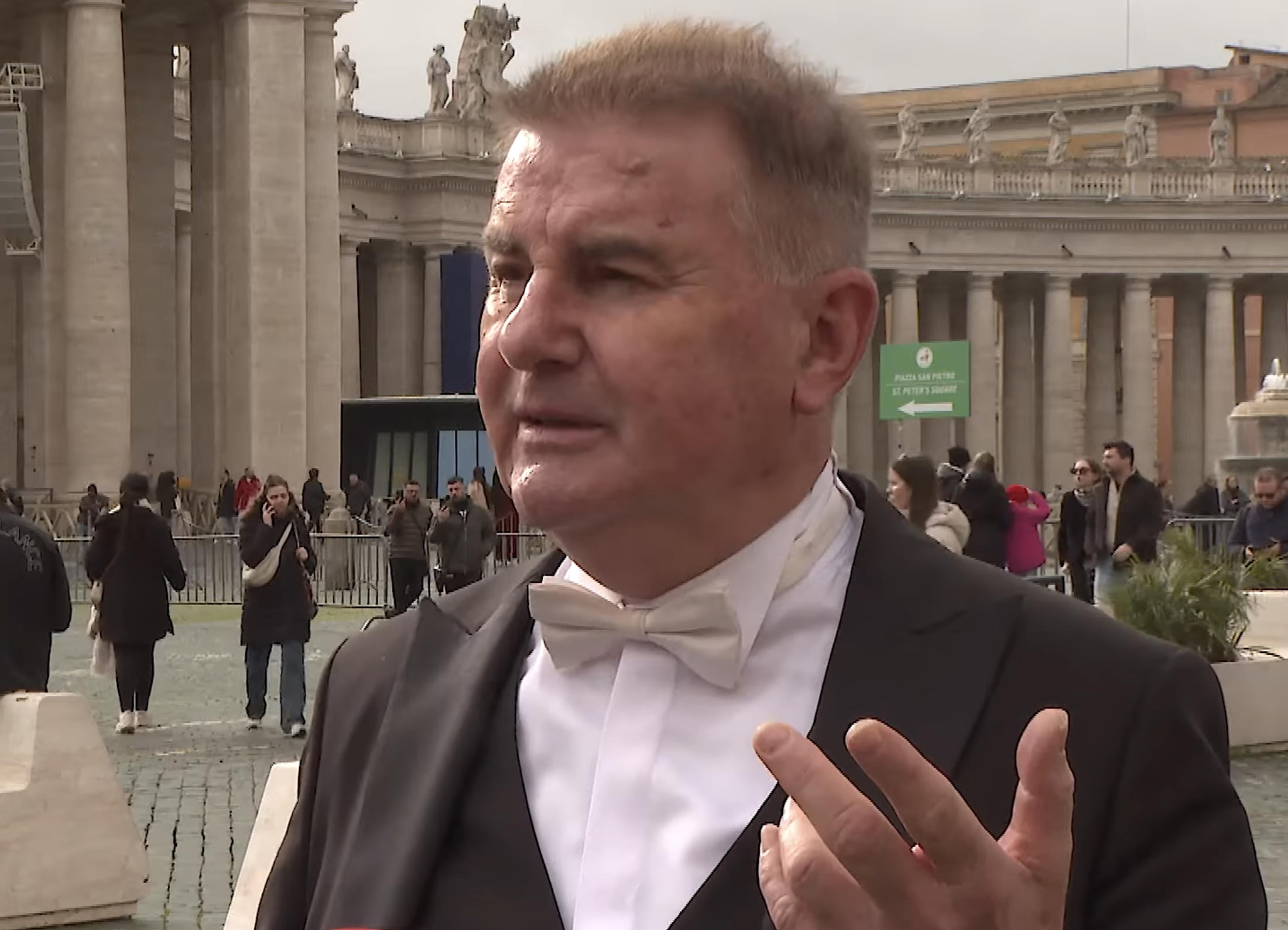
What also struck him about the speech was the Pope’s call to rediscover the basic values of the Christian faith.
In an increasingly polarized world, the Slovenian ambassador noted, “Christian faith is talking about coming together and finding the solutions that are best for society. Either they are coming from one side to another, but they’re coming from the heart, and they are coming from a way to bring people together and not to split them.”
Andrii Yurash, Ukrainian ambassador to the Holy See, was touched not only by the reference that Leo XIV made to the war in Ukraine but also his call for nations to respect international humanitarian law.
Yurash noted the situation in Ukraine is “incredibly difficult” and that the population is suffering greatly. The Pope’s desire to see the fighting end, he said, is shared “not just by Ukrainians, but by the whole world.”
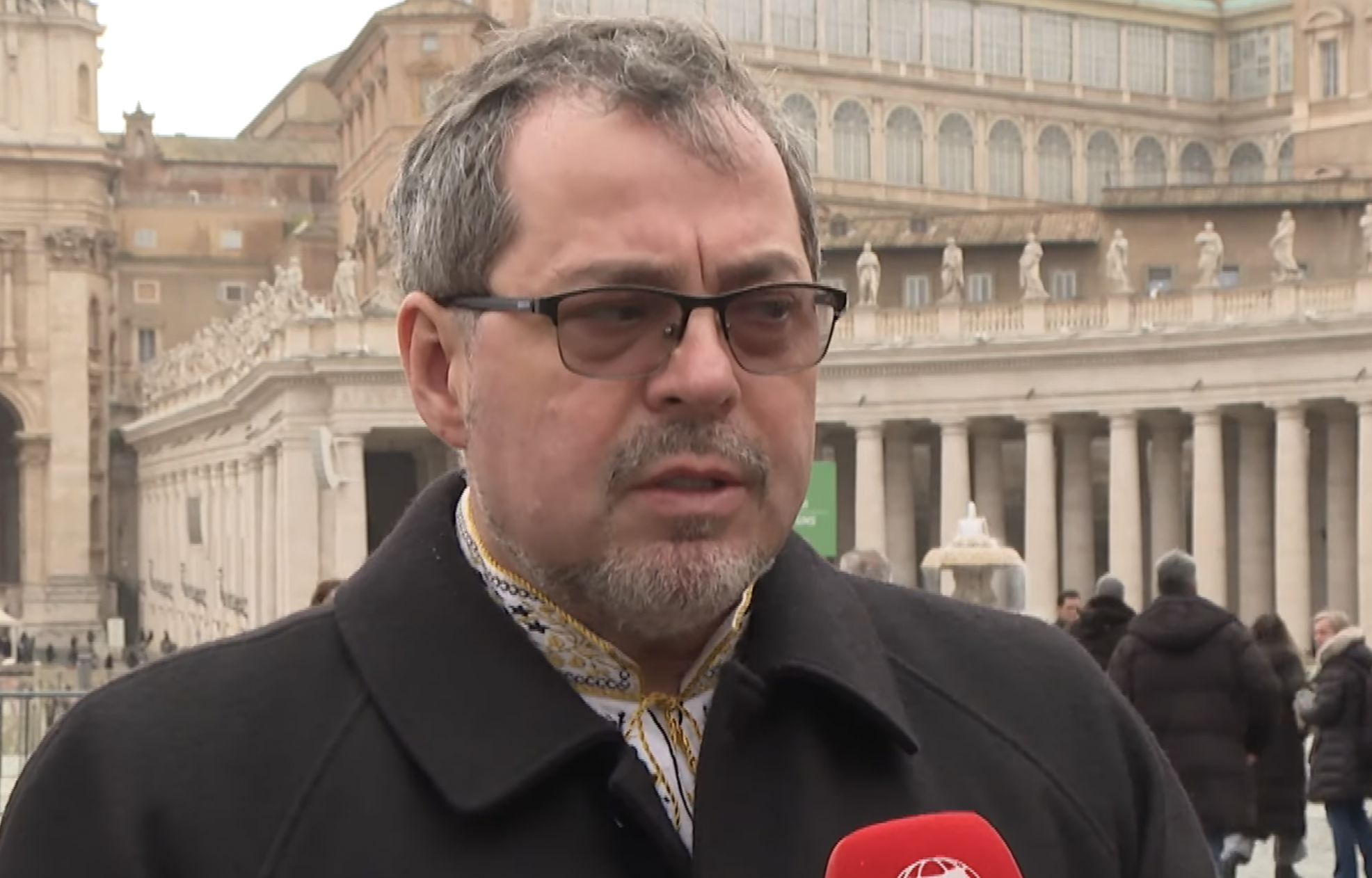
Yurash also underscored the role of churches in achieving peace. “Ukraine,” he said, “is a nation with one of the highest rates of religiosity right now, and so every message coming from church leaders can be very influential, especially in this context of war.”
In particular, the ambassador mentioned the role of military chaplains and noted that “messages from the bishops, from the ordinary priests are always welcome” in support of a just peace in Ukraine.
This article was originally published by NCRegister.