The Holy Father appealed to communities of nations “to be ever vigilant, so that the horror of genocide may never again befall any people.”
Pope Leo XIV said he is praying for a world “without antisemitism, without prejudice, oppression, and persecution of any human being,” during his general audience on Jan. 28.
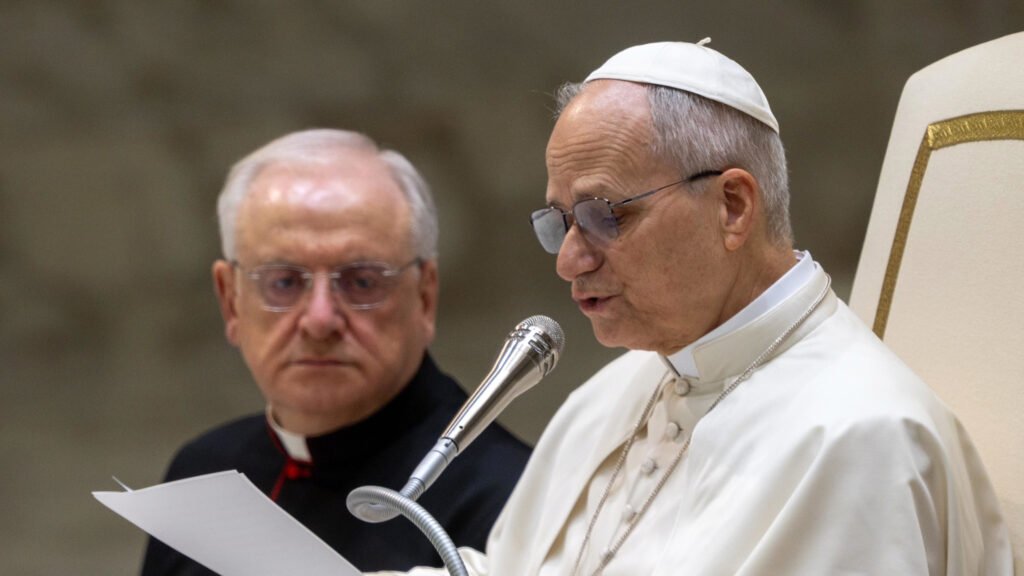
Recalling the Jan. 27 commemoration of International Holocaust Remembrance Day, held in memory of the millions of Jews and others who lost their lives during that genocide, the pope called on communities of nations “to be ever vigilant, so that the horror of genocide may never again befall any people and that a society based on mutual respect and the common good may be built.”
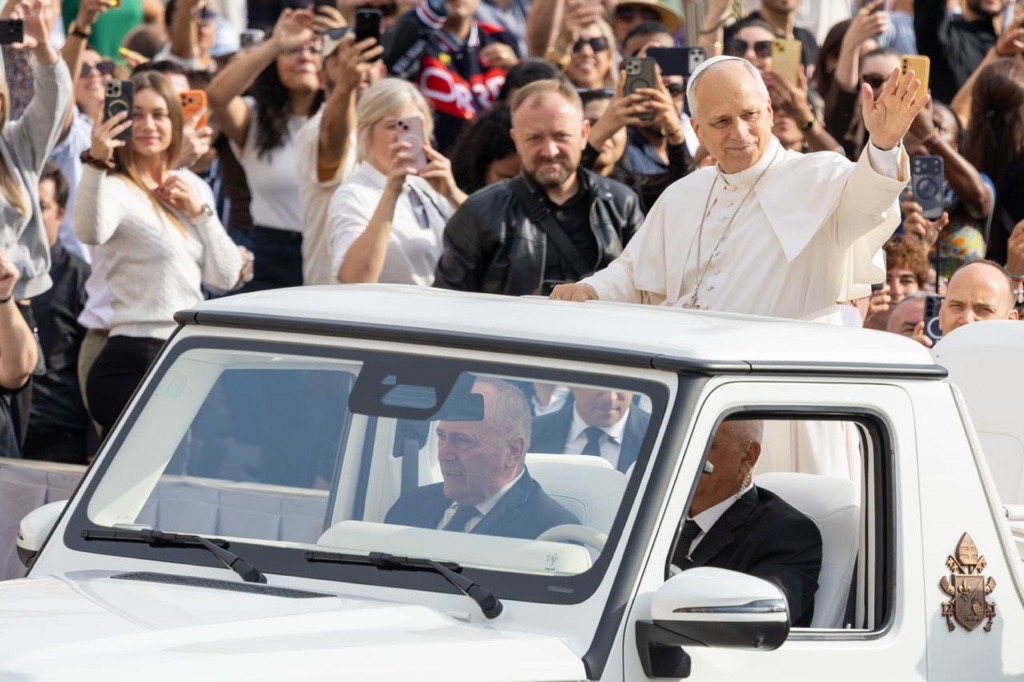
Leo made his appeal at the end of his weekly general audience in the Vatican’s Paul VI Hall on a rainy Jan. 28.
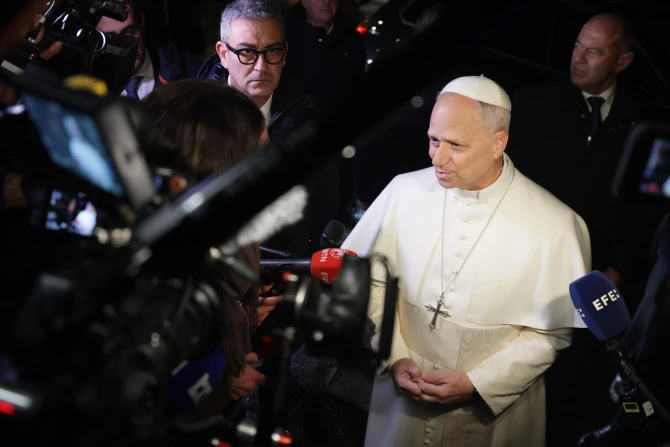
He also mentioned Holocaust Remembrance Day in brief comments to journalists as he left his Castel Gandolfo residence outside of Rome on the night of Jan. 27.
Asked about the presence of a United States aircraft carrier in the Middle Eastern region, he stressed the need “to pray hard for peace.”
“We little ones can raise our voices and always seek dialogue rather than violence to resolve problems, especially on this day that commemorates the Shoah,” he said, adding that we must eliminate “all forms of antisemitism.”
The word of God is a living reality
In his main message at the Jan. 28 audience, Pope Leo continued his series of talks on the dogmatic constitution Dei Verbum of the Second Vatican Council. He focused on divine revelation and reflected in particular on the relationship between sacred Scripture and tradition.
The word of God “is not fossilized, but rather it is a living and organic reality that develops and grows in tradition,” he said.

Pope Leo XIV gives his blessing at the end of the general audience in the Vatican’s Paul VI Hall on Jan. 28, 2026. Credit: Daniel Ibanez/EWTN News
He pointed to the teaching of St. John Henry Newman, doctor of the Church, who in his work “The Development of Christian Doctrine” affirmed that Christianity — both as a communal experience and as a doctrine — is “a dynamic reality.”
Leo noted that this understanding is already present in the Gospel, when Jesus uses the parables of the seed to express a life that develops thanks to an inner vital force.
Scripture and tradition: An inseparable unity
Following the teaching of the Second Vatican Council, the pope emphasized that sacred Scripture and tradition “are so linked and joined together that one cannot stand without the others.”
Quoting Dei Verbum, he said “there exists a close connection and communication between sacred tradition and sacred Scripture. For both of them, flowing from the same divine wellspring, in a certain way merge into a unity and tend toward the same end.”
Church tradition, he explained, “branches out throughout history through the Church, which preserves, interprets, and embodies the word of God.”
The Catechism of the Catholic Church, citing a motto of the Church Fathers, also affirms that “sacred Scripture is written principally in the Church’s heart rather than in documents and records.”
The pontiff recalled two classic expressions of the Christian tradition. St. Gregory the Great famously said “the sacred Scriptures grow with the one who reads them” and St. Augustine observed that “there is only one word of God that unfolds through Scripture, and there is only one Word that sounds on the lips of many saints.”
Safeguarding the deposit of faith
Leo XIV also quoted the exhortation of the Apostle Paul to Timothy: “O Timothy, guard what has been entrusted to you.”
This passage, he said, is echoed by Dei Verbum, which states that “Sacred tradition and sacred Scripture form one sacred deposit of the word of God, committed to the Church,” whose interpretation belongs to the “living teaching office of the Church, whose authority is exercised in the name of Jesus Christ.”
The pope explained that the term “deposit” is juridical in origin and imposes a precise duty: to preserve the content — “which in this case is the faith” — and to transmit it intact.
For this reason, he stressed that the “deposit” of the word of God “is still in the hands of the Church and all of us,” who, in our various ecclesial ministries, are called to preserve it “in its integrity, as a lodestar for our journey through the complexity of history and existence.”
This article was originally published by EWTN News English.
Hannah Brockhaus contributed to this report.