Skip to content

Pope Leo XIV praises Chinese Catholics for unity 100 years after consecration of their first bishops

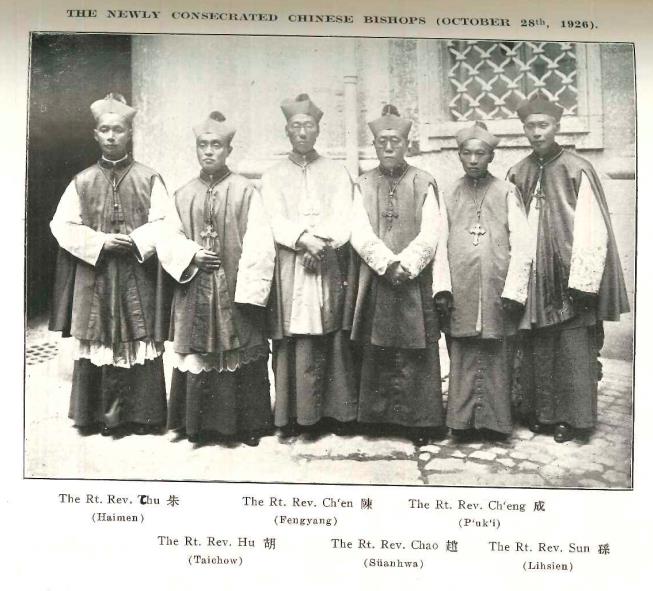
On March 30, 1926, Cardinal Willem van Rossum, prefect of Propaganda Fide, announced Pius XI’s decision to consecrate the first six Chinese bishops, a ceremony that was held in St. Peter’s Basilica on Oct. 28, 1926. | Credit: Public domain

The pope sent a message to a conference in Rome marking the anniversary, where attendees discussed the Vatican’s complex relations with China.

A century after the consecration of the first Chinese bishops, Pope Leo XIV praised the Church in China for remaining in communion with Rome.

On Nov. 5, the Vatican published a video message from the pontiff during a conference titled “The Universal Face of the Church in China,” held at the Pontifical Urban University in Rome. The meeting not only marked the 1926 consecration of China’s first bishops but also reflected on the state of the Chinese church today, particularly regarding the ongoing Vatican-China deal.

Among those present were Vatican Secretary of State Cardinal Pietro Parolin; Cardinal Luis Antonio Tagle, dean of the College of Cardinals; Cardinal Stephen Chow Sau-yan, SJ, bishop of Hong Kong; and Ignazio Ding Zuyao, bishop of Haimen.

Communion with Peter, not colonialism

In his message, Leo noted Chinese Catholics’ long history of fidelity to the papacy, quoting Pope Benedict XVI, who said that they have always had “legitimate pastors who have preserved intact apostolic succession.”

“No shepherd in the Church can claim the mission as his own,” Leo said. “Rather, he receives and exercises it in communion with the successor of Peter and with all the other successors of the apostles, the bishops.”
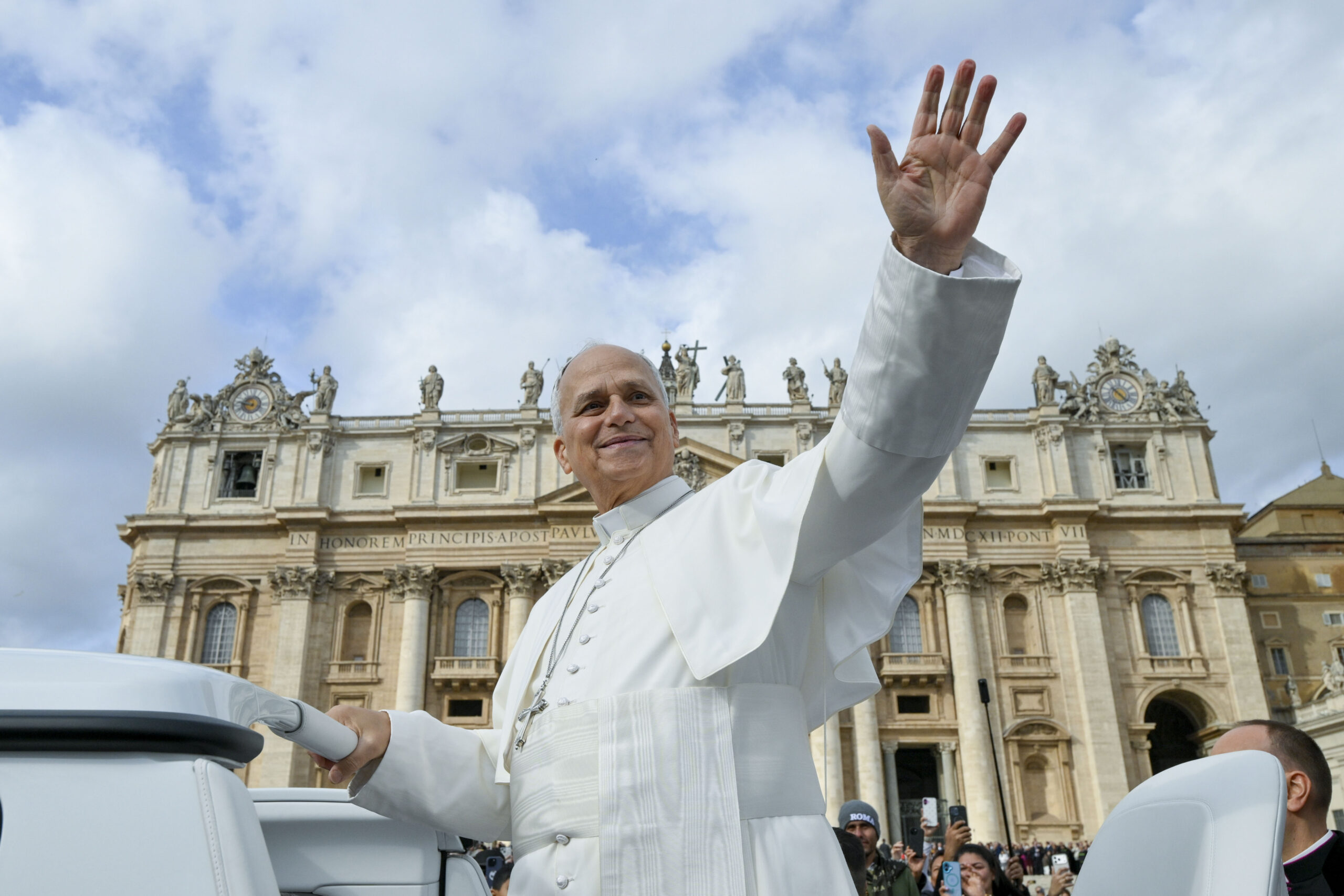
Pope Leo XIV passes in front of St. Peter’s Basilica on the back of the popemobile during his weekly ride through the crowds in St. Peter’s Square for the general audience on Oct. 28, 2026. | Credit: Vatican Media

The pope also noted the significance of six Chinese priests traveling from Shanghai to Rome in 1926 to receive consecration from Pope Pius XI.

“They crossed the world to bear witness to the communion that springs from the faith of the apostles,” Leo said.

Quoting Pope Benedict XV, Leo affirmed that the Church’s missionary work “cannot be confused with processes of colonization” but is “born of mission” to “bear witness to Christ in charity.”

China-Holy See relations: A relationship marked by suspicion?

The Holy See and China have not maintained official diplomatic relations since 1951. Their provisional, undisclosed 2018 agreement on the selection of bishops has been challenged, with concerns that the Chinese Communist Party (CCP) is suppressing the Church.

Parolin, speaking on the sidelines of the conference, acknowledged that the deal still has its imperfections.
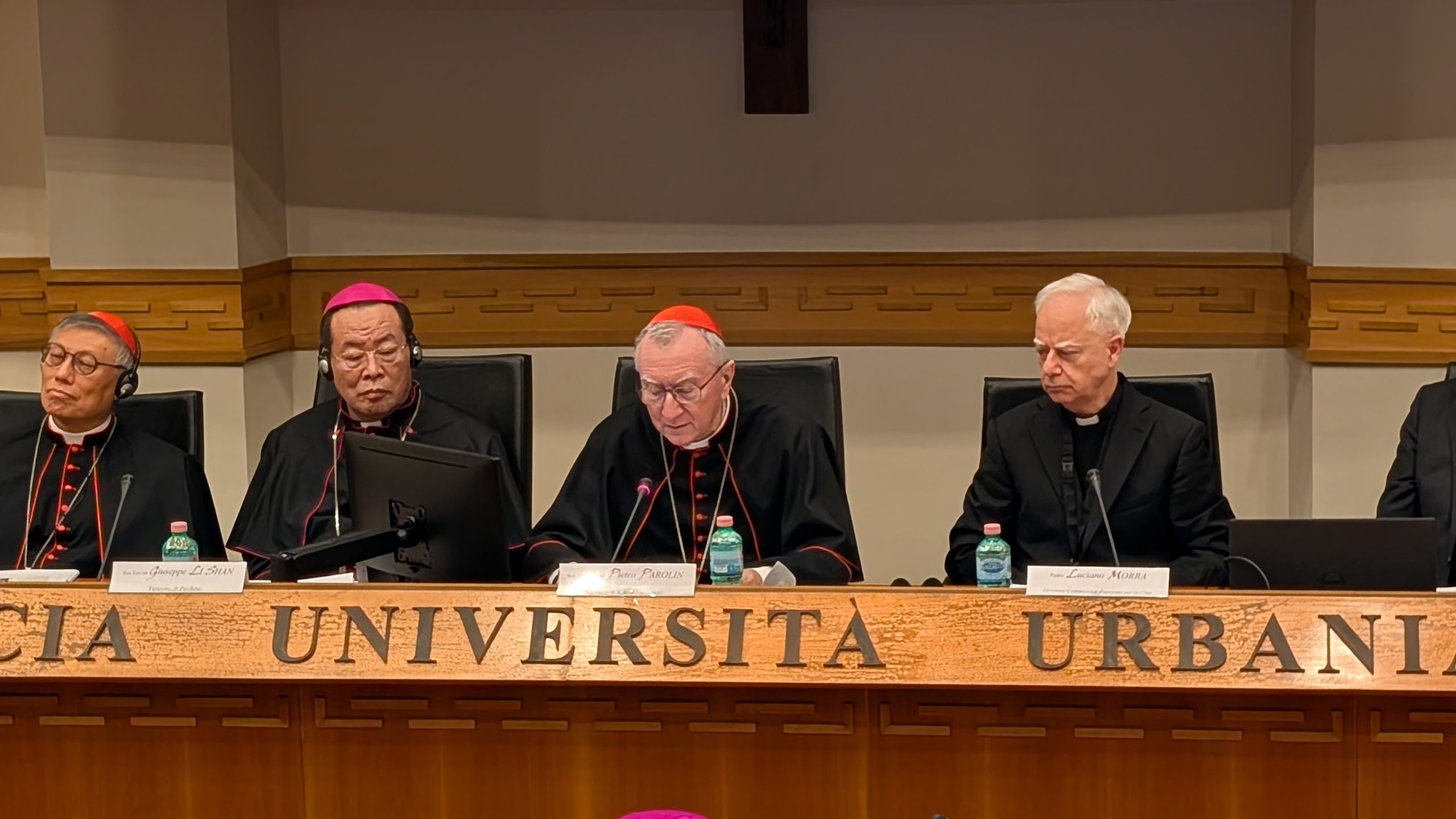
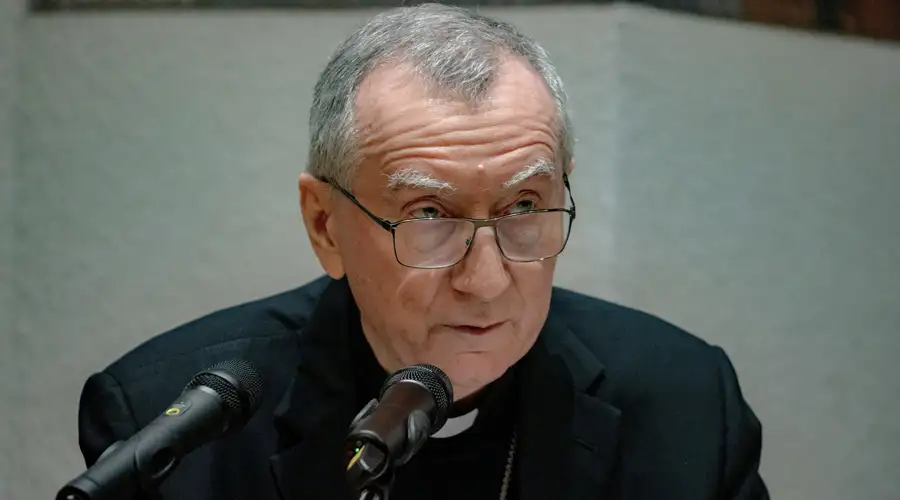
Vatican Secretary of State Cardinal Pietro Parolin speaks during the conference “The Universal Face of the Church in China” at the Pontifical Urban University in Rome on Nov. 5, 2026. | Credit: Ishmael Adibuah/EWTN News

“All agreements are imperfect, including the one on China,” Parolin said to reporters. “However, the path is open. So we move forward trying to perfect what is imperfect.”

Chow noted the suspicion with which Catholics are sometimes viewed in China, out of fear that their religion could be used as a tool of foreign influence.

“We wonder how come the Church, our Church, in China for so many years is still seen as a foreign Church,” he said. “I think that in China, a major concern is that, for example, religion will not be used as a vehicle for foreign intervention.”
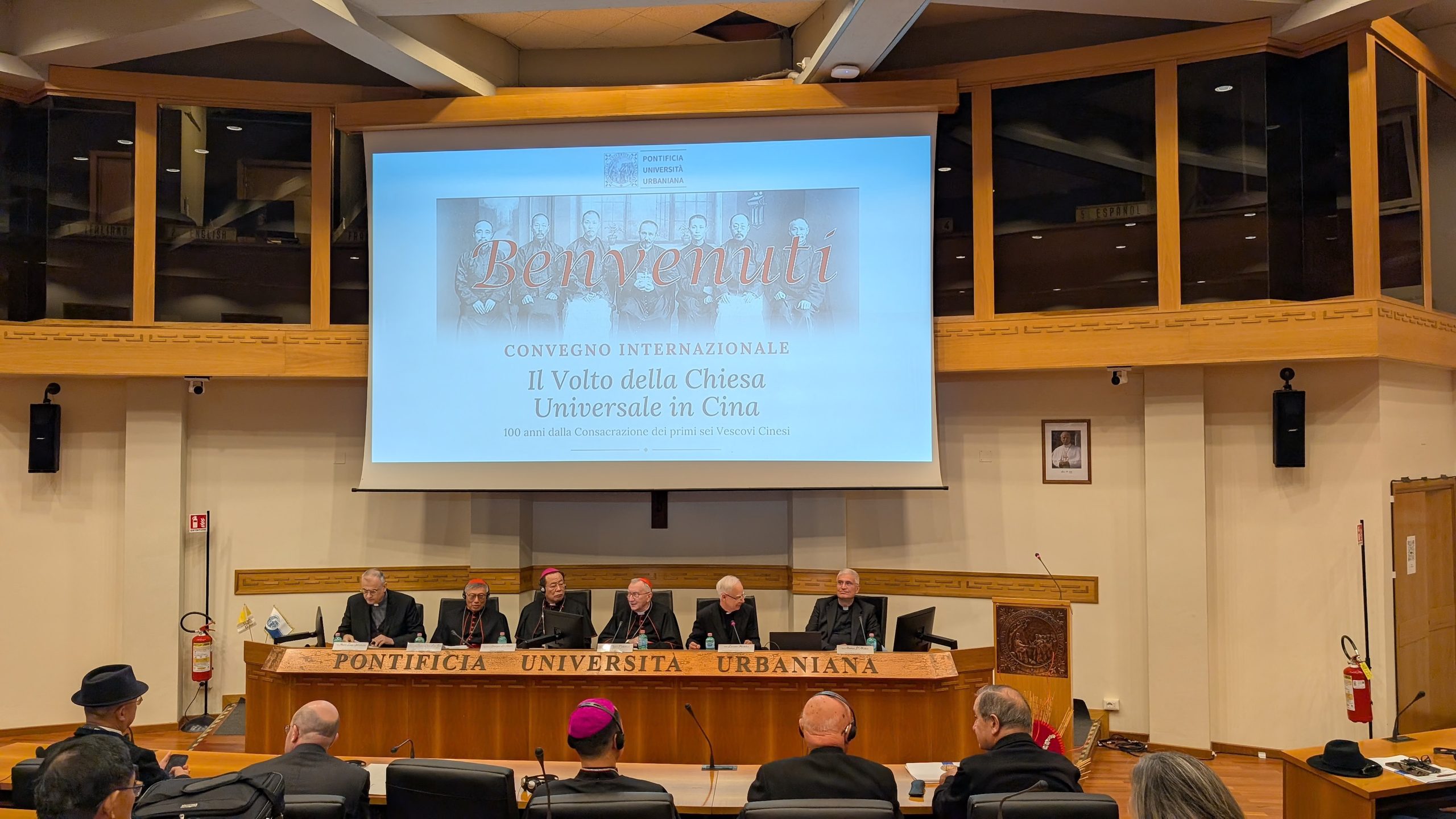
Vatican Secretary of State Cardinal Pietro Parolin speaks during the conference “The Universal Face of the Church in China” at the Pontifical Urban University in Rome on Nov. 5, 2026. | Credit: Ishmael Adibuah/EWTN News

Others, however, expressed support for the so-called “Sinicization” of the Church, which is a state-led campaign to subordinate religious institutions to its Chinese Communist Party agenda.

“The ‘Sinicization of Catholicism’ is not a departure from Catholic tradition but an expression of authentic catholicity,” Joseph Li Shan, bishop of Beijing, said.

Zuyao, made a bishop in October under the Vatican-China deal, added that Sinicization is “not a departure from communion with the universal faith” but rather “a natural expression of inner faith and a faithful implementation of Christ’s command ‘Render unto Caesar what is Caesar’s and unto God what is God’s.’”

This article was originally published by EWTN News English.
Receive the most important news from EWTN Vatican via WhatsApp. It has become increasingly difficult to see Catholic news on social media. Subscribe to our free channel today

Share

Would you like to receive the latest updates on the Pope and the Vatican

Receive articles and updates from our EWTN Newsletter.

I agree that EWTN will keep me informed about news, faith stories and how to best support their work. You will never receive e-mails from us that you do not want to receive. You can unsubscribe any time. For more information on how to unsubscribe, our privacy practices, and how we are committed to protecting and respecting your privacy, please review our Privacy Policy.

More news related to this article

Vatican News: Korean Martyr Statue in St. Peter & Pope Francis’ Message at Clinton Global Initiative

Stay informed with this week’s Vaticano Updates as we bring you the most significant news from Pope Francis

Is the Next Pope at the Synod?

ANALYSIS: Roughly half of all cardinal-electors are currently in Rome, making the Synod on Synodality something of a prelude to a future conclave.
Cardinal Pietro Parolin, Vatican secretary of state. | Credit: Daniel Ibáñez/ACI Prensa

Cardinal Parolin presents the Father Jacques Hamel Award 2023 in Lourdes

The Vatican Secretary of State, Cardinal Pietro Parolin, presented Father Jacques Hamel’s 2023 Award during the Days of

Vatican Appointments. Fernandez as Member of Another Dicastery, the Number 2 of the Academy of Theology

Two minor appointments, but which may change some perspectives. Fernandez also ends up at the Dicastery for Legislative Texts. A new secretary for the Pontifical Academy of Theology

Pope Leo makes surprise visit to children’s Christmas concert at Castel Gandolfo school

Pope Leo XIV enjoyed a special Christmas concert this week dedicated to him by students of the Paul

Pope Francis sends delegation to Syria to support reconstruction

Cardinal Claudio Gugerotti, sent by Pope Francis, is visiting Syria until Jan. 29 to deliver the pope’s blessing to Catholics and support the country’s reconstruction.

LIVE
FROM THE VATICAN

Be present live on EWTNVatican.com