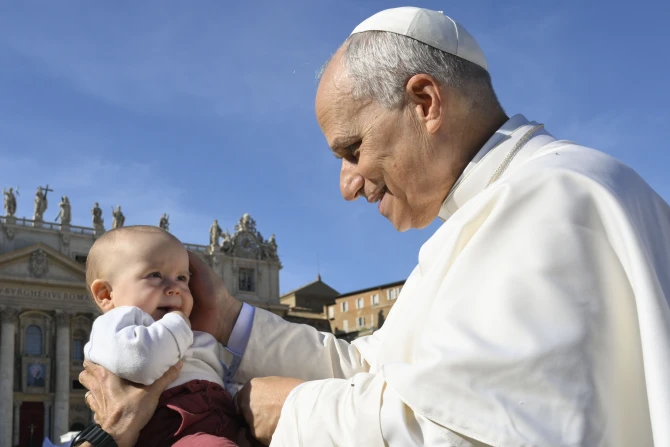
The wool of the blessed lambs will be used to make pallia, narrow white vestments worn by metropolitan archbishops.
Pope Leo XIV on Wednesday received a pair of lambs to be blessed for the feast day of the Roman virgin and martyr St. Agnes — the first time a pope has welcomed lambs at the Vatican, part of a centuries-old tradition, since 2017.
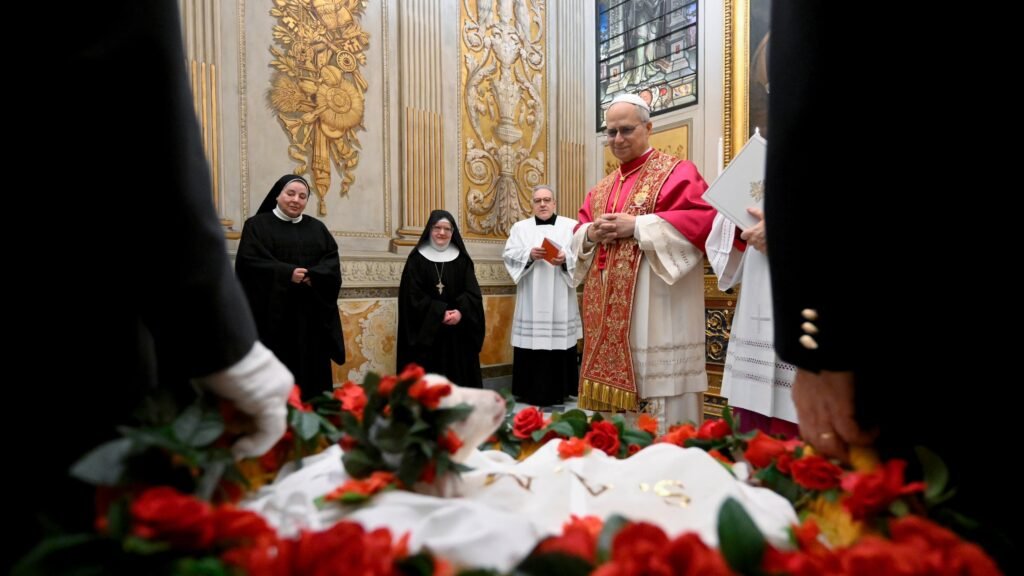
The presentation took place in the 17th-century Urban VIII Chapel in the Apostolic Palace, where the lambs’ bleats punctuated the brief ceremony Jan. 21. The wool of the blessed lambs will be used to make pallia — narrow white vestments worn by metropolitan archbishops.
It was a tradition for the pope to bless the lambs every year on the feast of St. Agnes until Pope Francis discontinued the practice after 2017.
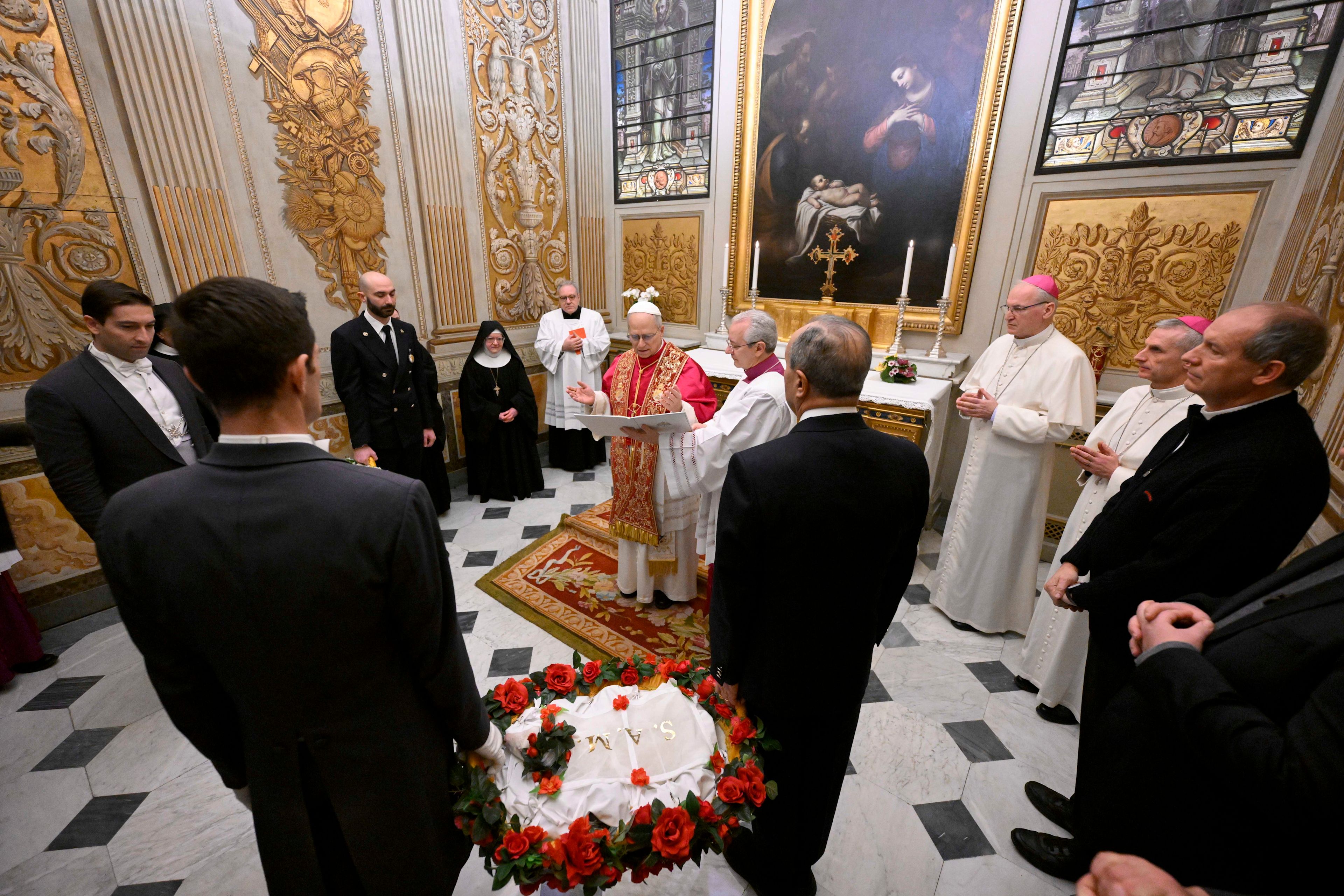
Pope Leo XIV meets a pair of lambs blessed for the feast of the Roman virgin and martyr St. Agnes in the Urban VIII Chapel in the Vatican’s Apostolic Palace on Jan. 21, 2026. | Credit: Vatican Media
St. Agnes, who was killed in Rome in A.D. 304 at the age of 12 or 13 for being a Christian, is associated with the lamb as a symbol of her purity and because her name means “lamb” in Latin.
The lambs — carried in baskets dressed in white with red roses for St. Agnes’ virginity and martyrdom — were later blessed in the Mausoleum of Constantina, an ancient church close to the Minor Basilica of St. Agnes Outside the Walls, which is temporarily closed.
The Benedictine nuns of the Basilica of St. Cecilia will take over care of the lambs, shearing them during Holy Week, then weaving their wool into pallia, which the pope will bestow on new metropolitan archbishops on June 29, the feast of Sts. Peter and Paul.
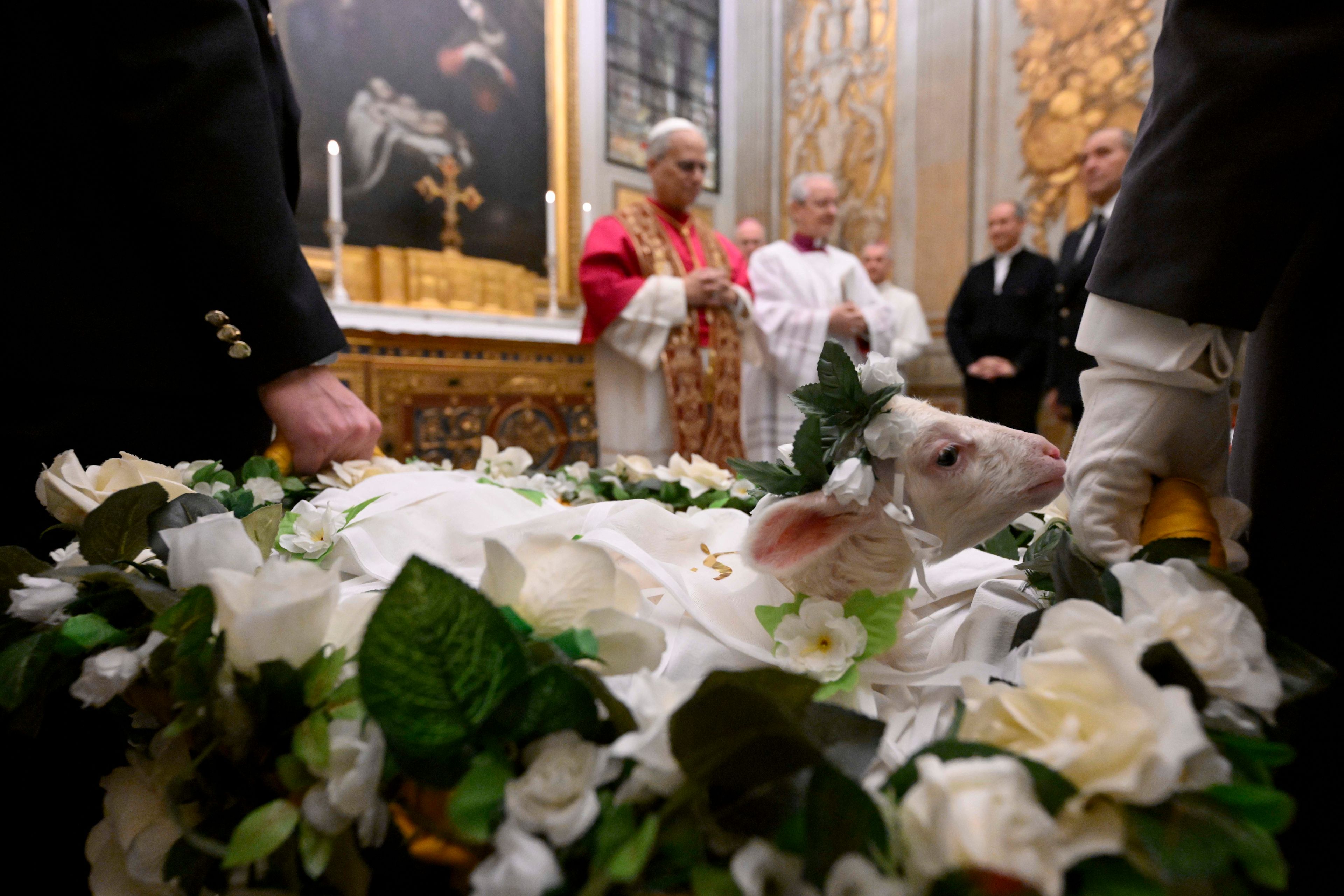
Pope Leo XIV meets a pair of lambs blessed for the feast of the Roman virgin and martyr St. Agnes in the Urban VIII Chapel in the Vatican’s Apostolic Palace on Jan. 21, 2026. | Credit: Vatican Media
The pallium is a narrow, circular band of white wool with pendants hanging down the front and the back. It is adorned with six small black crosses and three pins (called spinulae), which resemble both thorns and the nails used to crucify Jesus.
It is bestowed on the Latin-rite patriarch of Jerusalem and metropolitan archbishops — the diocesan archbishops of the primary city of an ecclesiastical province or region — as a symbol of communion, authority, and unity with the pope and his pastoral mission to be a shepherd for the people of God. The pope also wears the pallium over his chasuble when he is celebrating Mass.
Before the vestments are bestowed on the metropolitan archbishops, they are placed for a time in a spot near the tomb of St. Peter, under the main altar of St. Peter’s Basilica, to reinforce the bishop’s connection to Peter through apostolic succession.
This article was originally published by EWTN News.