VATICAN CITY — Pope Leo XIV will travel to the Sicilian island of Lampedusa on July 4, returning to a place that has become one of the most powerful symbols of the migrant crisis and the Church’s call to solidarity with the vulnerable.
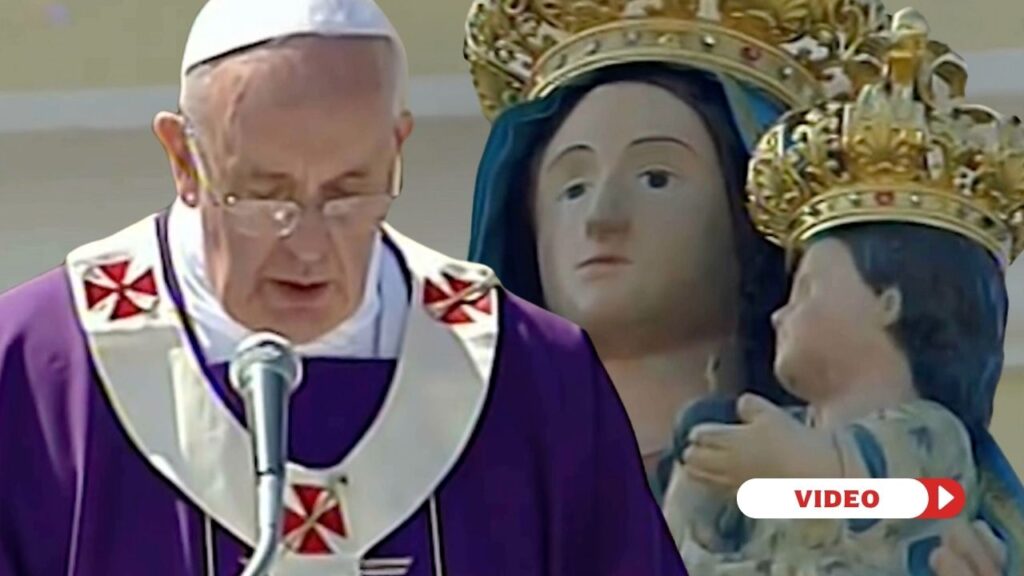
The visit comes thirteen years after Pope Francis made Lampedusa the destination of the very first journey of his pontificate in 2013, shortly after a migrant boat capsized in the Strait of Sicily, claiming countless lives. At the time, Pope Francis said the tragedy had remained “like a thorn in my heart causing me pain,” explaining that he felt compelled to go there “to pray, to show my solidarity, but also to awaken our consciences, so that what happened will not happen again.”
An Island Shaped by Migration and Welcome
Over the years, Lampedusa has become both a gateway to Europe and a place of encounter between suffering and solidarity.
While migrant arrivals have decreased compared to the height of the crisis, those arriving now come from an increasingly wide range of countries. In response, the island has developed a reception system built through cooperation between state authorities and humanitarian organizations.
Cristina Palma, vice director of the migrant hotspot center in Lampedusa, described the carefully coordinated process that begins the moment authorities are alerted to an incoming landing. Migrants are met at the pier, medically examined, and transported to the reception center, where, she said, the goal is for every person “to feel treated with dignity and humanity.”
That spirit of welcome has become deeply rooted in the island’s identity.
Religious Sisters Living Among the Migrants
Following his 2013 visit, Pope Francis expressed the desire for consecrated women to establish a permanent presence on the island as a bridge between migrants and the local community.
Today, that wish has become reality through the work of several religious communities serving side by side in Lampedusa.
For Sr. Cristina of the Minor Carmelite Sisters of Charity, the mission is inseparable from what she calls the “civilization of love.” Reflecting on her years among migrants, she explained that she always felt drawn to places where she could sow hope and compassion. “Here, where the world passes by,” she said, “I truly feel I’m in my place.”
She described the arrival pier as a place where words are often unnecessary, because the simple act of presence becomes a witness of charity and dignity.
Stories of Suffering and Survival
Few people have witnessed the human cost of migration as closely as Pietro Bartolo, widely known as “the doctor of Lampedusa.”
After years working on the front lines as a physician before later serving in the European Parliament, Bartolo has listened to thousands of stories carried across the Mediterranean.
One testimony in particular remains etched in his memory: that of a Nigerian woman who endured trafficking, violence, imprisonment, and abuse during her journey. Bartolo recalled how she described surviving the desert and Libyan prisons while holding onto a single determination — reaching Europe for the sake of her children. “Only death could stop me,” she told him.
Her story reflects the extraordinary resilience carried by many who arrive on the island’s shores after unimaginable suffering.
Remembering the Dead, Protecting Human Dignity
Not all journeys end in survival.
For years, the people of Lampedusa have buried unidentified migrants in the island’s cemetery alongside local residents, creating a shared resting place marked by equal dignity.
Sr. Colette of the Little Sisters of Jesus said that nearly everyone on the island visits the cemetery regularly to pray for loved ones, and she feels called to do the same for migrants whose families cannot come. She described this quiet ministry as an act of hope and remembrance, especially for those who died far from home.
Even amid suffering, she said, the migrants who arrive often still carry “a little spark” of life and hope despite exhaustion and trauma — something she describes as a gift she receives from them.
A Sanctuary of Hope in the Mediterranean
Beyond its role in the migration crisis, Lampedusa’s identity has long been shaped by faith and devotion.
At the heart of the island stands the Marian Sanctuary of Porto Salvo — “Safe Harbor” — a place deeply tied to the spiritual life of the local community.
Sr. Maria of the Daughters of Mary Missionary recalled how the island and sanctuary were heavily bombed during World War II, yet the statue of the Madonna remained intact and no lives were lost. For islanders, this became a sign of protection, leading the Madonna di Porto Salvo to become the island’s patroness.
That same sense of protection and refuge continues to shape Lampedusa’s vocation today as an island that welcomes those crossing dangerous waters in search of hope.
A Call to Conscience
Pope Leo XIV’s return to Lampedusa will inevitably recall the words Pope Francis spoke there in 2013 — words that continue to resonate across the Church and the world.
“Where is your brother?” Pope Francis asked during that historic visit. “This is not a question directed at others; it is a question directed at me, at you, at each one of us.”
As Pope Leo XIV prepares to visit the island thirteen years later, Lampedusa remains both a frontier of migration and a spiritual reminder that human dignity cannot be ignored. Through its people, its faith, and its witness of welcome, the island continues to stand as a sign of compassion in the heart of the Mediterranean.
Adapted by Jacob Stein.