Pope Francis cited the examples of Western intervention in Libya and Iraq in arguing that the West should not “export” democracy to other countries, according to a recently published interview.
The pope’s comments were published in the Italian newspaper La Stampa and excerpted from a book released this week by journalists Francesca Ambrogetti and Sergio Rubin, “You Are Not Alone: Challenges, Answers, Hopes.”
In an excerpt from the book, the pope was asked by the authors about “the responsibilities of the most developed countries” for the “chaos” being experienced by other nations.
Francis responded that that chaos was due in part to “the failure of the West in its attempt to import its own type of democracy” in some countries around the world.
“We are thinking of Libya, which seems to be led only by very strong personalities such as Gaddafi,” the pope said. “A Libyan told me that they once had only one Gaddafi, while now they have 53.”
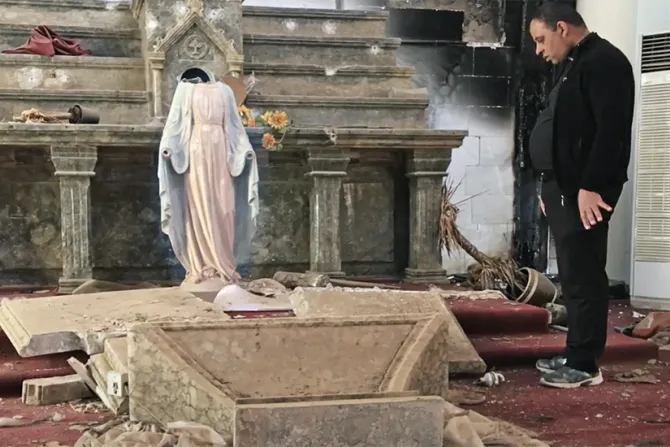
The Holy Father similarly pointed to the Iraq War, which he called “a real disgrace” and “one of the worst cruelties.” U.S.-led forces defeated the Iraqi military and deposed president Saddam Hussein, leaving in his place a country strained by worsened sectarian violence.
“Saddam Hussein was certainly not a little angel, on the contrary,” Francis said, “but Iraq was a fairly stable country.”
The pontiff cautioned that he was “not defending Gadaffi or Hussein.” But, he argued, “organized anarchy and other war” followed those conflicts.
“I therefore believe that we must not export our democracy to other countries, but help them to develop a process of democratic maturation according to their characteristics,” Francis said. “Do not wage a war to import a democracy that their peoples are unable to assimilate.”
The pope pointed out that some countries, such as monarchies, “will probably never accept a democracy,” but nations “can help to ensure that there is more participation” in those instances.
The pope confessed himself “ignorant in terms of international politics,” though he said the rise of the Islamic State (ISIS) indicates “an unfortunate Western choice.”
Ambrogetti is an Italian-born journalist, while Rubin is from Argentina; the two previously collaborated on the 2014 book “Pope Francis: His Life in His Own Words.” Rubin has also authored a biography of Francis.
These article was originally published on Catholic News Agency.