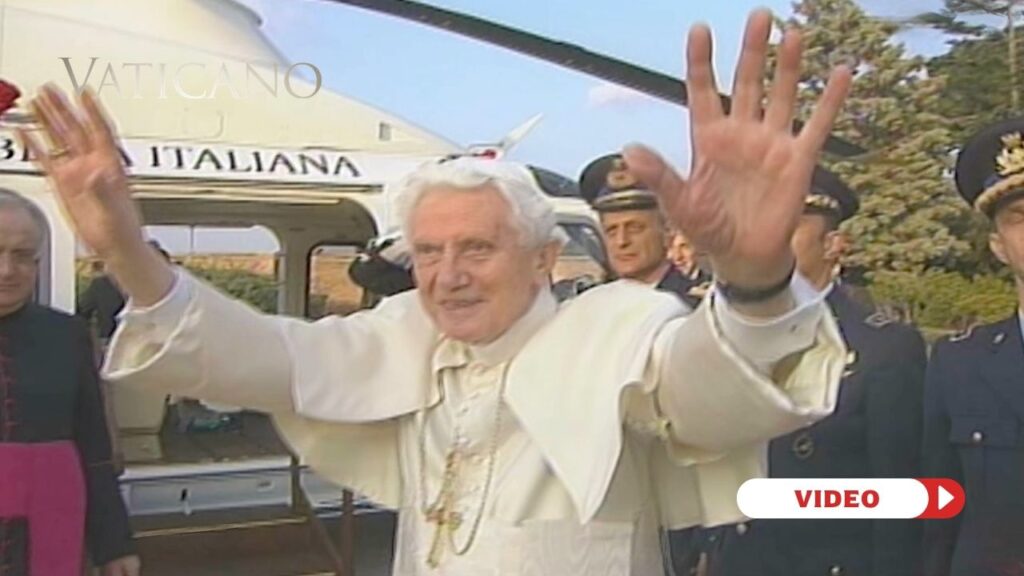
When Benedict XVI stepped down in 2013, few anticipated the intellectual movement his legacy would inspire.
The Ratzinger Foundation, established in his name, has since grown into a vibrant global platform where thought, faith, and beauty converge. Each year, its prize puts the spotlight on extraordinary figures, theologians, philosophers, artists, drawn from every corner of the world and every Christian tradition, recognizing those who devote themselves to exploring the deepest questions of the human spirit.
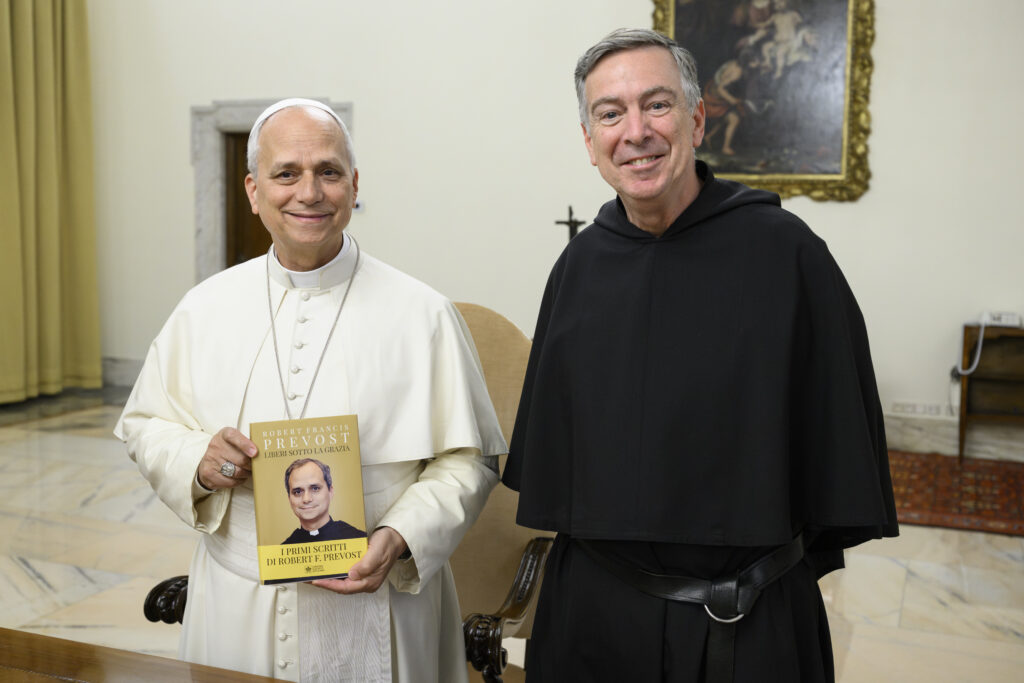
Following Fr. Federico Lombardi’s decade-long tenure, newly appointed president Fr. Roberto Regoli sat down with EWTN Chief Global Officer, Andreas Thonhauser, to discuss the influence of Pope Benedict XVI in his life and his vision for the Foundation’s future.
Could you explain to us a little bit the scope of the work of the Ratzinger Foundation?
As a foundation, we can’t work alone. It’s impossible in our world to be alone. So we are building an important network with other Catholic institutions, universities, foundations, Not only Catholic, but also other cultural visions, but we have a common vision to support the humanity, human dignity. But also, I repeat, the first goal is theology.
How does his theology influence your work today?
So we have a committee, a scientific committee. We have cardinals and bishops, present scientific committee. They support the foundation to see better the horizon of our public engagement in the culture.
A historian yourself, you teach at the Gregorian University in contemporary Church history. Maybe also from that point of view, how did Pope Benedict XVI impact the Church?
Pope Benedict XVI was a protagonist of the Church of his time. As a young scholar, as Archbishop, Cardinal, and the Pope, and also as Emeritus Pope. As a young scholar, he has a vision of the future of the Church. He was able to understand the crisis of the Church, and also he was able to see the future of the Church, not only about the crisis, but also he was able to say to other people what was a possible way to go beyond the crisis. Ratzinger is not a princess in the museum, is not a point of archaeology, but with his ideas, with his thought is really present in our time. Pope Leo XIV started in the beginning of 2026 a new project of catechesis about the Second Vatican Council, and Ratzinger was a protagonist not about only the Council, but about the application of the Council, interpretation until our days. is a vision, it is a contribution for our Church.
What is your vision for the Ratzinger Foundation?
This year we start the centenary, but the big feast is next year, 2027. For us, it’s important to remember Ratzinger, he’s taught, but more and more to help, to give a contribution to theological debates, about the point of our time. So, two goals. For intellectual work, it’s a very academic work for the foundation. But also, for us, it’s very important to give a contribution for new generations.
So not only to retreat behind the own walls of the church, maybe, but really to go out into society.
Is necessary because the church has a word to say to the society. We can’t stay also in our house. We need to be in confrontation, to have a relation with other parts of the society.
What could we have learned from somebody like Pope Benedict in the face of those crises that we’re facing?
The big difference between the Church and the Society for us is the holiness of the Church as a gift of the God. This difference is present in the life of the saints, Saint Francis, Ignatius, and other saints. So, the contribution in the crisis of the Society, the contribution of the Church is to be holy. The future is not a short time, 70, 80 years, 90 years, but it’s the eternity. If we have this vision of the eternity in front of us, maybe we can decide better about our present world, because the vision is large and we can work better.