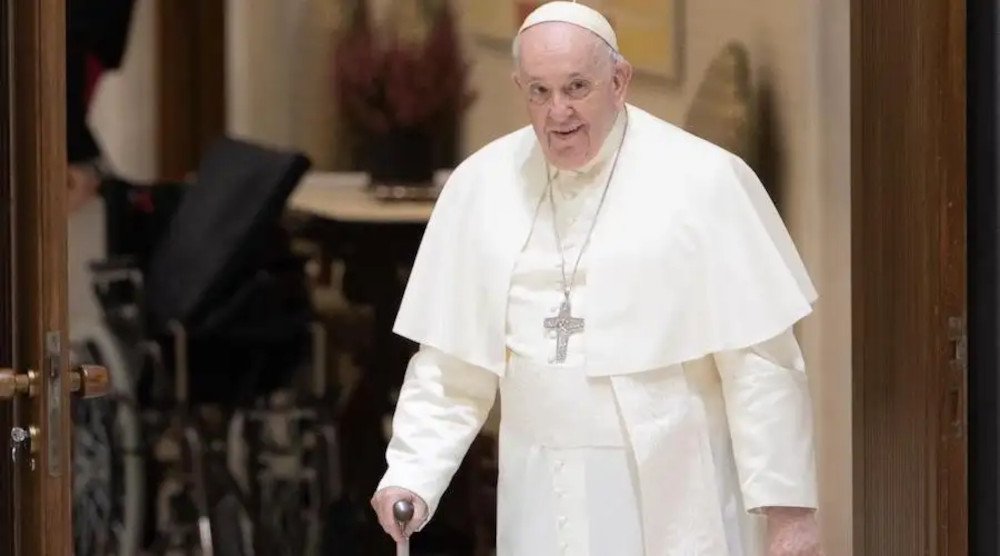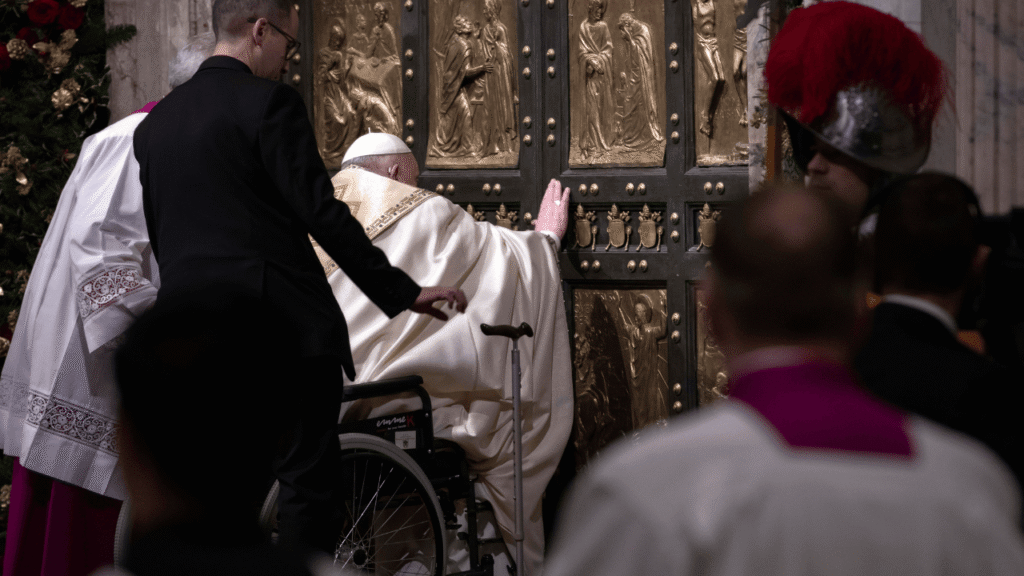
It was Christmas Eve 2024 when Pope Francis, seated in his wheelchair, firmly knocked on the door of St. Peter’s Basilica before thousands of faithful gathered at the Vatican — and millions more watching around the world. With that simple yet powerful gesture, the great Jubilee Door swung open, inaugurating the 25th Holy Year in the history of the Church.
For Professor Francesco Buranelli, former Director of the Vatican Museums, the meaning of the Holy Door reaches to the very heart of the Gospel.
“It is one of the most beautiful symbols of Jubilee. And it is our Lord Himself who tells us this in the Gospels. It is the Gospel according to John that takes up the words of Our Lord and says: ‘Truly, truly, I say to you — I am the door. Whoever enters through me will be saved.’”
The opening of the Holy Door at the Vatican Basilica — built over the tomb of the Prince of the Apostles — marked the official beginning of the Jubilee of 2025. In the Bull of Indiction Spes non confundit (Hope does not disappoint), Pope Francis called the Church to become tangible signs of hope for those living in hardship and suffering.
One of the most striking expressions of that call came when the Pope traveled to Rome’s Rebibbia Prison. There, he opened a special bronze Holy Door — the only one located outside the four papal basilicas of the Eternal City — extending the Jubilee’s grace to those often forgotten.
A Jubilee of Hope in a Wounded World
Father Agnello Stoia, Parish Priest of Saint Peter’s Basilica, reflected on the prophetic nature of Pope Francis’ focus on hope.
“Pope Francis was quite prophetic in identifying hope as the hallmark of this Holy Year. Because the things we saw on television, the things we read in the newspapers, spoke of darkness, of death, of bombs, of children killed, of people who were hungry– everything except hope. And so, this word hope seems almost dissonant — yet this is the great message that comes to us here from Saint Peter. It is not only a hope grounded in the fact that Jesus has risen from the dead, and therefore is our hope, but also a call to all people of good will to build a lasting peace.”
Archbishop Rino Fisichella, Pro-Prefect of the Dicastery for Evangelization, emphasized that this hope is not abstract, but deeply personal.
“We have rediscovered that we feel the need for hope — and that this hope has a face… This hope has a name: it is Jesus Christ, it is Jesus of Nazareth, who is our hope.”
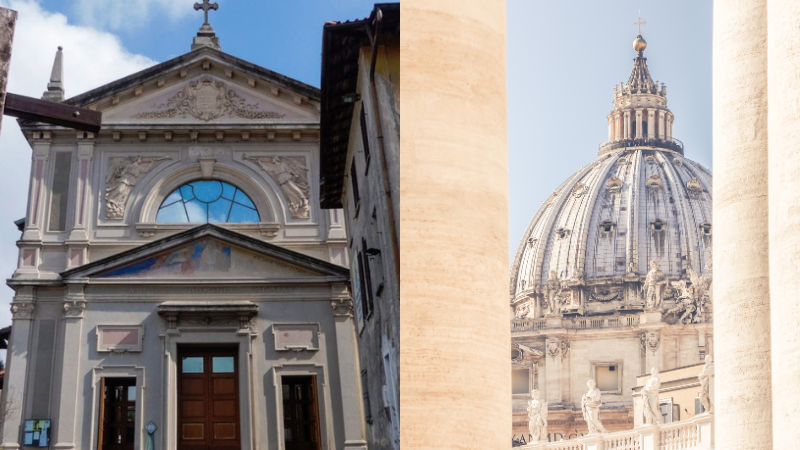
From the earliest days of the Jubilee, pilgrims began arriving in great numbers, passing through the Holy Doors of Rome’s papal basilicas. Saint John Lateran — Mother and Head of all Churches — Saint Mary Major, and Saint Paul Outside the Walls continued a tradition dating back to 1300, when the first Jubilee was proclaimed.
Pilgrimage: Grace That Engages the Whole Person
Professor Roberto Regoli of the Pontifical Gregorian University explained that pilgrimage has always required more than interior devotion.
“In the past, a pilgrimage to Rome would last for days or even weeks — it wasn’t enough to visit just one church; all the basilicas had to be visited. Because the fundamental idea is that grace is not only something that concerns your inner life, not simply something that happens in your prayer between you and God, but it also requires the wholeness of the person. There is effort involved.”
Still, the Basilica of St. Peter — standing over the Apostle’s tomb — remained the focal point. Along the Via della Conciliazione, pilgrims walked toward the Holy Door as part of a physical and spiritual journey.
Father Stoia witnessed the unprecedented scale of the crowds.
“I don’t think the Basilica has ever been so crowded. We’ve had incredible peaks. One day they told me: 105,000 people entered the Basilica today. We try to welcome everyone, above all to ensure that the Basilica is a place where anyone can experience God. Even non-believers can feel embraced by a space warmed by prayer, a place whose beauty is not the cold beauty of a museum, but a living beauty that seeks to communicate a magnificent God.”
A Holy Year Marked by Suffering
As the Jubilee calendar filled with events, Pope Francis’ physical strength began to fail. He was only able to attend two major Jubilee gatherings in person: meetings with communicators and with members of the armed forces.
Archbishop Fisichella urged the faithful not to forget the cost of those moments.
“Let us not forget Pope Francis’ months of illness, his hospitalization, already at the beginning of the Jubilee. Let us not forget that during the Pope’s first meeting, the one with the armed forces, he felt compelled to give the floor for the reading of his homily to the master of ceremonies, because he was unable to do it himself.”
On February 14, Pope Francis was admitted to Gemelli Hospital with a severe respiratory infection that progressed into bilateral pneumonia. For 38 days, the world watched anxiously as medical updates were released daily. Each evening, the rosary was prayed in Saint Peter’s Square, led by cardinals of the Roman Curia.
He returned to Casa Santa Marta on March 23, though doctors warned he would need two more months to recover. While major Jubilee events continued without him, Pope Francis surprised many by appearing in St. Peter’s Basilica in his wheelchair. He also insisted on being present for Easter Day.
No one imagined it would be his farewell.
Hope That Leads to Eternal Life
In reflecting on the Pope’s final months, Archbishop Fisichella described a man deeply oriented toward his ultimate encounter with Christ.
“Pope Francis guided us, and he himself was oriented toward this encounter with Jesus. Hope, in the end, is the definitive encounter with the Lord. And hope is the proclamation of a new life that lasts forever, eternal life. Hope is the announcement of a salvation that is given to us. Pope Francis experienced it firsthand and entrusted his own life to that strength of hope which gives eternal life.”
The Jubilee of Hope continues, shaped indelibly by a Pope who opened the Holy Door — and then walked, through suffering, toward the promise it proclaimed.
Adapted by Jacob Stein. Produced by Alexey Gotovskiy; Camera by Alberto Basile, Fabio Gonella, Patrick Leonard, Anthony Johnson; Video edited by Ilaria Chimenti