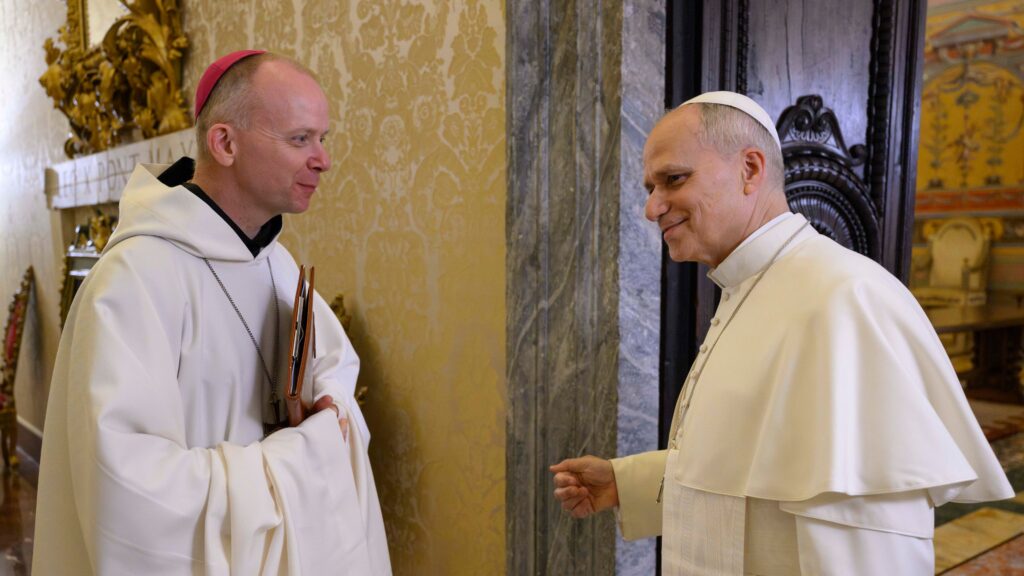
Monsignor Georg Gänswein, the personal secretary of Pope Benedict XVI for decades, explained that he destroyed the late Pontiff’s most confidential and private documents due to an explicit request from him.
In statements to Italian media on Sunday, March 19, the German Archbishop also clarified that there are no unpublished writings of Pope Emeritus and that the last one was Benedict XVI’s book published posthumously under the title “What is Christianity.”
“A shame? Yes, I also told him, but he gave me this indication that there is no turning back. There are no unpublished writings left,” said Monsignor Gänswein.
The former secretary of Benedict XVI had already spoken about this demand of Pope Emeritus in his memoirs, published after the Pontiff’s death under the title “Nient’altro che la verità. La mia vita al fianco di Benedetto XVI” (Nothing but the Truth. My Life with Benedict XVI).
In the book, which was released on January 12, 2023, the Archbishop explained that he had been asked about what he would do with his documents and articles after Benedict XVI’s death.
“In reality, this is not a problem for me since I received precise instructions from him, with delivery instructions that I feel obliged to respect in conscience, relating to his library, manuscripts of his books, documentation relating to the Council, and correspondence,” the book reads. Monsignor Gänswein also pointed out that “the other personal articles, from watches to pens, from paintings to liturgical furniture, were included in a meticulously prepared list by Benedict XVI before he died.”
He recounted that part of these personal items had already been given to people close to him: “He did not forget anyone; collaborators, secretaries, seminarians, students, drivers, pastors, friends.”
He detailed that the rights to his books will remain in the hands of the Vatican Publishing House, the publishing house of the Holy See, and a part of them will be destined for the “Joseph Ratzinger Vatican Foundation.” In addition, his library and collection of music scores have been sent to various foundations in Bavaria, Germany.
As for his private documents, such as personal notes or letters, the secretary emphasized in his memoirs that “their fate is sealed: all private documents of any kind must be destroyed. This applies without exception and escape,” according to explicit provisions of Benedict XVI himself.