The bishop of Kundinawa in Papua New Guinea, Paul Sundu, said that of the 300,000 people expected to see Pope Francis this weekend, “many walked two or three weeks before the papal visit” from all the dioceses of the island country.
Some even came from the Solomon Islands, about 885 miles to the east in the South Pacific.
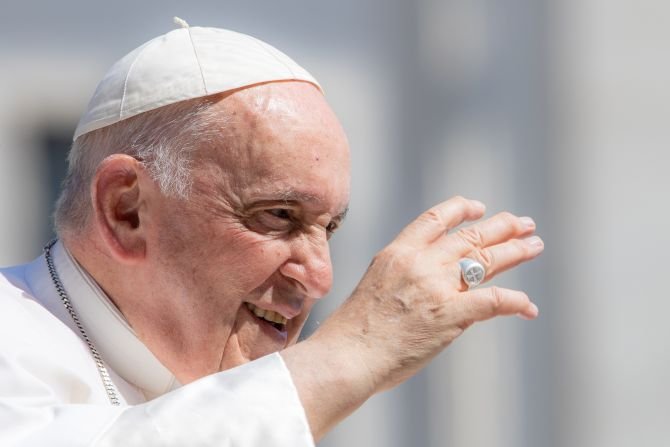
The Holy Father arrived Friday for a three-day visit to Papua New Guinea, his second stop on a 12-day apostolic journey to Asia and Oceania.
In a statement released by the Pontifical Mission Societies in Spain, Sundu predicted that the Holy Father’s days in the country “will be a blessing that cannot be forgotten. The presence of the pope will definitely give us more joy and courage to continue our mission.”
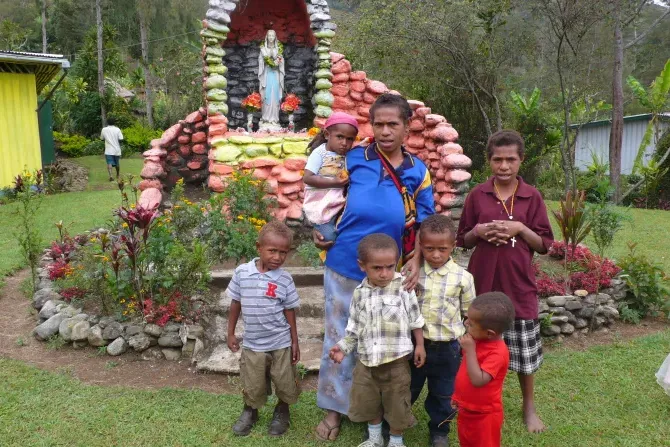
Papua New Guinea is one of the 1,126 mission territories of the Catholic Church, whose first evangelizers arrived there in 1889. Today, its population is 30% Catholic, a percentage that increases at a rate of 40,000 baptized each year.
In this Oceania nation, 19 dioceses have been established in which 600 priests work in 400 parishes and serve more than 800 social institutions such as orphanages, hospitals, or leprosariums. In addition, the Catholic Church has nearly 3,500 schools in the area, according to data provided by the Pontifical Mission Societies in Spain.
For the director of the Pontifical Mission Societies in Papua New Guinea, Father Victor Rocha, “the impact of this visit will be seen especially in the faith of the people” in a parish whose commitment is evident because the churches “are full every Sunday; about 70%-80% of the baptized attend Mass.”
To sustain this territory, considered 100% missionary, the help of the Pontifical Mission Societies is essential, and it has allocated more than $7 million in the last five years, mostly from the collection for World Mission Day.
This money is invested in covering current expenses and in building houses and parishes, providing transportation and drinking water, and setting up diocesan radio stations along with supporting charitable works and the four major seminaries in which 104 candidates for the priesthood are in formation.
This story was first published by ACI Prensa, CNA’s Spanish-language news partner. It has been translated and adapted by CNA.