Stewardship and Creation
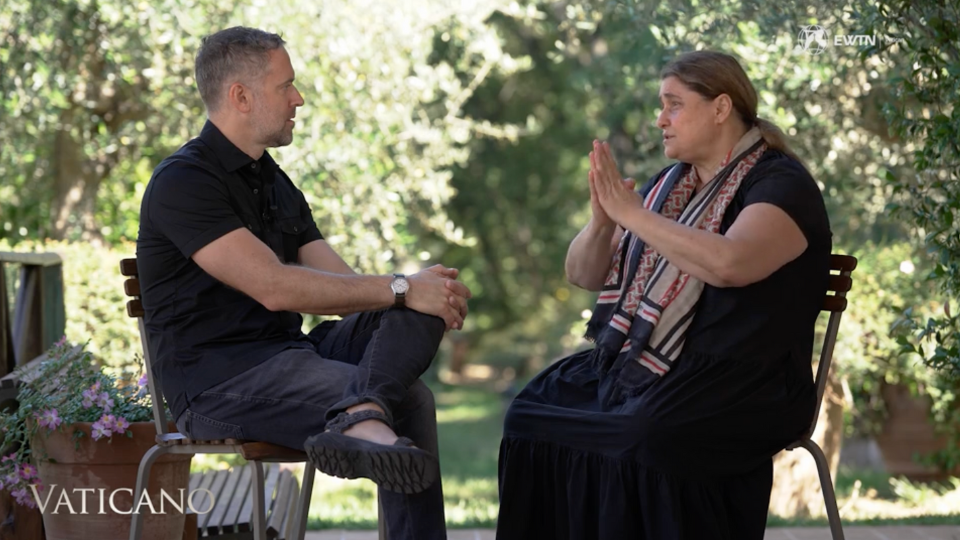
The great message is that God has entrusted us, since Genesis, to be stewards. To steward not only by guarding but also by cultivating the garden of creation. Every time we lose this mandate, we appropriate it and become masters of creation, causing creation to rebel. Moreover, the Lord has also asked us to represent Him,” reminds Fr. Francesco Piloni, Provincial Minister of the Friars Minor of Umbria.
The Origins of the Canticle
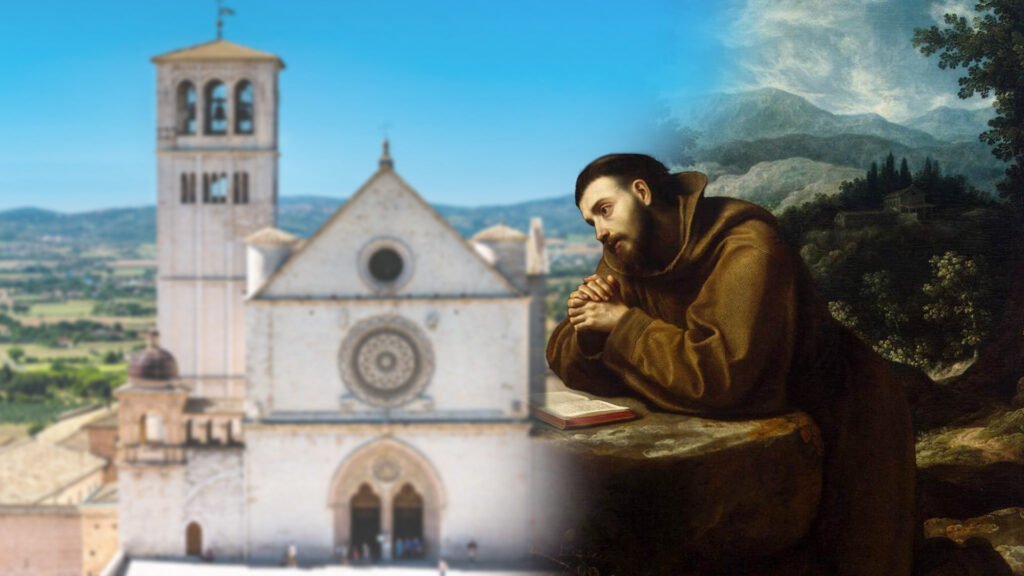
In 1225, a gravely ill and nearly blind St. Francis of Assisi, aware of his impending death, composed a hymn of gratitude that would resonate through the ages. Known as the Canticle of the Creatures or the Canticle of Brother Sun, it celebrates the beauty of creation and the mystery of life.
A Historic Commemoration
Eight centuries later, on January 11, 2025, the Franciscan family gathered in Assisi to honor the eighth centenary of the Canticle with ceremonies at the Sanctuaries of San Damiano and the Spoliation.
Born from St. Francis’s dialogue with God, the Canticle is a dance of praise, radiating joy, wonder, and light.
This very light inspired Pope Francis to choose his name upon ascending the papacy.
The Message of Relationships
“The great issue that is underscored in the magisterium of the latest pontificates is that we are beings in relationship, our DNA and relationships,” Fr. Francesco Piloni notes. “A Christian cannot be interested only in himself. But indeed we are all brothers, and Francis reminds us that the Wind is a brother, the fire, the sisters, the stars—all are in relationship.”
Opening Ceremonies at San Damiano
The 2025 commemoration began at San Damiano, where St. Francis composed much of the Canticle. The ceremony, led by Brother Francesco Piloni, included a reading from the Compilation of Assisi, a brief Liturgy of the Word, and messages from key Franciscan leaders, including Brother Massimo Fusarelli and Brother Carlos Alberto Trovarelli.
Fr. Francesco Piloni relates the story, “In 1225, here, Francis, after having received the stigmata a year earlier at La Verna. On a night of great tribulation, where there were even mice running alongside his body, he strongly asks the Lord for help within his sufferings. And from that night of travail was born one of the greatest and most wonderful expressions that marked literature. Here, friends, Francis composed the Canticle of the Creatures.”
Reflections at the Sanctuary of Spoliation
The celebration continued at the Sanctuary of the Spoliation, where Brother Simone Calvarese led reflections on the Canticle’s final stanzas, focusing on forgiveness and death. Messages were shared by prominent Franciscan leaders and Monsignor Domenico Sorrentino, highlighting the unity and spiritual richness of the Franciscan legacy.
A Universal Legacy
“The beauty is that now the Franciscans are in more than 100 countries around the world, and each one wants to strongly tie this expression that is 800 years old but so current and so contemporary, the Canticle of the Creatures, because each of us is in contact with the sun, the moon, the stars, and the earth, but also with illness and death. And forgiveness touches all created realities, but it touches man,” Fr. Francesco Piloni highlights.
St. Francis’ Final Joy
In his final years, St. Francis found joy in an apparent paradox: the acceptance of Brother Pain and Sister Death. Amid physical suffering and discord among his brothers, his dialogue with God became a source of hope.
Adapted by Jacob Stein