For more than five decades, the Special Olympics movement has transformed the lives of millions of people with intellectual disabilities through sport. Founded in 1968 by Eunice Kennedy Shriver, the organization has become a global force for inclusion, respect, and human dignity, helping athletes discover their talents and reach goals many once thought impossible.
A Champion in the Pool and in Life
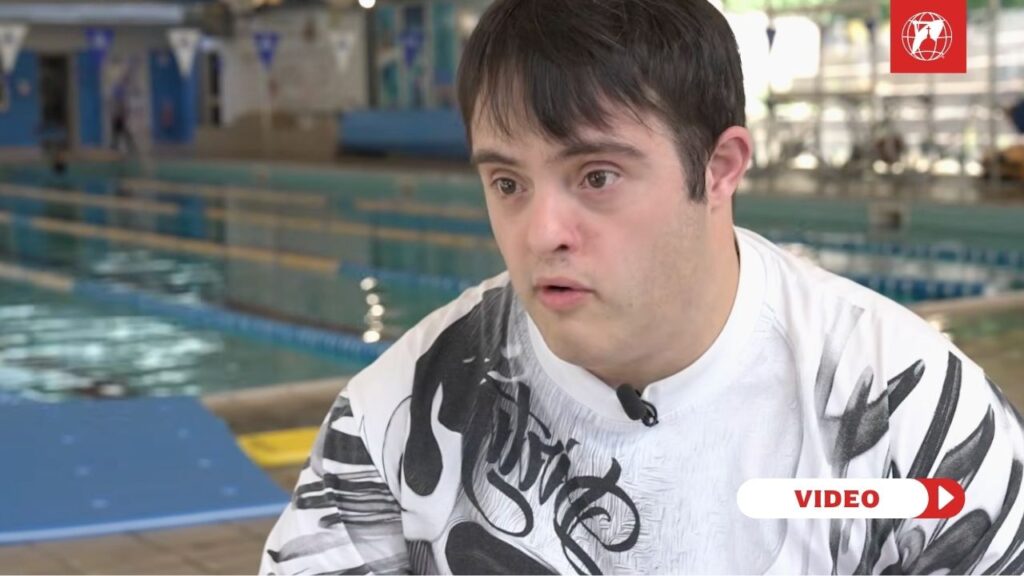
Among these athletes is Italian swimmer Gabriele Di Bello, whose journey through the Special Olympics has become a powerful witness to perseverance, faith, and the limitless potential of every human person.
Di Bello has been involved with Special Olympics for 12 years. What began with a backstroke race that he unexpectedly won soon grew into a passion for competitive swimming. Encouraged by his family and coaches, he continued training and eventually represented Italy at the Special Olympics World Games in Dubai, where he finished third in the world.
Looking back on his first victory, he recalls the surprise and joy he felt. Winning that initial race gave him confidence to keep training and pursuing new challenges, eventually leading him to compete on the international stage.
Breaking Down Barriers
Today, Special Olympics Italy supports athletes across the country, creating opportunities for people with intellectual disabilities to compete, build friendships, and develop confidence. For coach Sergio Colantoni, the experience is about much more than athletic achievement.
Colantoni describes Di Bello as a young man who constantly teaches those around him. He says that athletes with intellectual disabilities often approach life with a spontaneity and sincerity that others can easily lose amid the routines of everyday life. Their curiosity, openness, and joy serve as a reminder of what truly matters.
The coach also believes one of society’s greatest misconceptions is the assumption that disability necessarily means limitation. In his experience, athletes frequently demonstrate remarkable solidarity and generosity, showing a willingness to help others without being asked. Far from being defined by what they cannot do, they often reveal strengths that challenge the prejudices of those around them.
Di Bello himself hopes people will come to see individuals with disabilities differently. While acknowledging that certain tasks may take longer, he emphasizes that people with Down syndrome live lives much like everyone else. They spend time with friends, enjoy social activities, and pursue their dreams. His message is simple: stop speaking negatively about people with disabilities. They are unique individuals with the same dignity and aspirations as anyone else.
The Gift of Family and Opportunity
Behind Di Bello’s success stands a family that refused to allow a diagnosis to determine his future.
His mother, Annarita Casolini di Sersale, remembers choosing a different path than the one many specialists suggested. Rather than focusing on limitations, she and her family decided to give Gabriele the same opportunities they would have given any child.
That decision proved transformative. Through sport, Gabriele not only developed as an athlete but also formed friendships with teammates and their families, creating a rich network of relationships that continues to enrich his life.
Casolini acknowledges that raising a child with Down syndrome presents challenges, but she believes society often sees disability through an unnecessarily negative lens. Too many people, she says, still view those with disabilities as fragile or dependent. Yet her experience has taught her that these young people bring immense joy to their families and communities.
Her testimony also carries particular significance in a world where prenatal diagnoses of Down syndrome are frequently cited as reasons for abortion. Gabriele’s life stands as a living reminder that a diagnosis can never measure a person’s value, potential, or capacity to enrich the lives of others.
Faith at the Heart of the Journey
Throughout his athletic career, Di Bello has relied on another source of strength: his Catholic faith.
He speaks openly about his trust in God and his belief that every opportunity he has received is a gift. While he respects those who choose not to believe, he says faith has always been central to his life. He credits both hard work and God’s providence for the achievements he has attained.
“The ways of the Lord are infinite,” he reflects, adding that God teaches patience and invites people to trust more deeply. For Di Bello, faith does not eliminate obstacles, but it provides the confidence to face them with hope.
His gratitude extends not only to God but also to those who have supported him throughout his life. He describes his parents as more valuable than gold and expresses deep appreciation for the coaches who believed in him and encouraged him to pursue his goals.
In many ways, Gabriele Di Bello’s story captures the true spirit of the Special Olympics. It is a story not merely about competition, medals, or records, but about human dignity, inclusion, perseverance, and love. It demonstrates that disability is never the final word and that, when given the opportunity to flourish, every person can reveal gifts that inspire the world around them.
Adapted by Jacob Stein. Produced by Bénédicte Cedergren. Camera by Sergio Natoli. Video Edited by Gianluca Gangemi.