The plan threatens to harden a decades-old split between the traditionalist group and the Vatican.
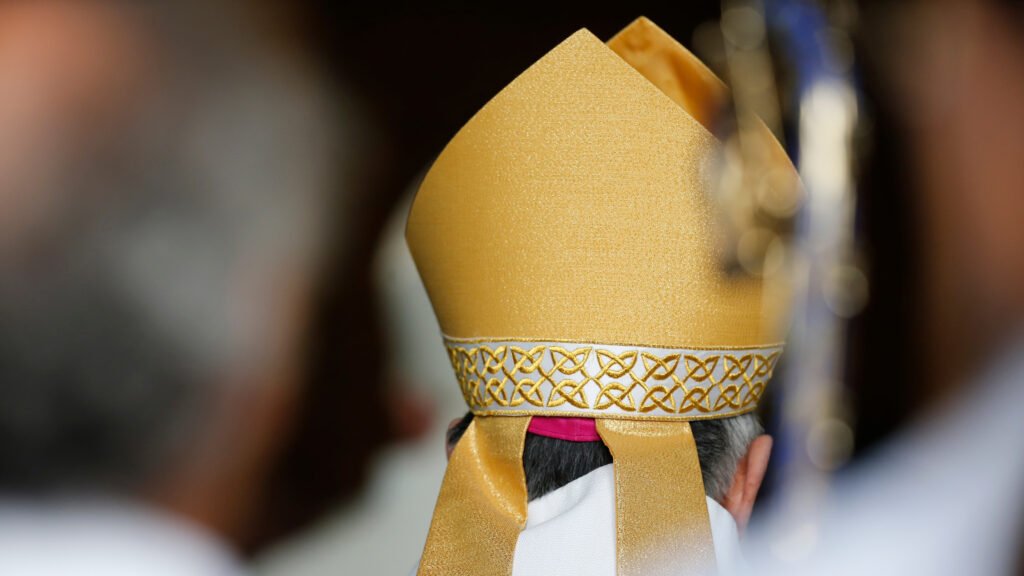
The Priestly Society of St. Pius X (SSPX) announced Monday that it plans to consecrate new bishops on July 1 even without authorization from the Holy See, a move that would likely lead to automatic excommunication of all the bishops who take part and harden a decades-old split with Rome.
The SSPX, which exclusively celebrates the Traditional Latin Mass and maintains doctrinal differences with certain teachings and reforms of the Second Vatican Council, has not consecrated new bishops since 1988 when the society’s founder, Archbishop Marcel Lefebvre, consecrated four bishops without Rome’s approval. The move directly contravened canon law and led to their, and the archbishop’s, automatic excommunication.
Even though Pope Benedict XVI remitted the 1988 excommunications in 2009, the Vatican says the SSPX exists in a state of “institutional irregularity” or “imperfect communion” with the Holy See, lacking a formal, recognized canonical structure. Ongoing doctrinal disagreements are the stated reason why no stable canonical structure has yet been granted.
The SSPX said Monday that its superior general, Father Davide Pagliarani, requested an audience with Pope Leo XIV last August to present, “in a filial manner,” the current situation of the SSPX, including its need for bishops.
The society’s statement continued: “After having long matured his reflection in prayer, and having received from the Holy See, in recent days, a letter which does not in any way respond to our requests, Father Pagliarani, in harmony with the unanimous advice of his council,” has decided to proceed with consecrating new bishops.
The SSPX has only two serving bishops: Bishop Bernard Fellay, a former superior general of the society, and Bishop Alfonso de Galarreta. Bishop Richard Williamson was expelled in 2012 for persistent disobedience and open opposition to the society’s superiors and their policy toward Rome. He died last year. Bishop Bernard Tissier de Mallerais died in 2024.
Both Benedict XVI and Pope Francis tried to regularize the SSPX gradually, with Pope Benedict pursuing dialogue that was halted in 2017. Pope Francis granted faculties for confessions and marriages while keeping doctrinal issues open.
Observers say moving ahead with new consecrations after explicitly seeking and not receiving Rome’s agreement signals a clear divergence of judgment that will likely harden positions on both sides, making any future canonical solution more difficult.
They also say the move implicitly challenges how the Holy See is handling liturgy, doctrine, and the traditionalist movement globally at a time when debates over the older liturgy are already intense.
“Excommunications are back on the menu, obviously because it’s automatic,” said Joseph Bevan, a senior SSPX layman and author of the 2025 book “Traddy Daddy — Memories and Thoughts of the Father of a Catholic Family.” He said he believes such a development was “inevitable,” adding that the discussions have been ongoing since July 2025 but with no progress. “Who can blame them?” he told EWTN News. “Rome is dragging its feet and being obstructive.”
But a Rome canonist speaking on background to EWTN News held out hope that as the consecrations have not yet happened, a solution could possibly be found in the meantime, and today’s announcement could press both parties into coming to a resolution.
The Holy See Press Office did not immediately respond to a request for comment.
In his Feb. 2 message, Pagliarani stressed that the SSPX’s motive remains the service of the Church and the preservation of tradition, citing his 2024 reflection on the 50th anniversary of Archbishop Marcel Lefebvre’s declaration that formally set out the position of the SSPX.
“The Society of St. Pius X is not primarily seeking its own survival,” Pagliarani said on that occasion. “It seeks the good of the universal Church and, for this reason, is a work of the Church, responding to the needs of an unprecedentedly tragic era… Without any spirit of rebellion, bitterness, or resentment, we pursue our work of forming priests, guided by the timeless magisterium.”
The communiqué concluded by saying that further explanations regarding the present situation and today’s decision would be expected in the coming days.
This article was originally published by EWTN News English.