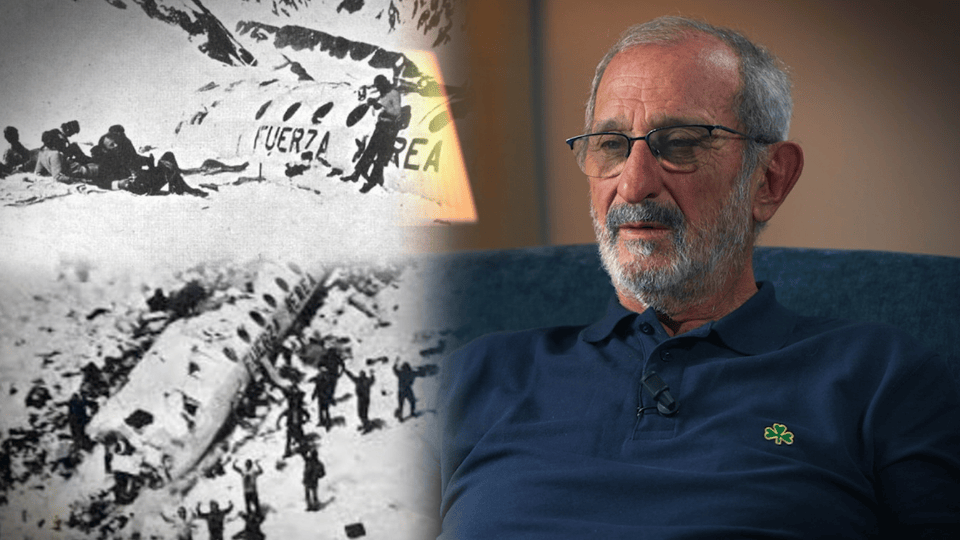
On Friday, October 13, 1972, a Uruguayan plane carrying 45 passengers to Chile crashed in the Andes Mountains. Young men from the “Old Christians Club” rugby team and some of their relatives faced temperatures of –22 degrees Fahrenheit and lack of food, which led them to eat the bodies of the deceased. Only 16 people survived and they have dedicated their lives to remembering their friends who never returned home.
Gustavo Zerbino is one of the survivors and in this interview with Paola Arriaza, EWTN Vatican Correspondent, he recalls that life-changing moment and explains how faith sustained them during those days in the Andes:
Gustavo Zerbino, on October 13th, 1972, the plane in which you were traveling with your rugby team crashed into the Andes Mountains. What do you remember about that moment?
Well… You’re taking me back to a key moment, a turning point in my life. In that instant, you’re singing and jumping with your friends because you’re heading to Chile for a long weekend, and suddenly, in just a second, an air pocket drops you a thousand meters, and you realize that.
The pilot wants to do everything possible to keep the plane from crashing directly into the side of the mountain, so he gives it full throttle, and the plane seems like it’s going to break apart. And at the exact moment, right before impact, I unbuckle my seatbelt and stand up. I did the complete opposite of what you’re supposed to do. And I felt a “whoosh” because the plane went into a stall, hit the nose, and broke apart like the cap of a pen.
I realized I was alive, and when I took a step back, I sank into the snow up to my waist.
At 4,500 meters of altitude, there’s no oxygen. Your heart races, the air won’t fill your lungs, your mind moves in slow motion, and your ears and nose start bleeding. You try to stand up, but it feels like you have a 100-kilo backpack on your back.
At what point did you all decide to eat the deceased in order to survive?
Well, we were waiting for the rescue from the outside world. The day we heard on the radio that they weren’t looking for us anymore. We realised that the only way to survive was by our own means.
The decision was taken unanimously, it wasn’t done until we all agreed.
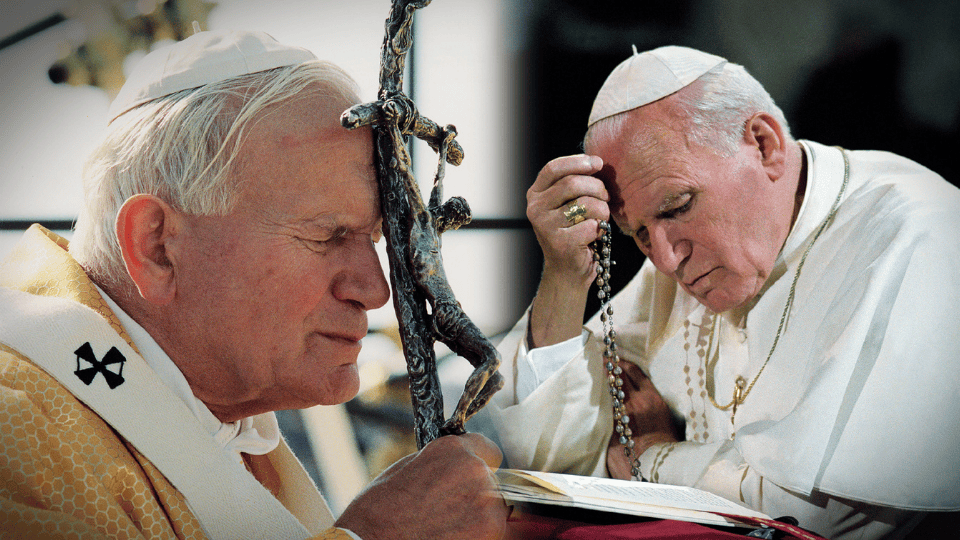
At this moment in the mountains, on those cold, bitterly cold nights, embracing each other, giving each other warmth, in that silence and solitude, the only thing you could hear were the little rosary beads, right?
Yes, at night. For 73 days, every night, we prayed the rosary for three reasons. First, to thank God because we were alive and to ask the Virgin for strength. That day, even though eight had died in an avalanche, we still gave thanks for being alive—just being there was reason enough to be grateful.
The second reason was that, in the darkness of the night, no negative thoughts could take over our minds.
And the third was that there were sixteen of us, sitting in a circle, and every five minutes, someone had to say the rosary out loud. Because if you fell asleep, you would freeze to death.
Gustavo, did you have any conversations with God these days?
All day long, but we had a direct connection. God was the friend who gave you water, who caressed your feet, who embraced you—He was love.
In the midst of the mountain, you feel so small, so insignificant, while the mountain is so vast, so immense, that you can truly sense the presence of God.
How was it the day you were rescued?
Well, no one rescued us.
We got out on our own, we crossed the mountains ourselves because Parrado and Canessa stoically walked for ten days, climbing and trekking through the mountains, enduring temperatures of -40 to -31 degrees Fahrenheit—something not even a person with proper gear could withstand.
On the 50th anniversary of this accident, you wrote to Pope Francis, an Argentine, didn’t you? And you asked him to join in the Eucharistic celebration with all. Do you remember?
Yes. I met the Pope; I was with him four times. We carried out many high-impact actions around the world with Scholas Occurentes.
I wrote to him and told him that this 50th anniversary was important for the world because significant things had happened in the Andes—the Virgin had played a key role, God had given us strength, and we understood that a celebratory and thanksgiving Mass would be meaningful. It would be good to have a message from him.
What have the years since been like?
Wonderful. Every day when I wake up I have 1,440 minutes to do whatever I want.
I am happy. All the things I do in the world remind me every day of my friends who died physically but live within me and every person who is in front of me is a brother.
That’s why life is full of hope and a great commitment.
Gustavo Zerbino, it has been a pleasure.
Thank you very much.
SIGN UP FOR OUR NEWSLETTER HERE
Adapted by Jacob Stein
Produced by Andrea Manna, Camera: Gianluca Gangemi, Video Editor: Ilaria Chimenti, Alessio Di Cinitio, Andrea Manna.