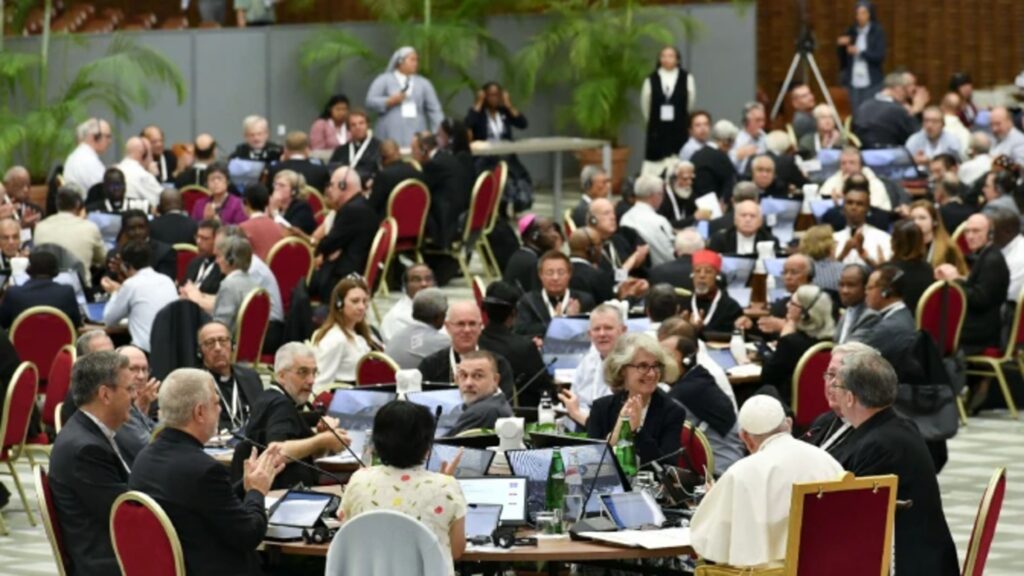
The report is the conclusion of the work carried out by one of the 10 study groups created by Pope Francis in 2024 during the Synod on Synodality.
The final report of the Synod on Synodality study group dedicated to the poor and the earth raises the need to create an observatory on disability and to include theologians from poor regions in consultative and governing bodies.
The text — published March 24 — emphasizes that listening to “the cry of the poor and of the earth” is not a pastoral option but a constitutive act of faith in the mission of the Church. It identifies already existing tools such as parishes, base communities, movements, charitable organizations, and ecumenical and international networks.
However, it states that social ministry cannot be delegated only to these structures, since all Christians have the responsibility to listen and respond to the needs of the poor.
The report — which is not binding and will now be reviewed by Pope Leo XIV — is part of the work carried out by 10 study groups created by Pope Francis in 2024 during the Synod on Synodality. The groups are dissolved once their reports are published.
Within the group on the poor, another subgroup was established, mostly composed of people with disabilities.
This subgroup produced the proposal to create an international “Ecclesial Observatory on Disability” that would establish similar bodies at the diocesan, national, and regional levels.
The aim, the text states, is to use this model to “create structures and processes for listening to other marginalized groups,” including “the LGBTQIA+ community.”
“The Church has many means to listen to the cries of the poor and the earth. However, the Synod learned that women, Indigenous people, Dalits, young people, people with disability, victims of class or caste discrimination and racism, LGBTQIA+ people, those made poor, and other marginalized groups, are still asking to be heard,” it states.
“We need to deepen our listening and respond with transformative action. Synodality invites us to move from having means of listening to becoming a means of listening in the service of God’s mission,” the report says.
The document also highlights the importance of the language used for people in vulnerable situations and urges that it respect the “diversity of their experience” and reflect their dignity, for example through the use of “person first language.”
Groups for single or widowed people
Another recommendation in the report is for dioceses and bishops’ conferences to consider creating “groups for single parents, widows, and widowers” in order to offer support and learn about their needs, and that there be deeper exploration of “effective ways of listening to those affected by war, conflicts, and violence.”
It also calls for ensuring the presence of vulnerable groups, women, and those coming from territories affected by climate change and conflicts in Church bodies.
Greater role for the marginalized and the poor in theology
The report also raises the need to include theologians from “poor, marginalized, or excluded” contexts in the drafting of Church statements.
“The appointment of women, people with disabilities, and people of color should be a key priority,” it says.
It proposes creating global networks connecting theologians with organizations working on the ground, strengthening dialogue with other Christian denominations and religions, and promoting collaboration among Catholic media, universities, and young people in order to translate theological reflection into concrete action.
It suggests creating “global networks” that connect the poor “with organizations closest to the reality of the world of the poor.” According to the report, the goal is to promote a theology more connected to the reality of the poor and open to intercultural dialogue and other disciplines.
This story was first published by ACI Prensa, the Spanish-language sister service of EWTN News. It has been translated and adapted by EWTN News English.