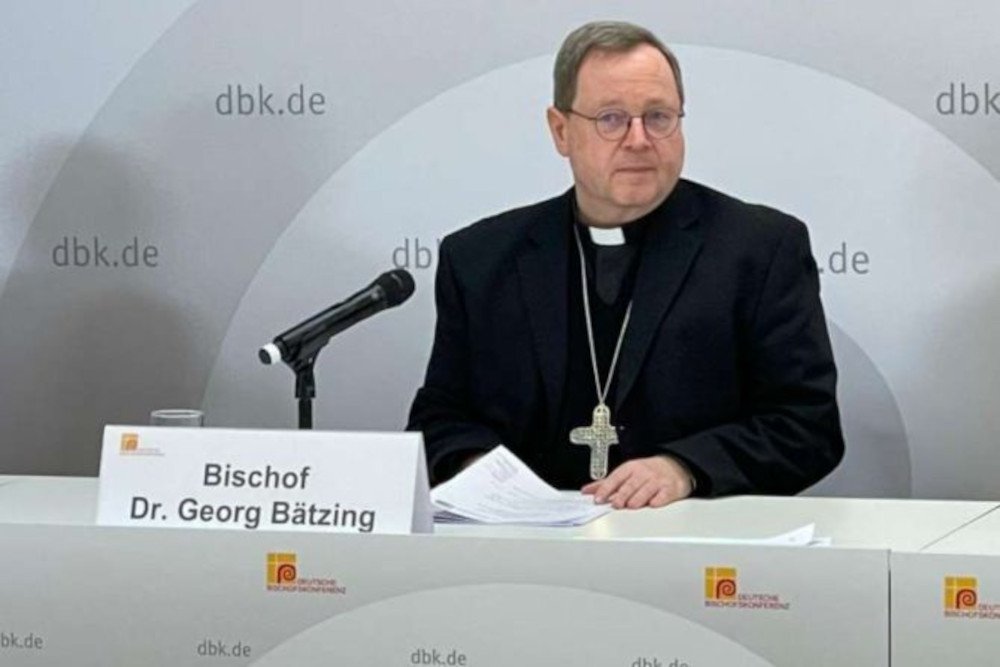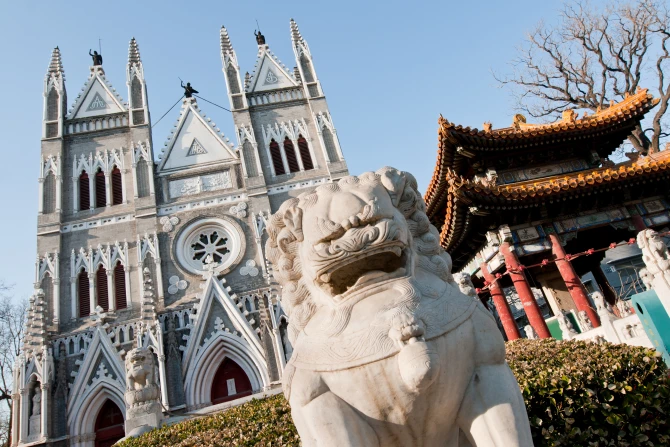
Two prominent Catholics — Cardinal Joseph Zen of Hong Kong and American author George Weigel — have leveled sharp criticisms at the Synod on Synodality, focusing particularly on the Vatican’s approach to China.
In a blog post published on Oct. 18, Zen, the 92-year-old bishop emeritus of Hong Kong, issued an urgent appeal for prayer as the synod enters its third week.
“We must pray for the successful (decent) ending of this synod,” Zen wrote, outlining three fundamental concerns.
The cardinal questioned the gathering’s legitimacy as a Synod of Bishops, given the inclusion of non-bishop voting members.
“With the ‘non-bishops’ voting together, it is no longer a Synod of Bishops,” Zen argued.
About the controversial declaration Fiducia Supplicans and LGBTQ issues, Zen wrote: “I think endless debate should be avoided at least on the issue of blessing same-sex couples“ and urged synod delegates: “If this issue is not resolved in the synod, the future of the Church will be very unclear, because some clergy and friends of the pope insist on changing the Church tradition in this regard.“
The archbishop emeritus of Hong Kong also warned against granting individual bishops’ conferences independent authority over doctrinal matters. “If this idea succeeds, we will no longer be the Catholic Church,” Zen cautioned.
This is not the first time the cardinal has voiced concerns about the synod.
In a critique published on Feb. 15, he argued that the synod presents “two opposing visions” of the Church’s nature and organization.
Meanwhile, Weigel, a distinguished senior fellow at the Ethics and Public Policy Center, penned an op-ed in the Wall Street Journal on Oct. 17 criticizing the presence of two Chinese bishops at the synod.
Weigel argued that Bishop Vincent Zhan Silu of Funing/Mindong and Bishop Joseph Yang Yongqiang of Hangzhou are “bent on ‘sinicizing’ the Catholic Church.”
The biographer of St. John Paul II also pointed out that Zhan Silu was previously excommunicated for accepting consecration without papal approval. Weigel noted that Yang Yongqiang is vice president of the Chinese Catholic Patriotic Association, which Weigel describes as “a tool of the United Front Work Department of the Central Committee of the Communist Party.”
Controversial deal expected to be renewed
The synod takes place against the backdrop of the ongoing debate over the diplomatic relationship between the Holy See and Beijing, particularly the Sino-Vatican deal on bishop appointments.
The provisional agreement was first signed in 2018 and renewed in 2020 and 2022 and is likely due for another renewal this October.
As of this report, the Vatican has not yet announced whether the agreement has been extended, though observers widely expect it to be renewed.
While critics have raised serious concerns over the Vatican’s diplomatic approach to Beijing and the Chinese policy of sinicization, the Holy See has publicly doubled down on the diplomatic strategy of supporting Beijing.
Cardinal Pietro Parolin has praised Chinese President Xi Jinping’s campaign of “sinicization” of religion and culture in the country, saying it relates to the Catholic concept of inculturation “without confusion and without opposition.”
Weigel strongly rejected this interpretation in a commentary for the National Catholic Register.
More recently, Andrea Tornielli, editorial director of Vatican News, wrote on Oct. 17 that the Chinese bishops at the synod emphasized their communion with the universal Church.
Tornielli quoted Yang as saying: “The Church in China is the same as the Catholic Church in other countries of the world: We belong to the same faith, share the same baptism, and we are all faithful to the one, holy, catholic, and apostolic Church.”
The Vatican News director also reported Yang stating: “We follow the evangelical spirit of ‘becoming all things to all people.’ We effectively adapt to society, serve it, adhere to the direction of the sinicization of Catholicism, and preach the good news.”
This article was originally published on Catholic News Agency.