ROME — Hidden among the winding streets of Rome’s Trastevere district stands a tiny church that many visitors walk past without realizing its extraordinary history.
According to tradition, this is the place where the young Benedict lived while studying in Rome at the end of the fifth century, before abandoning worldly ambitions in search of God. From this modest site began the spiritual journey that would eventually give rise to the Benedictine Order and profoundly shape Christian Europe.
Where Benedict chose a different path
The church stands on the site of the Domus Anicia, the Roman residence of Benedict’s family. Although they came from Norcia, wealthy families of the period often maintained homes in the capital.
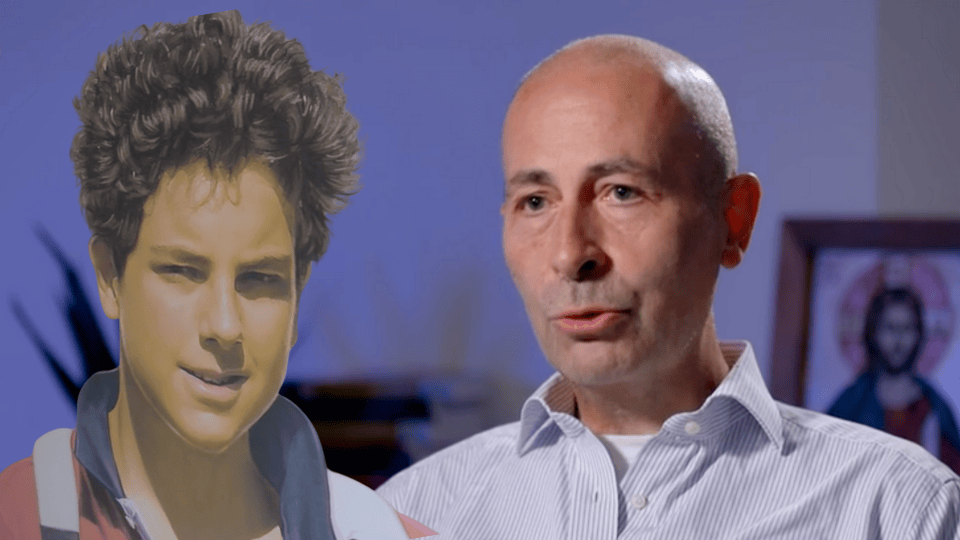
Fr. Ramón Ángel Pereira Veiga of the Heralds of the Gospel explains that it was here that Benedict made the decision that changed his life.
“We are talking about the fifth century, when Saint Benedict came to Rome to study. And it was precisely here that Benedict left everything behind and decided to become a hermit, withdrawing to a cave some distance away, in Subiaco.”
That departure eventually led Benedict to the cave at Subiaco, where he lived as a hermit before gathering disciples and later founding the monastery of Montecassino.
The first place of Christian worship on this site was likely built around the year 524 using bricks believed to have belonged to Benedict’s family home. Although the church was repeatedly destroyed during barbarian invasions, it was rebuilt each time by the faithful.
A cradle of Benedictine spirituality
Among the church’s most treasured places is the room traditionally identified as “Saint Benedict’s cell,” where he is believed to have stayed before leaving Rome.
For Fr. Ramón Ángel, its significance extends far beyond local history.
“It was in this place that Saint Benedict heard the voice of God. So we can truly say that this place is a cradle of European Christian civilization.”
Visitors today can still see the ancient Roman brickwork embedded within the church’s walls, with archaeologists dating many of the bricks to the fourth and fifth centuries.
The building itself also bears witness to centuries of history. Its medieval reconstruction incorporated columns and capitals reused from earlier Roman structures, each differing from the next.
A living Benedictine legacy
Since 2012, the church has been entrusted to the Heralds of the Gospel.
Fr. Ramón Ángel says the community finds a natural affinity with the spirituality of St. Benedict, especially his vision of contemplation united with daily work.
“Saint Benedict was a contemplative man. A man whose motto was ‘Ora et labora’, that is, the contemplative life but alongside work… taking work as a way of also honouring God and doing good.”
That balance of prayer and work continues to inspire countless Christians more than fifteen centuries after Benedict’s death.
Hidden treasures in Trastevere
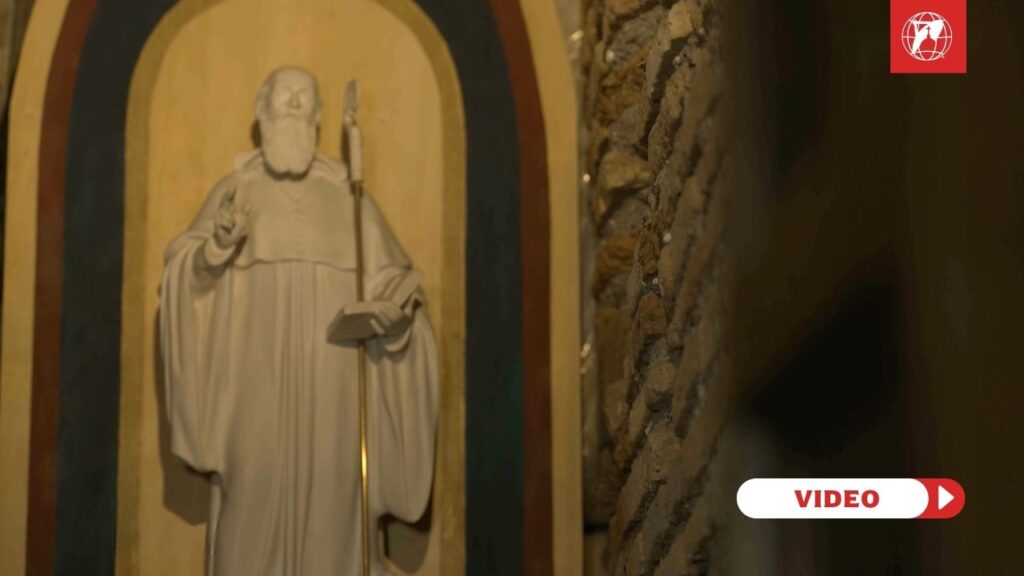
The church is also home to Rome’s oldest and smallest bell tower and preserves several important works of art dedicated to St. Benedict.
The centerpiece is a medieval painting on the main altar portraying the saint seated as an abbot, clothed in the traditional black Benedictine habit and holding his Rule.
Fr. Ramón Ángel points to the opening words of that Rule, still visible in the painting:
“‘Listen, O son, to the teachings of the master, and incline your ear to hear and listen to God in your heart.'”
Those words first written more than 1,500 years ago continue to summarize the spirituality that began in this quiet corner of Trastevere—a place where a young student heard God’s call and began a journey whose influence still reaches around the world today.
Adapted by Jacob Stein