COMMENTARY: The three-to-five-minute exercise can be life-changing.
There is something both liberating and disorienting about summer. The school year carries me. It’s not always graceful, but the structure is there: the early mornings, the carpool, the rhythm that tells me where I am in the day.
When summer arrives and that rhythm stops, I don’t feel liberated so much as disoriented. A loose schedule, it turns out, is not a more spacious one. It’s often just a different kind of chaos.
Maybe you know the feeling.
But here’s what I’ve come to believe: The moment our routine cracks open is actually the best moment to plant something new inside it. And this summer, I want to suggest one small, ancient and genuinely transformative practice that can change the shape of your interior life if you let it. It’s called the examination of conscience. Catholic tradition calls it the examen. It takes three to five minutes before you go to sleep. And it has a way of quietly changing everything.
The Desert Fathers practiced it. St. Augustine practiced it. St. Ignatius of Loyola placed it at the center of his Spiritual Exercises. St. Josemaría Escrivá returned to it again and again as essential for anyone seeking God in ordinary life. Its roots reach all the way to the Psalms:
“I think of you upon my bed, I remember you through the watches of the night” (63:7).
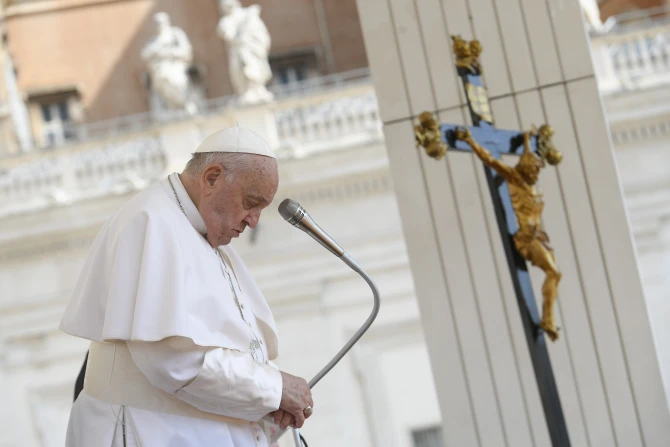
And on the last day of 2025, Pope Leo XIV stood before pilgrims in St. Peter’s Square and commended this same practice to the whole Church, inviting Catholics to reflect on God’s action over the past year, evaluate how they had responded to his gifts, and ask forgiveness for the times they had fallen short.
When something has been recommended, across centuries and by this many saints and now by a new pope, the reasonable response is probably just to try it.
Let me clear something away first, though. The examination of conscience is not a courtroom. It is not an anxious catalogue of failures followed by discouragement. It is not scrupulosity.
The First Letter of John gives us the right tone:
“in whatever our hearts condemn, for God is greater than our hearts and knows everything” (3:20).
God sees us whole. We come to the examen not to be prosecuted, but to be seen and loved honestly.
Here is what the practice actually looks like:
You begin by acknowledging that God is present. Thirty seconds. A simple “Come, Holy Spirit, let me see my day as you see it.” This is what makes the examen prayer rather than mere journaling because you are not doing the seeing yourself. You are asking for light.
Then, before you look for failures, you look for gifts. What was good today? Name three things. A conversation that surprised you with its warmth. A moment of patience you didn’t know you had. A child who made you laugh.
Pope Leo’s year-end invitation had exactly this shape of noticing what God has been doing before you turn to your own response. That order matters. It reminds you, before you examine anything else, that you stand before Someone who has already been generous with you today.
Next, gently walk back through the day. Was I patient? Did I listen well? Did I even glance at God, or did I barrel through from morning to night without a thought of him? See it honestly, but without drama.
Then: a brief act of contrition, and one small concrete resolution for tomorrow. Not “I will be a better person.” That’s too vague to act on. Something specific like “When I feel impatience rising with the kids tomorrow morning, I will pause before I speak.” The resolution is what keeps the examen from being merely a feeling and turns it into real formation.
And finally, you entrust the day to Our Lady and you close your eyes.
Three to five minutes. That is all.
Summer is the right time to begin precisely because the disruption of routine creates a genuine opening. When our days are scripted down to the minute, adding any new practice of piety may feel like we have to dismantle something else. But when the structure is already loose, there is room to build. The examen can be tucked into any gap — like after the younger children go to bed, during the last quiet of the evening, even in a car after dropping someone off. It requires only a few minutes of intentional quiet and an honest heart.
Start tonight. Acknowledge that God is present. Count three things from today for which you are grateful. Walk honestly back through the day. Say you are sorry for what fell short. Name one thing you will do differently tomorrow. Put yourself in Our Lady’s hands and close your eyes.
Do it again tomorrow night. And the night after that.
The Christian life is a daily rhythm of falling and beginning again. God is not wearied by that rhythm. He is ready to meet us in it with the same mercy he had the night before. The examination of conscience is the small hinge that makes beginning again possible.
Summer may have thrown off your routine. That’s all right. Use the opening it made.
This article was originally published by National Catholic Register.