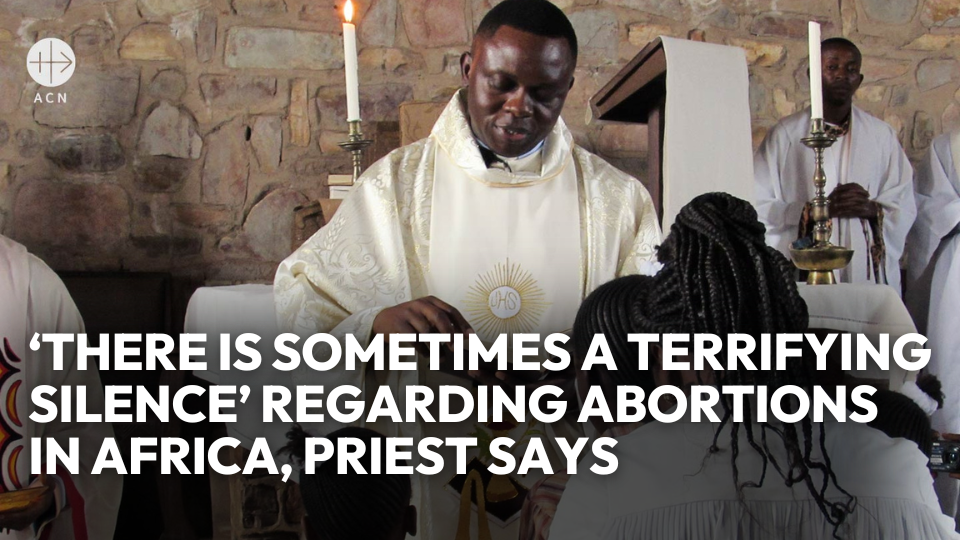
A Catholic priest serving in the Democratic Republic of Congo (DRC) has expressed concern about the “general silence” on matters of terminating pregnancies in Africa and underscored the need to counter the culture of death and promote the dignity of life as explained in St. Paul VI’s encyclical letter Humanae Vitae.
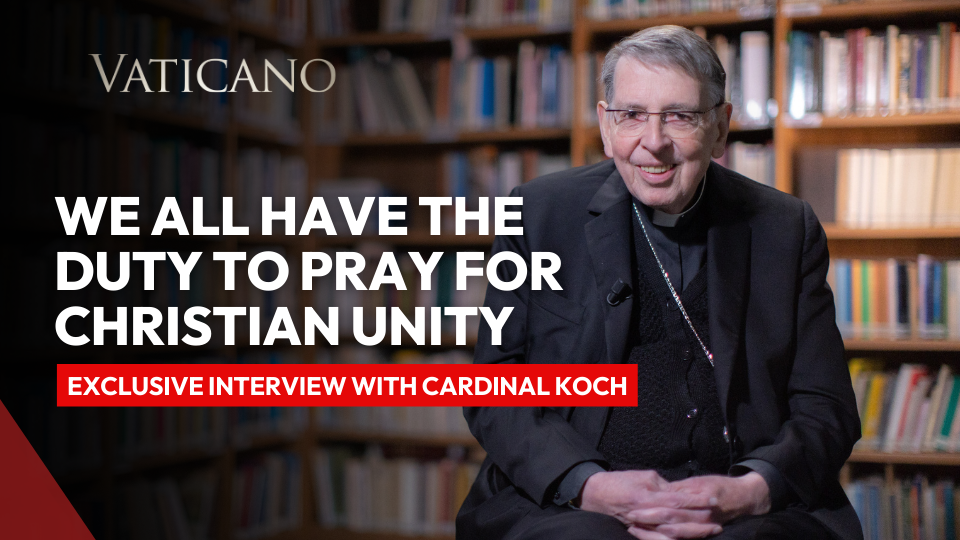
In an interview with EWTN Vaticano shared with ACI Africa, CNA’s partner news agency in Africa, on June 19, Father Apollinaire Cibaka Cikongo, rector of the University of Mbujimayi in DRC, lamented that the silence over abortions in Africa is sometimes “terrifying.”
“Recently, an article was published in the U.N. press stating that over 200 women received abortion care between April 11 and May 11,” Cikongo said, adding: “This means that more than 200 children were killed in one region alone.” According to Cikongo, “the people who perform these abortions do it in good faith, as they say that these children are not wanted, they are the result of rape, so terminating their lives is not a problem.”
“There is a social debate about these issues, but there is a prevailing culture that takes advantage of the general silence,” Cikongo said.
“There is a silence even within the Church,” he continued. “For example, there have been 200 children who were aborted, and I haven’t heard the Church say anything about it. There is sometimes a terrifying silence.”
In his apostolic journey to DRC and South Sudan earlier this year, Pope Francis urged the international community to give the Central African country its autonomy while not turning a blind eye to exploitation and violence.
“This country, so immense and full of life, this diaphragm of Africa, struck by violence like a blow to the stomach, has seemed for some time to be gasping for breath,” the pope said Jan. 31 in the garden of the Palais de la Nation in Kinshasa.
He added: “This country and this continent deserve to be respected and listened to; they deserve to find space and receive attention.”
“Hands off the Democratic Republic of the Congo! Hands off Africa! Stop choking Africa: Africa is not a mine to be stripped or a terrain to be plundered. May Africa be the protagonist of its own destiny,” the Holy Father said.
The Holy Father’s speeches during his trip to DRC and the ecumenical pilgrimage of peace in South Sudan from Jan. 31 to Feb. 5 are summarized in a new book titled “Hands Off Africa.”
In the interview with EWTN Vaticano, Cikongo said the “sometimes terrifying” silence extends to medical clinics, which promote the use of abortion and contraceptives to women in Africa, including where Church personnel serve. “I have witnessed situations where in a hospital pharmacy, there is a religious sister there with posters promoting contraception and abortion programmes,” Cikongo lamented.
“Sometimes it is out of ignorance, but many times it’s done in good faith or complicity because these programs are funded,” he continued. “If they want their hospital to receive subsidies, they have to accept assistance that includes contraception and abortion.”
The priest further recounted: “Even in the most remote villages, you can find health centers without microscopes but with condoms and contraceptive pills, focusing on fighting against life instead of identifying diseases that people have.”
For Cikongo, part of the solution is to promote the dignity of human life through the message of Humanae Vitae. He called for the translation of the 1968 encyclical letter into local languages and its distribution to promote the sanctity of life in DRC, which he said has suffered from decades of violent conflicts. “It is a small booklet that will allow us to spread the message because Humane Vitae corresponds with our culture,” he said, adding: “When I talk to an elderly woman in a village about Humanae Vitae, she can relate because that’s how she was raised.”
Cikongo went on to caution: “With the new generations and the influence of the media, if we don’t wake up, we will have a society corrupted by the culture of death and the destruction of sexuality and the relationship between a man and a woman.”
“We assert our viewpoints in the face of pressure. The value of sexuality and the value of embracing life are crucial. These are things we need to learn from Humanae Vitae,” Cikongo said.
Cikongo, who spoke at a recent conference on Humanae Vitae in Rome, is expected to hold a conference on the culture of life versus the culture of death in Black Africa later this year in a 15-lecture series.
This story was originally published on ACI Africa, CNA’s partner news agency in Africa. It was adapted by CNA.