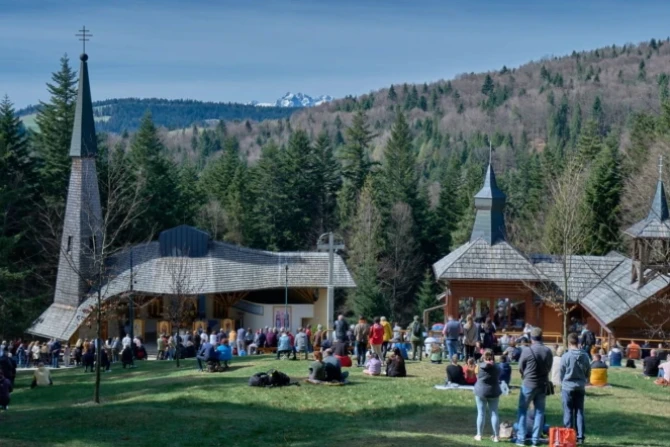
The Vatican Dicastery for the Doctrine of the Faith granted a “nihil obstat” — that is, nothing stands in the way — of Marian devotion surrounding the alleged apparitions of the Virgin Mary on Mount Zvir near the village of Litmanová in northwestern Slovakia from 1990 to 1995 — without recognizing their supernatural character.
SIGN UP FOR OUR NEWSLETTER HERE
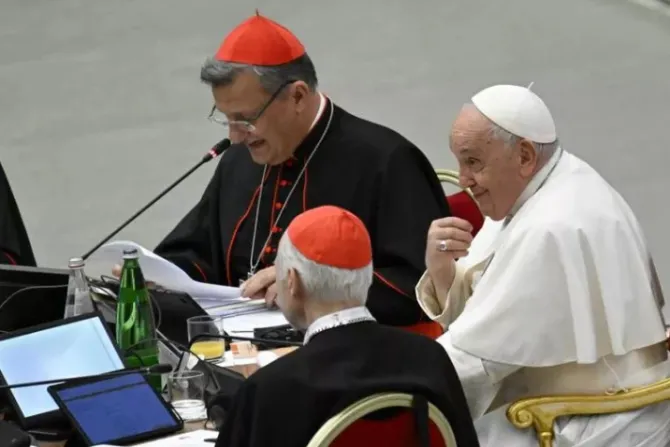
The letter, signed by the dicastery’s prefect, Cardinal Victor Manuel Fernández, and addressed to Archbishop Jonáš Jozef Maxim, hierarch of the Archeparchy of Prešov for Byzantine-rite Catholics, recognizes the pastoral value of the phenomenon and authorizes public worship without commenting on the supernatural authenticity of the apparitions.
The cardinal stated in the letter, published by the Vatican dicastery, that the discernment has taken into account “the many spiritual fruits” borne from this phenomenon.
The decision responds to the formal request by Maxim, who in letters sent to the Vatican in February and May highlighted “the countless sincere and heartfelt confessions and conversions experienced by pilgrims, which continue to take place at the shrine, despite the alleged apparitions ending three decades ago. The Slovak prelate also highlighted the constant flow of pilgrims who have continued to come to the site, manifesting an ongoing experience of faith.
Fernández noted several messages attributed to the Virgin that offer invitations to conversion, joy, and inner freedom. One of the most cited texts exhorts: “Let Jesus set you free. Let Jesus set you free. And do not allow your enemy to limit your freedom, for which Jesus shed so much blood. A soul that is free is the soul of a child” (Dec. 5, 1993).
On several occasions, the Marian figure presents herself as “happy” and repeats expressions of unconditional love: “I love you, just as you are. I love you. I love you! I want you to be happy, but this world will never make you happy” (Aug. 7, 1994). The faithful are also invited to live a simple and profound spirituality: “Begin to live simply, to think simply, and to act simply. Seek out silence so that the Spirit of Christ may be born anew within you” (June 5, 1994).
Some ambiguities
However, the Dicastery for the Doctrine of the Faith recognized that “some messages contain ambiguities or unclear formulations,” such as one that suggests that that nearly all people in one part of the world are condemned or one that states that “the cause of all illness is sin.”
These messages have not been deemed acceptable by the Vatican for publication. However, the Argentine cardinal recalled in the letter that, as early as 2011, a doctrinal commission dedicated to investigating these apparitions explained that the alleged visionaries did not hear messages in human language but rather had inner experiences that they then attempted to translate, which explains certain inaccuracies or personal interpretations.
For this reason, the cardinal of the Roman Curia asked the archbishop of Prešov to publish a compilation of these messages, excluding any statements that could lead to confusion or disturb the faith of ordinary people.
The Vatican made it clear that the “nihil obstat” does not equate to the recognition of supernatural intervention, but it does permit public worship and that the faithful can “safely approach this spiritual offering,” whose contents can help them live the Gospel of Christ more deeply.
A living shrine
Mount Zvir, less than two miles from the village of Litmanová, has been a place of pilgrimage for years, especially for those of the Byzantine rite. Three children were present at the alleged apparitions, which began on Aug. 5, 1990: Ivetka Korcáková, Katka Ceselková, and Mitko Ceselka.
This step by the Dicastery for the Doctrine of the Faith is possible thanks to the new norms on supernatural phenomena, published in May 2024, which provide for varying degrees of discernment, from “nihil obstat” to negative judgments, allowing for a more flexible assessment of the spiritual experiences of communities.
Since they came into force just over a year ago, it is the Dicastery for the Doctrine of the Faith and not the local bishop that pronounces on these events, and the Catholic Church’s discernment process no longer ends “with a declaration of ‘supernaturalitate’ [supernaturalness]” of the events.
The objective of the reform of the regulations, approved by Pope Francis, was to prevent fraud and scams that take advantage of the goodwill of the faithful.
This story was first published by ACI Prensa, CNA’s Spanish-language news partner. It has been translated and adapted by CNA.