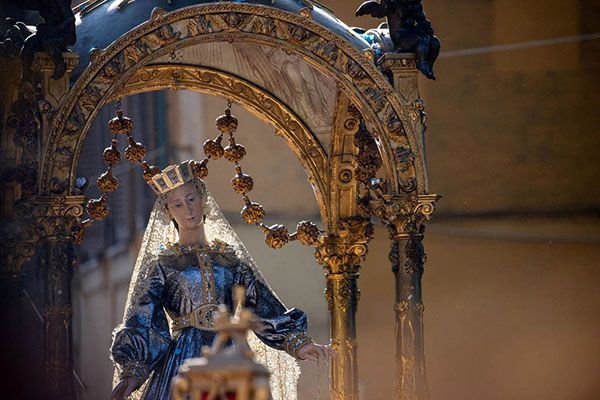
In a Roman neighborhood whose name is difficult to pronounce by pilgrims and tourists to Rome alike, a centuries-old tradition takes place in honor of Mary.
The statue of Mary was found at the mouth of the Tiber River in 1535 by Corsican fishermen who were residents of Trastevere is carried in procession.
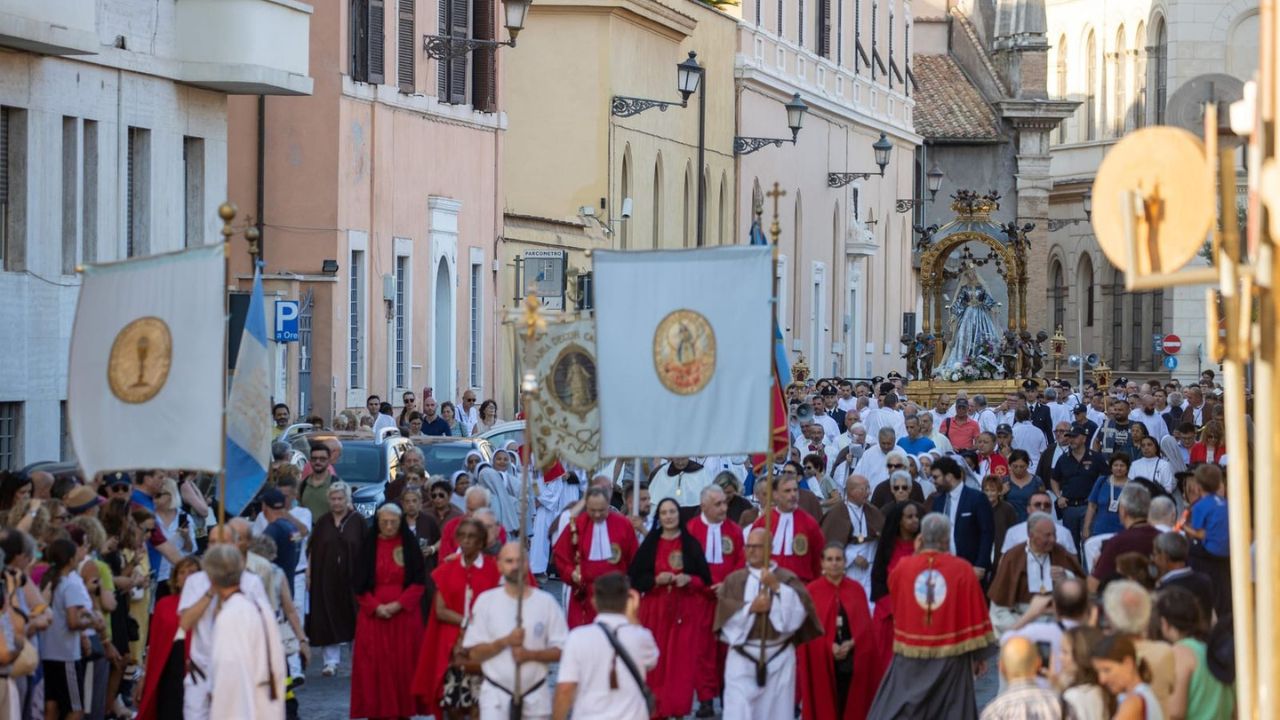
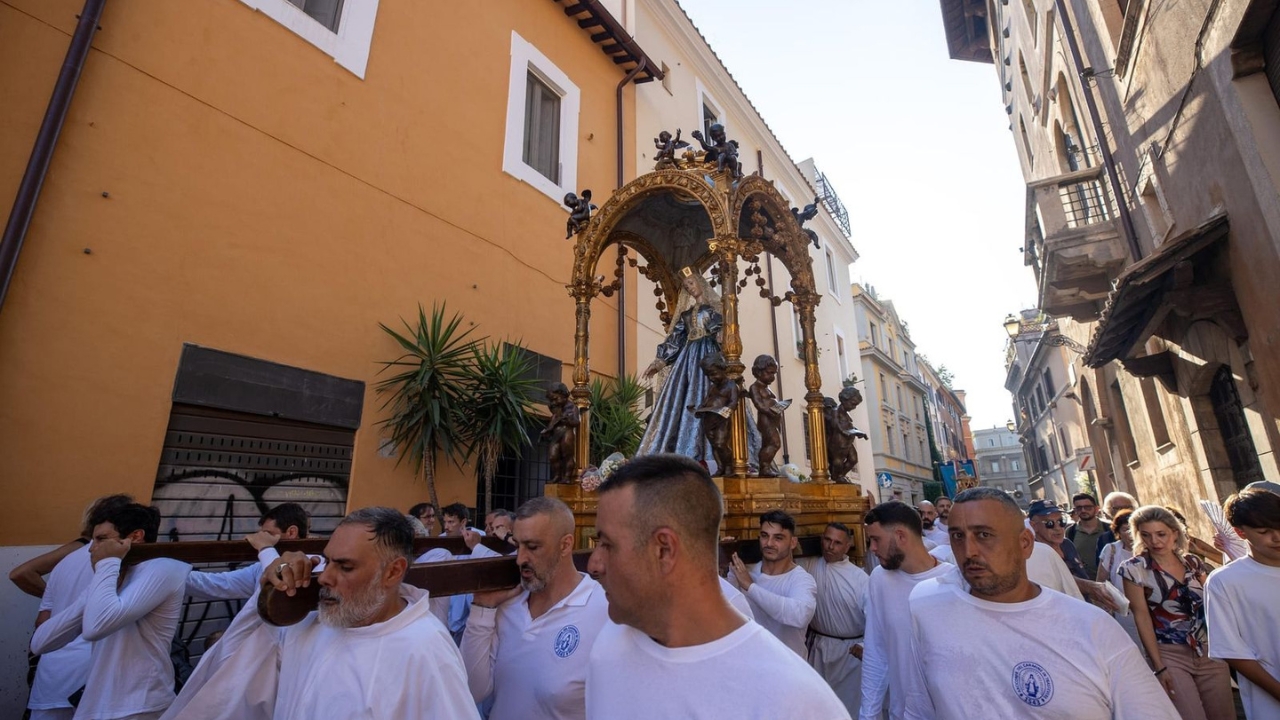
On the Saturday following the liturgical memorial of Our Lady of Mount Carmel (July 16), a procession goes through the streets of Trastevere with a large statue of Our Lady.
One week later, the same statue embarks on a boat filled with Roman confraternities to conclude the festivities of the Feast of “Noantri” in a procession down the Tiber River with the Madonna “Fiumarola,” meaning Our Lady “coming from the River” – recalling the event of 1535 when the cedar statue was found in the Tiber after a storm.
A Procession in the Vatican Neighborhood
July in Rome is filled with devotion to Mary under the title of Our Lady of Mount Carmel. On the Sunday before July 16, a Carmelite parish that sits in the shadow of St. Peter’s Basilica processes through the streets of the Vatican neighborhood, including the well-known street called Borgo Pio.
Inside the Church of Santa Maria in Traspontina, one can visit this statue of Our Lady year-round, with the Child Jesus in her lap, offering the Brown Scapular.
Where and What is Trastevere?
An even bigger procession, or rather, two processions take place just south of the Vatican in the neighborhood of Trastevere.
The name “Trastevere” comes from the Latin trans Tiberim, meaning, “beyond the Tiber.”
It is situated on the Tiber River across from the historic center of Rome, connected by the famous pilgrim’s bridge of Ponte Sisto which was built to provide another route for pilgrims, especially during Jubilee years, to be able to arrive at St. Peter’s Basilica.
Crossing over the bridge into Trastevere from the ancient center of Rome gives the precise meaning to the neighborhood’s name.
Before Trastevere was annexed to the city of Rome, it was an Etruscan settlement on the banks of the Tiber River. With the rise of the Roman Republic, from around the year 509 B.C. (lasting until the year 27 B.C. with the establishment of the Roman Empire, the moment Trastevere became the 14th neighborhood of Rome), more and more sailors and fishermen took up residence there.
The neighborhood’s fishermen would be the ones to find the statue of Mary in the waters of the Tiber and then protect her for the next nearly 400 years until today.
What does “Noantri” mean?
Residents of Trastevere have always taken great pride in their distinction from Rome’s old city center. These residents, called Trasteverini, also have great pride in their particular devotion to Our Lady. For this reason, they have their own procession called “Noantri,” from the Roman dialect meaning the feast of “the rest of us” in contrast to the feast of “you who live in other neighborhoods.”
Even with this particular neighborhood pride, all of Rome joins together for this Marian procession with the Madonna, which “came from the river.”
Found in 1535, the statue would be guarded by the Trasteverini, and she would become the protectress of the neighborhood of Trastevere.
The statue was eventually given to the Carmelites who took care of the Basilica of Saint Chrysogonus. For this reason, these processions were attached to the feast of Our Lady of Mount Carmel.
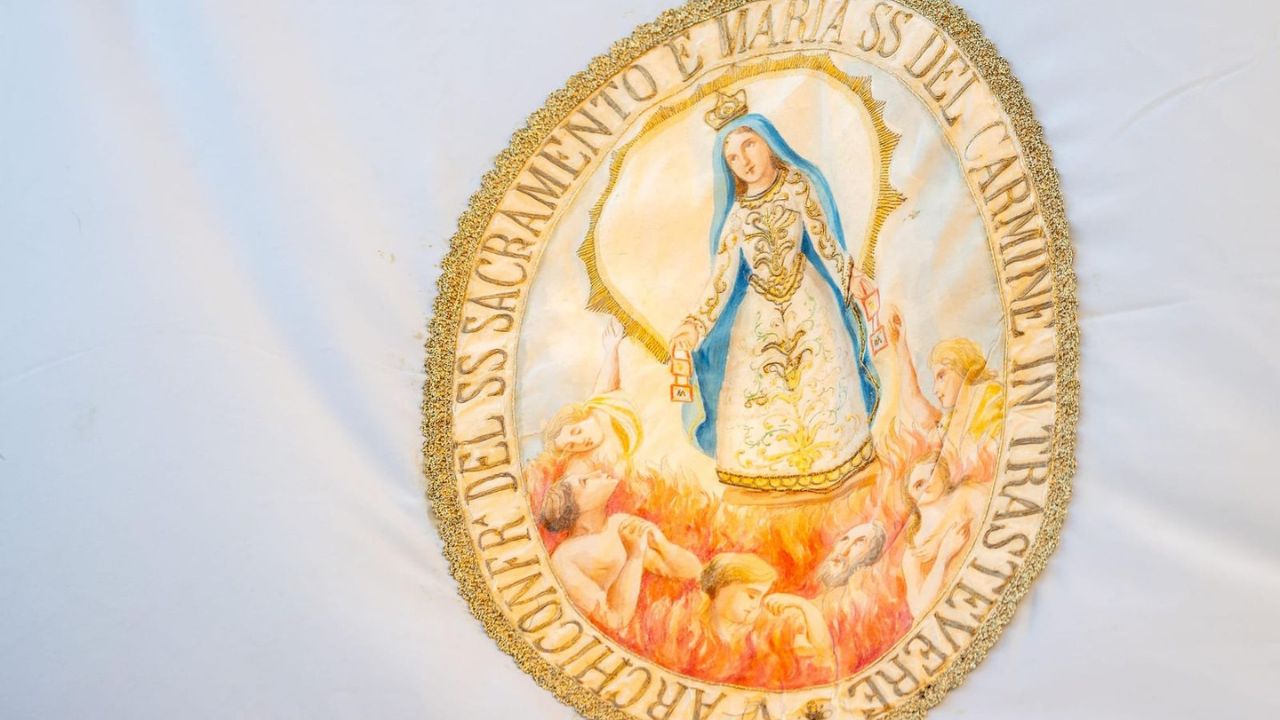
The Modern-Day Procession
Throughout the year, the statue is kept in the Church of Saint Agatha, which sits next to the Basilica of Saint Chrysogonus, now under the care of the Trinitarian Fathers.
It was in the 1920s when the statue would be carried in procession with the aim of reawakening Italian popular traditions.
Since then, from the Church of Saint Agatha, every year on the Saturday after the liturgical memorial of Our Lady of Mount Carmel, the statue exits the church to be carried through the streets of Trastevere.
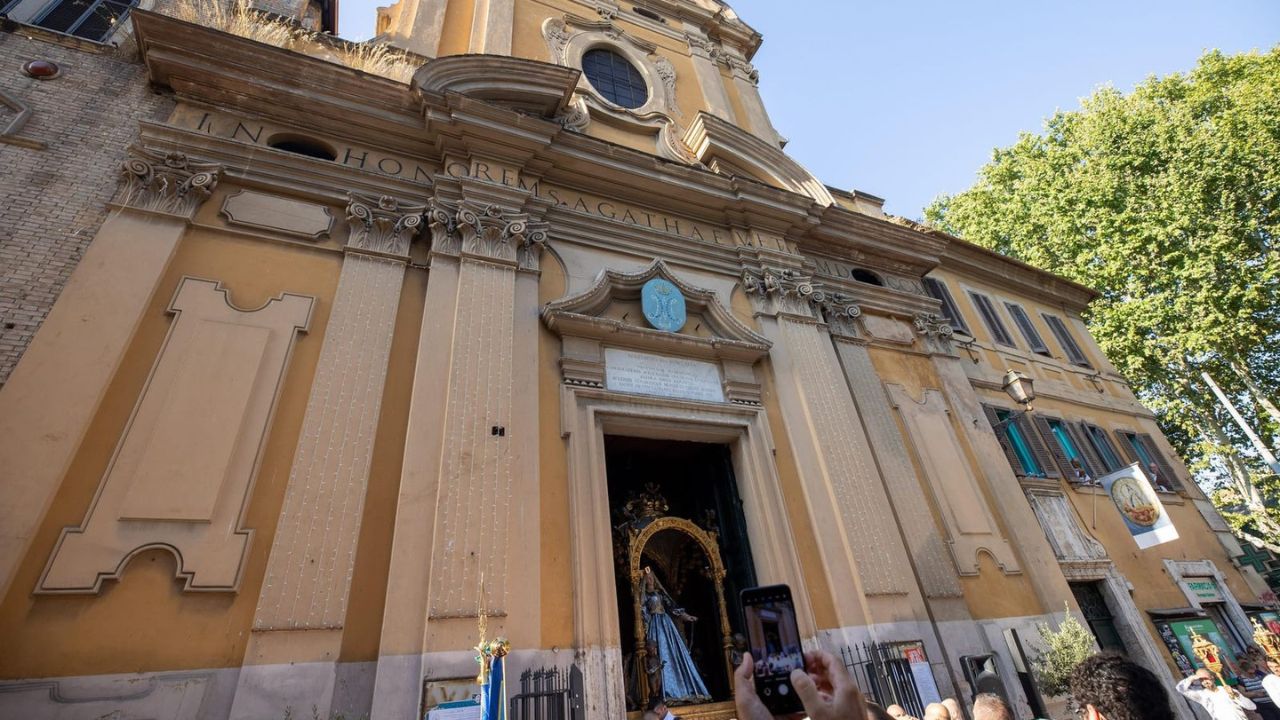
The statue is then returned to the Church of Saint Agatha where it is solemnly displayed for a week, until the following Sunday when the traditional procession on the Tiber River takes place.
The statue is placed on a boat from a northern point on the river and travels down the river to the neighborhood of Trastevere.
The statue of Mary then is greeted by a statue of Saint Joseph as it disembarks the boat.
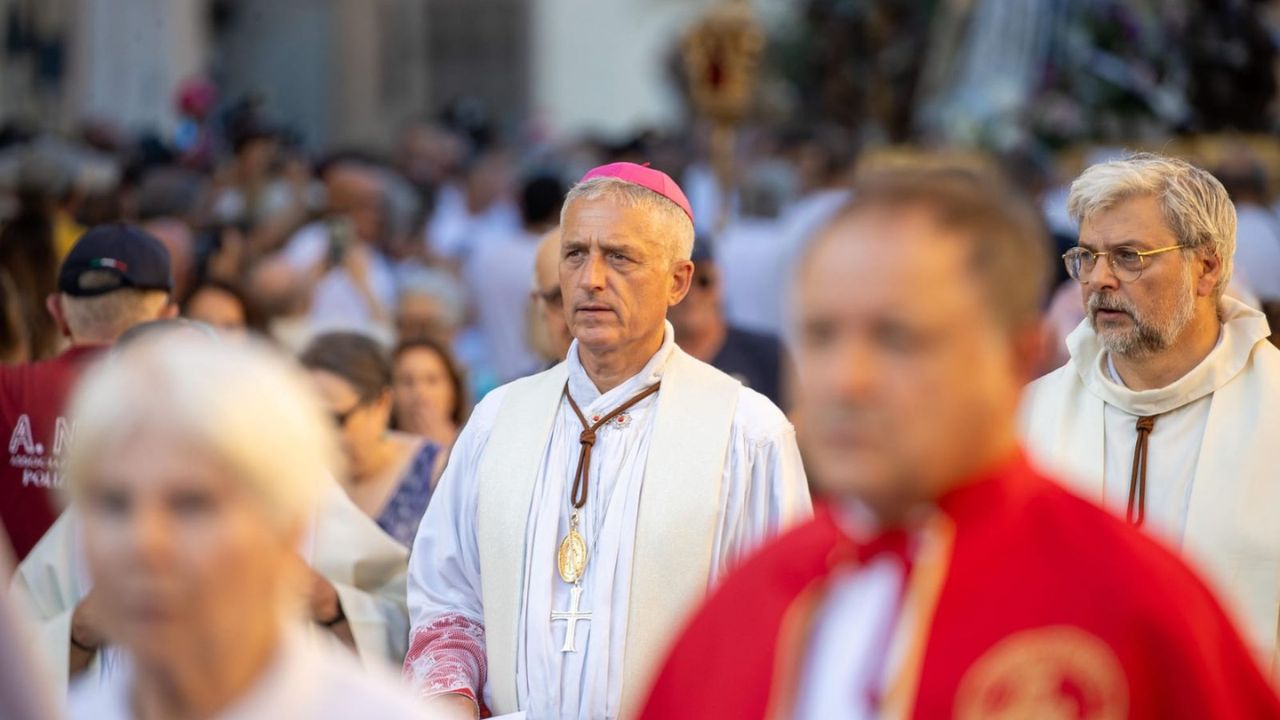
The procession continues to the Basilica of Santa Maria in Trastevere, where the statue remains until the following morning. There is a solemn blessing, and the morning after, Holy Mass is celebrated in the Basilica. The statue is then carried in procession back to the Church of Saint Agatha to wait for the following year’s procession.
This article was originally published by Church Pop.