If you spend any part of Christmas in Italy, you are sure to hear one of the country’s most beloved carols, “Tu Scendi Dalle Stelle” (“From Starry Skies Descending”).
The Christmas song, written and composed by St. Alphonsus Liguori in the mid-18th century, describes Christ, King and Creator, coming into the world as a poor baby.
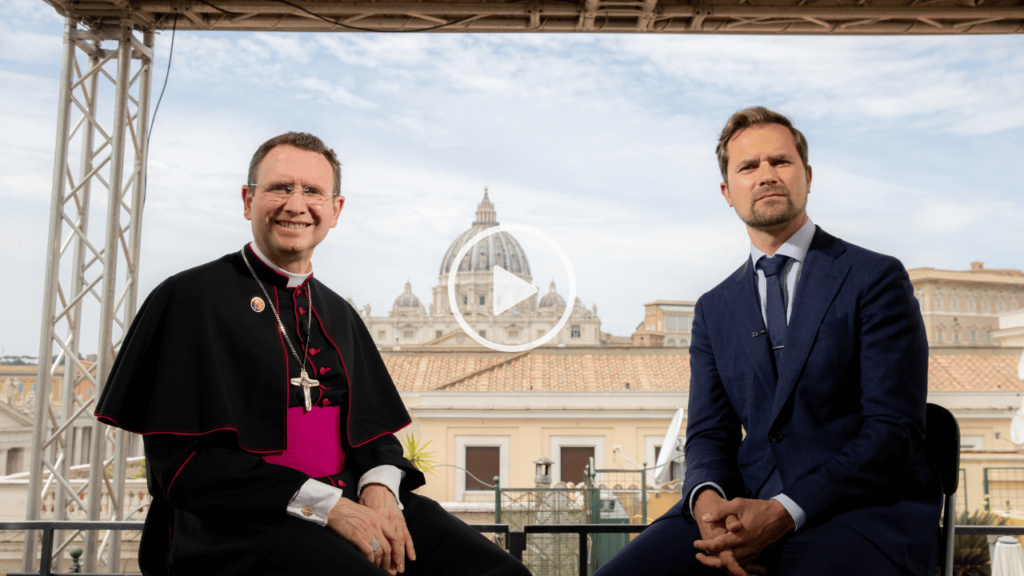
The song was “born from the heart and pen of Alphonsus Maria Liguori — in love with Jesus, but passionate about humanity — and very close to ordinary people,” Father Luca Preziosi told Valentina Di Donato of EWTN News.
The saint, from Naples, “wanted to share a little of this beauty, of his knowledge of Jesus,” especially with the peasants of the time, who could not read or write, said Preziosi, the rector of the Shrine of Santa Maria della Consolazione in Deliceto, Italy.
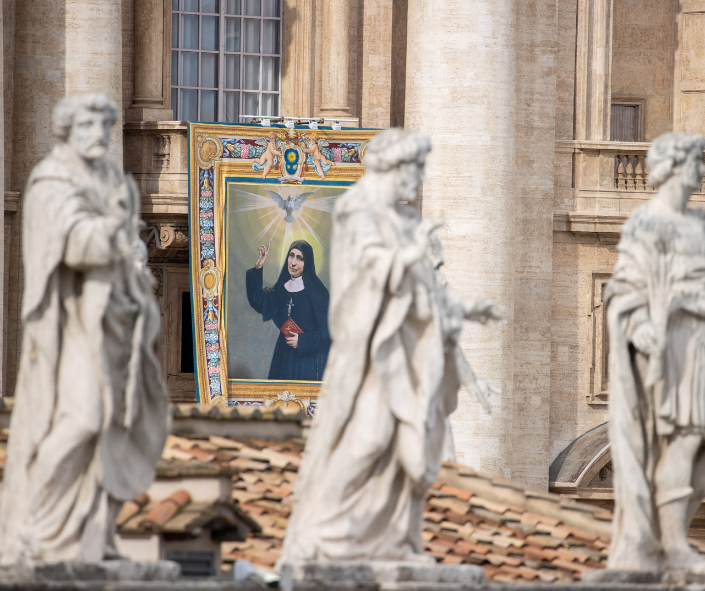
St. Alphonsus Liguori was a Neapolitan lawyer who became a priest and later a bishop. He is founder of the Redemptorists, a religious congregation dedicated to missionary work. He was declared a doctor of the Church for his contribution to moral theology.
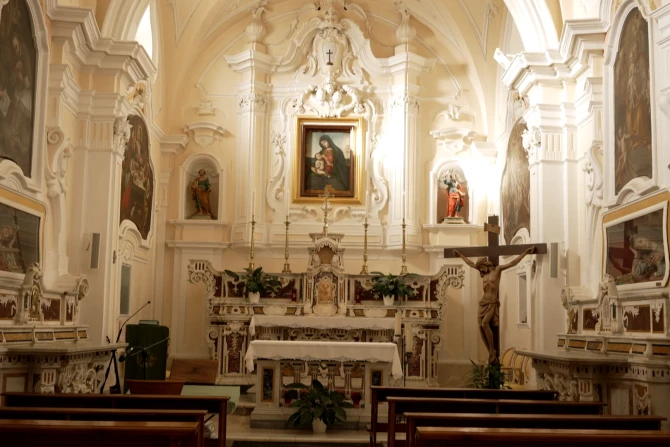
In December 1744, Alphonsus was asked by his bishop to serve for a period near the town of Deliceto, in southern Italy, at the Convent of the Consolation, where he would eventually found the third Redemptorist house.
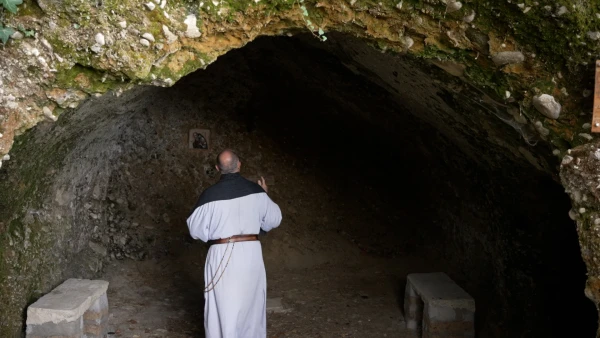
According to popular tradition, the priest was inspired by a grotto near the convent — hidden inside a small church — which recalled the humble birthplace of Jesus in Bethlehem. He began penning what would become “Tu Scendi Dalle Stelle.”
Alphonsus also borrowed heavily from the melody and lyrics of an earlier Christmas song he had written in Neapolitan dialect, “Quanno Nascette Ninno” (“When the Child Was Born”).
The Italian saint’s original title for the song, which has seven stanzas, was “Canzoncina a Gesù Bambino” (“Little Song to the Baby Jesus”).
The popular carol is part of the Italian “pastorale” musical style, and though several different arrangements exist, it is traditionally accompanied by an Italian bagpipe.
Italian singer Luciano Lamonarca has been working to popularize the song beyond Italy’s borders with a version of the carol in Italian, English, and Spanish.
“As a tenor, I of course wanted to promote the legacy of this song,” he told EWTN News. “So like Sergio Franchi and Luciano Pavarotti and Andrea Boccelli, who have recorded the song mostly in Italy, in Italian, I supported a project that would allow me to sing the song in all three languages and tell the story to the public at large, especially in America, where the song is not well known.”
Lamonarca presented his project to share “Tu Scendi Dalle Stelle” around the world with Pope Leo XIV at the Vatican on Dec. 18.
An English translation of the first two stanzas is:
From starry skies descending
Thou comest, the glorious King
A manger low Thy bed
In winter’s icy sting
A manger low Thy bed
In winter’s icy sting
O my dearest Child most holy
Shudd’ring, trembling in the cold!
Great God, Thou lovest me!
What suff’ring Thou didst bear
That I near Thee might be!
What suff’ring Thou didst bear
That I near Thee might be!
Thou art the world’s Creator
God’s own and true Word
Yet here no robe, no fire
For Thee, Divine Lord
Yet here no robe, no fire
For Thee, Divine Lord
Dearest, fairest, sweetest Infant
Dire this state of poverty
The more I care for Thee
Since Thou, O Love Divine
Will’st now so poor to be
Since Thou, O Love Divine
Will’st now so poor to be
This article was originally published by CNA.