The Vatican’s Dicastery for Communication reiterated its long-standing call for recognition of Palestine statehood amid the ongoing Israel-Hamas conflict after France announced last week it would recognize the region’s statehood.
SIGN UP FOR OUR NEWSLETTER HERE
The editorial manager for the Vatican’s Dicastery for Communication, Andrea Tornielli, called for a “two-state solution” and recognition of Palestine as a state in a July 27 editorial.
In the editorial, Tornielli cited France’s recent movement toward recognition. Last week, French President Emmanuel Macron announced in a post on X that France would recognize Palestine as a state — a plan that was quickly rejected by various Western countries including the United States, the United Kingdom, Germany, Italy, and Australia.
In addition to affirming Palestine as a state, Macron called for the demilitarization of the terrorist group Hamas that runs the government of Gaza. He demanded the release of the hostages, called for humanitarian aid for Gaza, and said that Palestine must accept demilitarization and fully recognize Israel.
In 2015, the Vatican signed its first treaty with the “State of Palestine.” Tornielli recalled the “comprehensive agreement” between the two parties, noting that the treaty affirmed the right of the Palestinian people to an “independent, sovereign, democratic, and viable” state.
While Pope Francis was the first of the popes to use the term “State of Palestine” upon his 2014 visit to the Holy land, Tornielli pointed out that Pope Benedict XVI affirmed both that “the State of Israel has the right to exist and enjoy peace and security” and that “the Palestinian people have the right to an independent and sovereign homeland.”
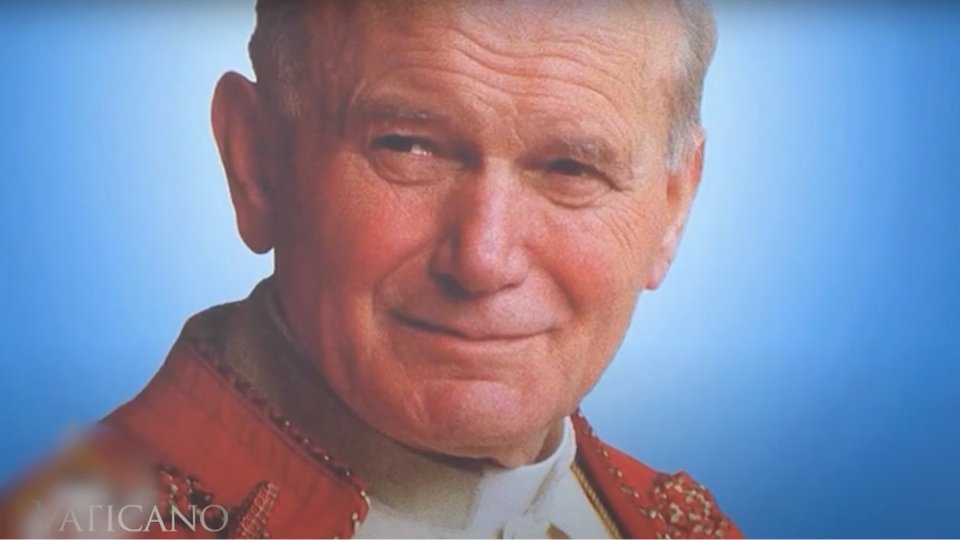
Before Benedict, in the early 1990s, Pope John Paul II established relationships with both the State of Israel and the Palestine Liberation Organization, according to Tornielli.
“It is to be hoped that the High-Level International Conference for the Peaceful Resolution of the Palestinian Question and the implementation of the two-state solution, grasping the urgency of a common response to the Palestinian drama, will decisively pursue a solution to finally guarantee this people a state with secure, respected, and recognized borders,” Tornielli wrote in the editorial.
Notably, the Vatican’s support of the “two-state solution” runs counter to the stances of many Western countries. The United States, the United Kingdom, Germany, Italy, and Australia rejected Macron’s Palestine statehood plan outright, while President Donald Trump dismissed Macron, telling reporters at the White House: “What he says doesn’t matter. It’s not going to change anything.”
Macron said in his post that he plans to announce the recognition at the United Nations General Assembly in September.
While U.K. Prime Minister Keir Starmer rejected the plan, he explained in a statement he supported the “two-state solution” but said it must ensure “lasting security for Palestinians and Israelis.”
On a local level, the Representative Council of Jewish Institutions of France called the decision a moral failure and said it risks security for Jews worldwide, while top American Jewish groups declined to attend a meeting with the French government after his statement.
Israeli Prime Minister Benjamin Netanyahu “strongly” condemned Macron’s decision, saying the move “rewards terror and risks creating another Iranian proxy, just as Gaza became.”
“A Palestinian state in these conditions would be a launch pad to annihilate Israel — not to live in peace beside it,” Netanyahu said. “Let’s be clear: The Palestinians do not seek a state alongside Israel. They seek a state instead of Israel.”
This article was originally published by CNA.