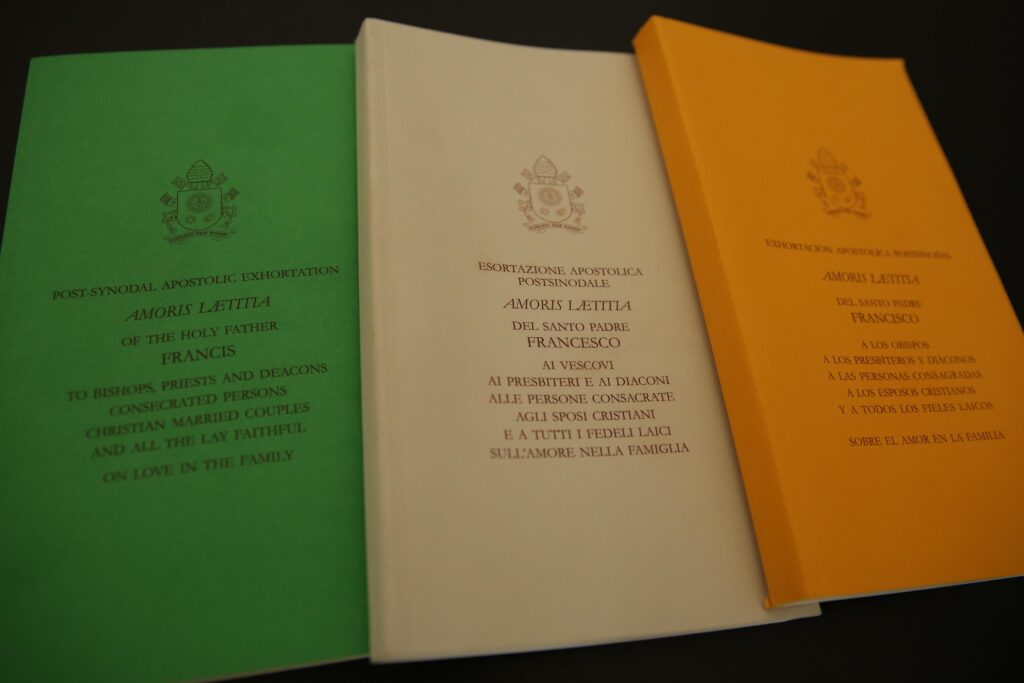
Pope Leo XIV has called the presidents of bishops’ conferences to Rome Oct. 7–14 for a weeklong gathering on Pope Francis’ apostolic exhortation “Amoris Laetitia.”
VATICAN CITY — A Vatican meeting of bishops in October will focus on divorce and separation, among other family-related issues, according to the preparatory document published Monday.
The gathering of presidents of the world’s bishops’ conferences will be a forum to discuss the application today of Amoris Laetitia, Pope Francis’ controversial 2016 apostolic exhortation on marriage and the family.
The Vatican announced July 6 that the Oct. 7–14 meeting will center on five themes, including accompanying and supporting families “in the difficulties of life.”
The gathering will include a discussion about “walking with families in complex situations,” such as “abandonment, separation, and divorce,” so that they can feel listened to and involved in the Church, according to a press release from the Secretariat General of the Synod and the Dicastery for the Laity, the Family, and Life.
It will also discuss cohabiting couples, openness to welcoming children, the decline in marriage among young people, and the transmission of the faith to new generations.
Pope Leo announced at the end of his second consistory of cardinals on June 27 that several families will also take part in the meeting with the Roman and Eastern Catholic bishops.
The presence of families “is essential,” he said. “At the same time, I hope that all those who come will prepare by listening closely to, and bringing with them, the experience of the families in their own Churches.” The pope also explained that the purpose of the event will be “to assess the progress made since Amoris Laetitia.”
In Amoris Laetitia, Leo’s predecessor Pope Francis sparked controversy when he wrote that even people in an “objective state of sin” could be eligible to receive the “help of the sacraments.” He later authorized an interpretation of that language that made it possible for some people in irregular unions to receive Communion after a process of discernment with a priest.
Previous popes had said divorced and civilly remarried Catholics could not receive Communion unless they lived as brother and sister.
According to a July 6 press release, the October gathering, while not a synodal assembly, will be carried out in a synodal style “because it shares the spirit of the Synod’s implementation process, marked by listening, prayer, and discernment.”
While organizers of the meeting did not specify, by a “synodal style” they likely meant a methodology used at the Vatican during the Synod on Synodality, and at the pope’s two consistories of cardinals this year, of breaking participants into small groups for highly moderated discussions at round tables.
Released the same day, the meeting’s “thematic framework” is intended to prepare and guide the discussions at the Vatican in October.
“The aim is to discern the direction in which the Holy Spirit is leading us today, so as to recognize, support, and foster what He is already accomplishing within families and to appreciate their contribution to the mission of the Church,” the framework document states.
The rapid changes of our era, the document continues, call “for attentive listening to the concrete lives of families and to the experience of those who accompany them, recognizing together both the beauty of love as it takes shape in daily life and the fragilities that often affect it, including precarious employment and housing, illness, the challenges of raising children, emotional loneliness, and the care of family members with disabilities, the elderly, or those who are not self-sufficient.”
“Failure, fragility, the gap between the ideal and reality, and the complexity of life situations also become places in which the work of God’s grace may be recognized and where persons can be accompanied with respect, patience, and hope,” the preparatory document says.
The full titles of the five themes of the meeting, as found in the text, are:
1. Families today: reality, beauty, and challenges — Discerning the signs of the times through the experience of families and the Church’s pastoral commitment today
2. Young people and the discovery of the vocation to marriage — Listening to young people and accompanying them in discovering the value of marriage
3. Married life. The first years of marriage: a decisive time — Listening to and accompanying couples in the early years of married life and at every stage of life
4. In the difficulties of life: accompanying and supporting — Walking with families in complex situations
5. Christian families as subjects of the Church’s mission — Embracing conjugal and family love as an impetus for mission
This article was originally published by EWTN News English.