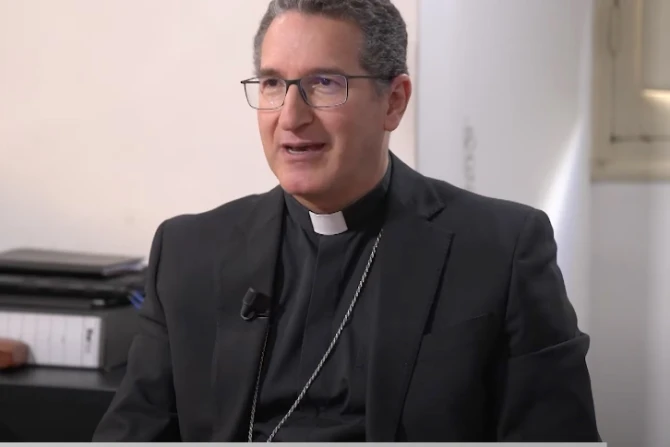
Cardinal Michael Czerny, Prefect of the Dicastery of Integral Human Development, explains it this way, “Artificial intelligence is like many human inventions. A potential for good and for evil.”
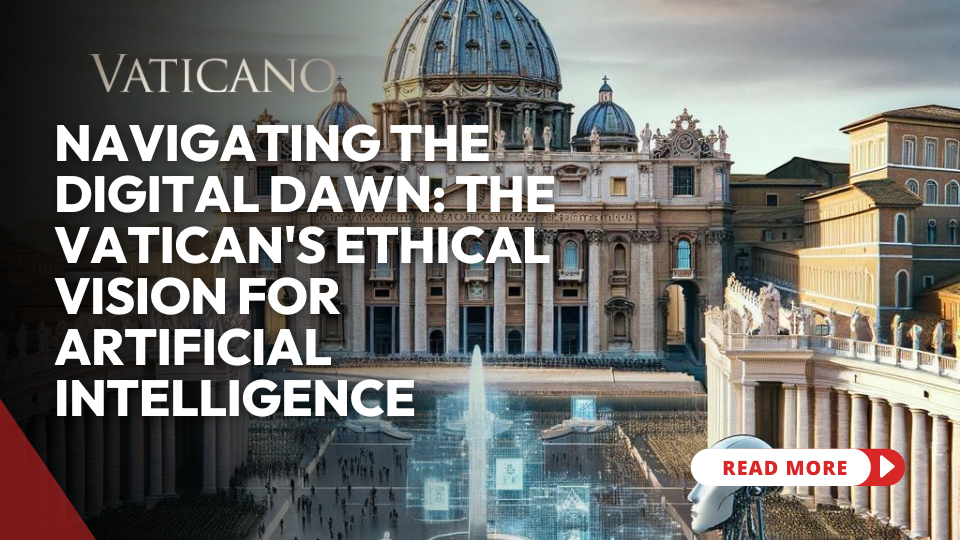
At a time when technological advancements are blurring the lines between reality and fiction, the Vatican’s concern for the ethical implications of Artificial Intelligence is more pronounced than ever.
Pope Francis in his 2024 Message for Peace, placed special emphasis on the use of Artificial Intelligence as a tool for peace and the Vatican Dicastery for Integral Human Development is at the forefront of these discussions.
Cardinal Czerny continued, “The connection between artificial intelligence and peace is actually human life. How we live, how we treat each other. How we treat the planet, and then we need to learn how to use and manage this marvelous invention in a way that contributes to the human good.”
Andreas Thonhauser, EWTN Vatican Bureau Chief asked the Cardinal, “How could artificial intelligence threaten peace?”
“Basically,” the Cardinal replied, “it is separating human responsibility from warfare. It means that ‘the subject’ if you want to put it in quotes, ‘the subject’ as it pulls the trigger or drops the bomb is no longer a human person with a conscience and with responsibility to the human family, but a logarithm.”
Moving from AI’s role in warfare and examining its wider societal impact with another Vatican official, Emilce Cuda, Secretary of the Pontifical Commission for Latin America, told EWTN Vatican, “The ‘New’ Artificial Intelligence is part of the qualitative technological leaps that occur in the history of mankind. There have been several and when that happens, all political, social, economic and even the forms of war change. History can give many examples of that.”
Pope Francis, in his message for Peace calls attention to the risks of AI misuse, urging for a proactive and responsible approach to technology management.
Cuda continued, “The irresponsible use of artificial intelligence leads to injustices. That is the moment when religious thought, such as Catholicism, can intervene. Pope Francis does not offer merely theoretical advice but urges the opening of a social dialogue.”
Pope Francis and the Vatican officials underscore the collective responsibility in the ethical deployment of AI, emphasizing the role of education and awareness in fostering a responsible global community.
“It’s what you call democracy,” Cardinal Czerny explained, “It’s up to people to exercise their responsibility through their elected officials and so on. And the Church accompanies people in this responsibility. So the message is a stimulus to God’s people to say, ‘Oh, I better learn about this so that I can also exercise my responsibility.’ And not be astonished when something goes very wrong and then say, ‘Well, I didn’t know, or I didn’t care.’”
The Lenten period of preparation for Holy Easter can indeed help us to reflect and meditate, including on the use of artificial intelligence and how we can employ it for peace.
Thonhauser asked Card. Czerny, “Any suggestions for our viewers for the season of Lent that we’re soon about to end. What they could be praying for, or also fasting for?”
The Cardinal suggested, “Yes, I think that they could think about what the obstacles to full human development are that they’re aware of, and to pray for the grace to help overcome them. Whether these are problems near at hand or far away. To ask God to allow us to cooperate in his saving work so that his people, all his people, might live the life that he created them for, or he created us for.”
For navigating the digital dawn, the Vatican’s message is clear: it calls for ethics and innovation to walk hand in hand, safeguarding peace and humanity.
Adapted by Jacob Stein